
Knowledge
A Guide to the Most Common Pool Cues
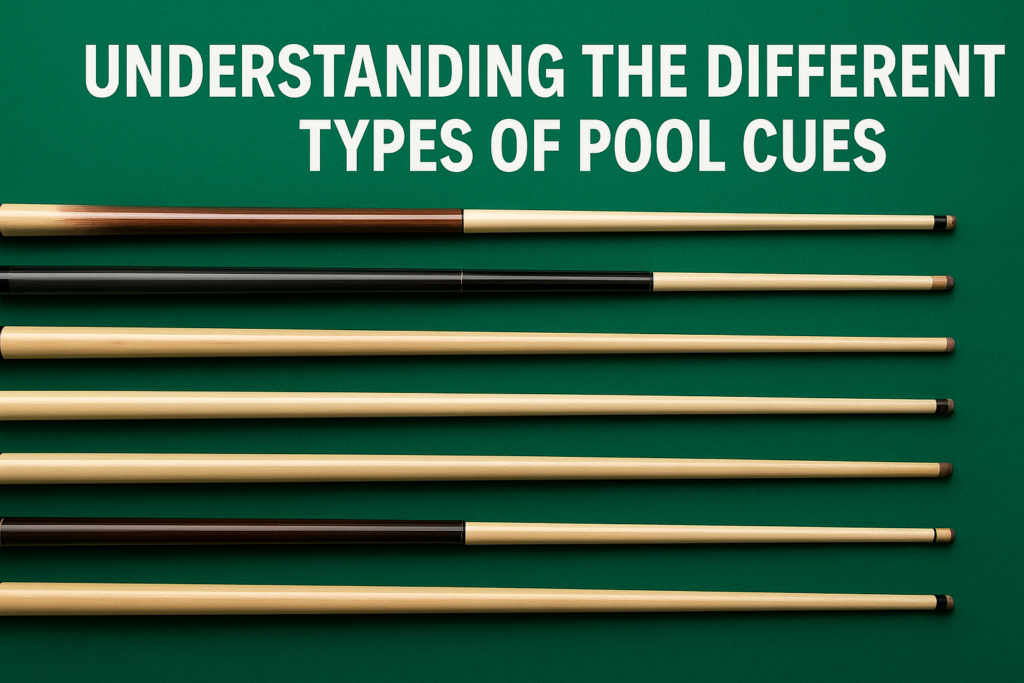
Pool cues may look similar at first, but each type is built for a specific job. Knowing the difference helps players choose the right tool for better control, power, and accuracy. Below is a breakdown of the cue types most players see around the world.
Key Takeaways
- Different cues serve different jobs.
- A playing cue is for everyday shots and control.
- Break cues are built for power and durability.
- Jump cues help lift the cue ball cleanly.
- Jump-break cues combine both roles in one stick.
- Sneaky-pete cues look plain but play like higher-end cues.
- One-piece cues are common in public spaces and made to be tough.
- Two-piece cues offer better quality and easy transport.
- Low-deflection cues help players aim more accurately with spin.
- Carom and snooker cues are designed for their specific games.
Playing cue
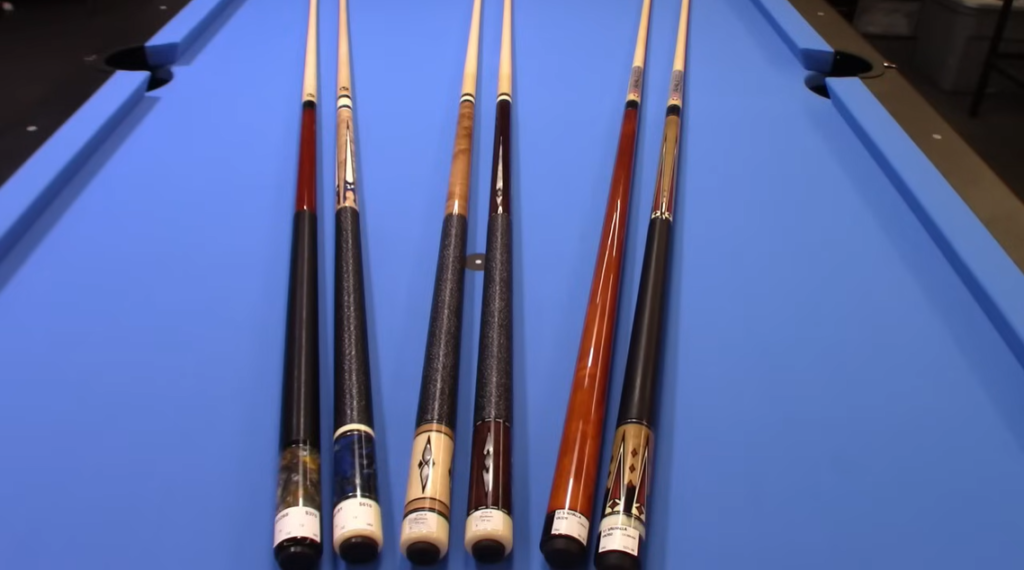
This is the cue most people use for regular shots. It’s built for balance and feel. A good playing cue gives steady control, a smooth stroke, and a tip that grabs the cue ball just enough to apply spin.
Break cue
A break cue is made for one thing: hitting hard. It usually has a harder tip and a stronger shaft that won’t flex as much. This helps transfer more force into the rack. Many players keep a break cue separate to avoid wearing out their main cue.
Jump cue
A jump cue is shorter and lighter than a standard cue. The goal is simple: lift the cue ball off the table cleanly. The short length lets the player raise the cue almost straight up without losing accuracy.
Jump-break cue
This cue combines the power of a break cue and the build of a jump cue. Players who want to carry one extra cue instead of two often choose this option.
Sneaky-pete cue
This cue looks like a simple house cue, but it’s actually a two-piece cue designed for performance. Skilled players used them in the past to avoid showing opponents they had their own custom cue. Today it’s more of a style choice.
One-piece cue
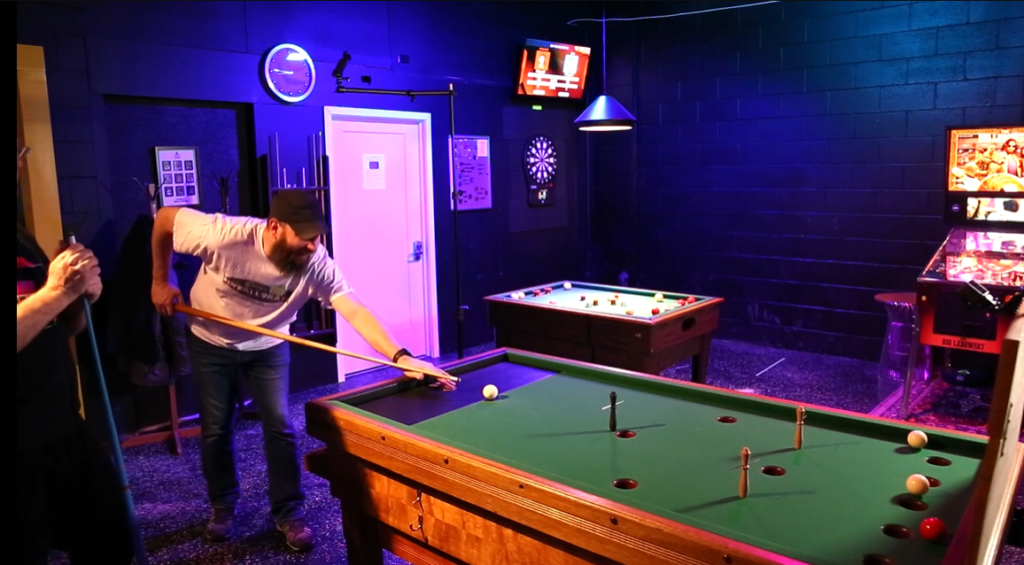
You’ll see these in bars, community centers, and casual play spaces. They’re sturdy and inexpensive. The downside is that they’re harder to transport and rarely match the quality of a good two-piece cue.
Two-piece cue
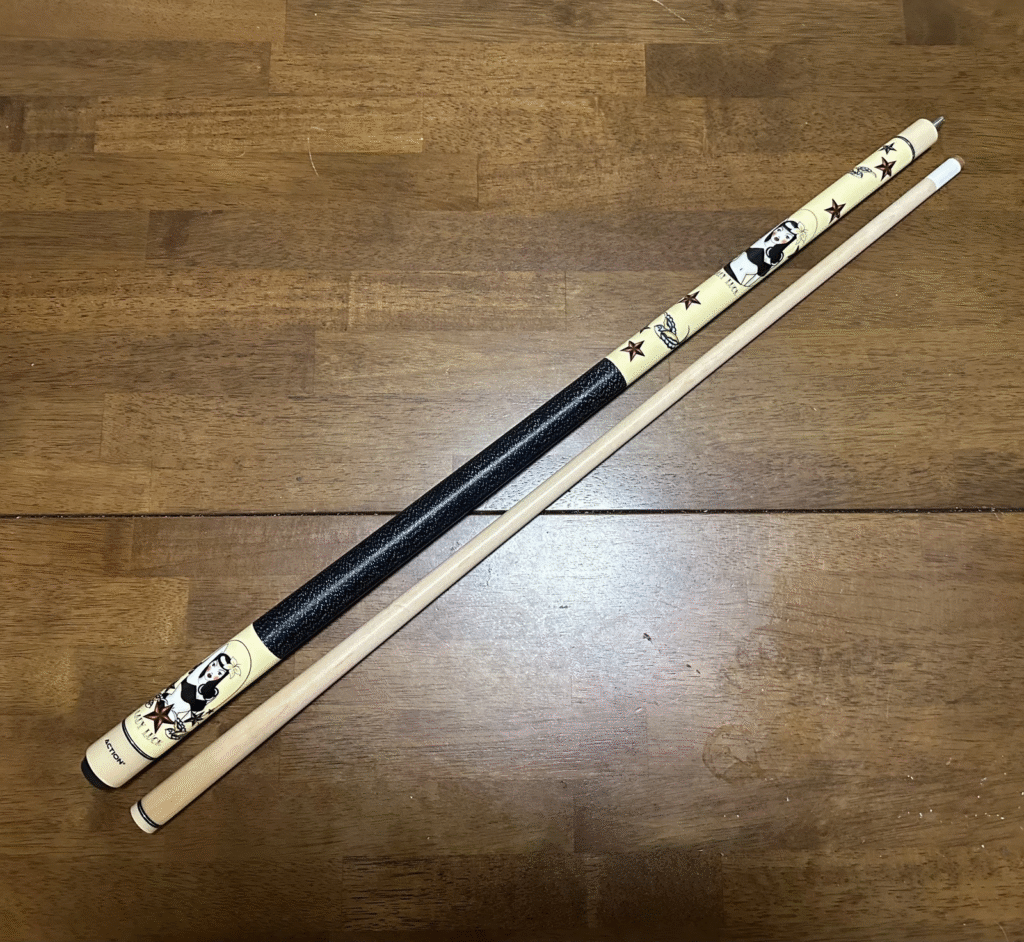
Most personal cues come in two pieces. They’re easier to carry and tend to offer better materials, better balance, and more consistent play. Players can also replace parts without buying a full cue.
Low-deflection cue
A low-deflection shaft reduces the sideways push that normally happens when you use spin. This helps the cue ball travel more in line with the aim. Many modern players prefer these shafts because they make aiming with spin more predictable.
House cue
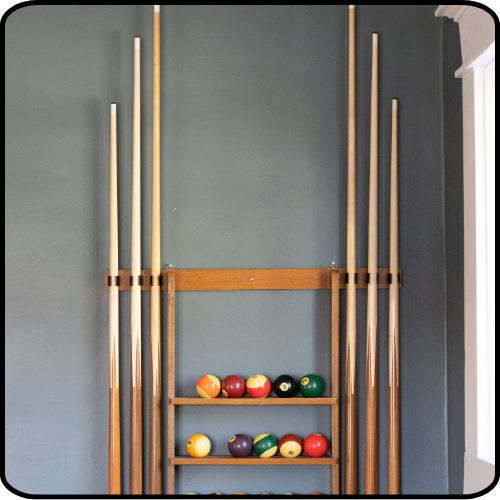
A house cue is the standard cue sitting on the wall at most pool halls. They vary a lot in weight and straightness. Some are fine, others aren’t, but they’re meant for general use by anyone walking in.
Carom cue
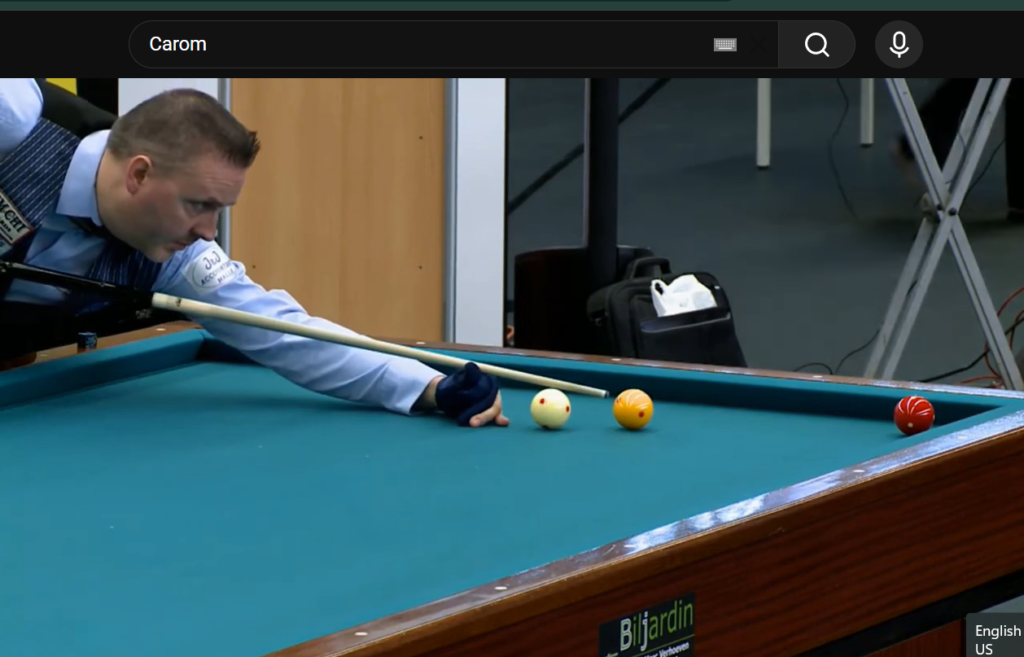
Carom cues are used for games played on pocketless tables, like three-cushion billiards. They have a thicker shaft and a shorter, stiffer build. The design helps with precise control and heavy spin.
Snooker cue

A snooker cue is thinner than a standard pool cue and often has a smaller tip. Snooker balls are smaller, so the cue needs to match. The feel is different from a pool cue, but it gives the fine control needed for long, delicate shots.
Learning and rules
- Official rules from WPA (World Pool-Billiard Association)
- Snooker rules from WPBSA
- Carom and three-cushion rules from UMB
- Buy pool cues and cases
- Differences Between English Pool, Snooker, and American Pool Cues