
Buying Guides, Knowledge
Differences Between English Pool, Snooker, and American Pool Cues
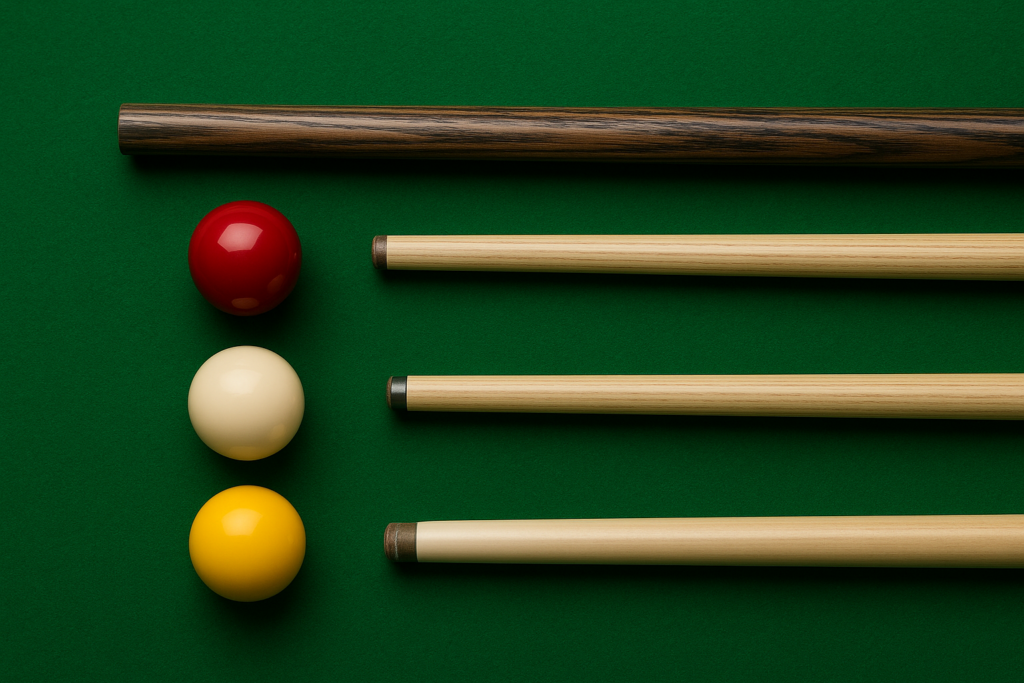
Many customers are unsure which cue they should use for different cue sports. Pool and snooker may look similar on the surface, but the equipment especially the cue is designed around the size and weight of the balls. In this guide, I’ll walk you through the key differences between English pool cues, snooker cues, and American pool cues, and explain why each one is built the way it is.
Key Takeaways
| Feature | English Pool Cue | Snooker Cue | American Pool Cue |
|---|---|---|---|
| Cue Ball Size Used | 1 7/8″ | 2 1/16″ | 2 1/4″ |
| Tip Size | 8–9 mm | 9.5–10 mm (up to 11 mm) | ~13 mm |
| Cue Wood | Ash | Ash | Maple |
| Ferrule Type | Brass/metal (small) | Stainless steel | Thick plastic (shock-absorbing) |
| Cue Construction | Often 2-piece (center joint) | Often 3/4 joint | Mostly 2-piece (center joint) |
| Primary Purpose | Precision & control for small ball | Control with extra stability | Power & durability for heavy ball |
| Not Ideal For | American pool (too thin/weak) | American pool (tip too small) | English/snooker finesse shots |
Cue Ball Sizes
Before comparing cues, we need to look at the cue balls themselves. The size of the ball determines the structure, strength, and tip size of the cue.
| Game Type | Cue Ball Size | Notes |
|---|---|---|
| English Pool (8-Ball) | 1 7/8 inches | Smallest and lightest cue ball |
| Snooker | 2 1/16 inches | Slightly larger; requires a slightly thicker cue tip |
| American Pool | 2 1/4 inches | Largest and heaviest cue ball |
These differences directly impact what type of cue is suitable for each game.
English Pool Cues
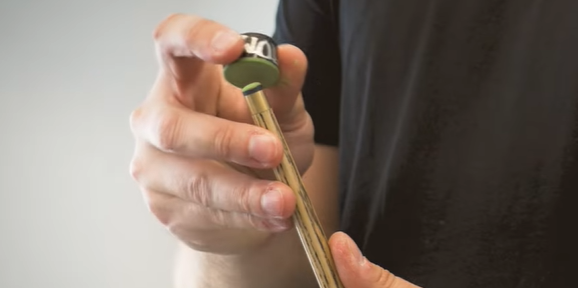
English pool cues are designed for the smaller, lighter English eight-ball cue ball.
Key Features
- Tip size: 8–9 mm
- Material: Usually ash
- Purpose: Precise cue-ball control
The thin tip gives players excellent accuracy for finesse shots. However, this same thinness makes it unsuitable for American pool—the cue simply isn’t built to take the repeated impact of heavier balls.
Two-Piece Construction
Many English pool cues split at the center with a brass joint. This makes them easier to carry while maintaining balance and playability.
Snooker Cues

Snooker balls are slightly larger than English pool balls, so the cue must match.
Key Features
- Tip size: 9.5–10 mm (some players prefer up to 11 mm)
- Ferrule: Often stainless steel
- Material: Ash
- Construction: Commonly a three-quarter joint, positioned closer to the butt for better stiffness
The snooker cue offers a blend of control and durability, designed for the longer table and slightly heavier ball.
American Pool Cues
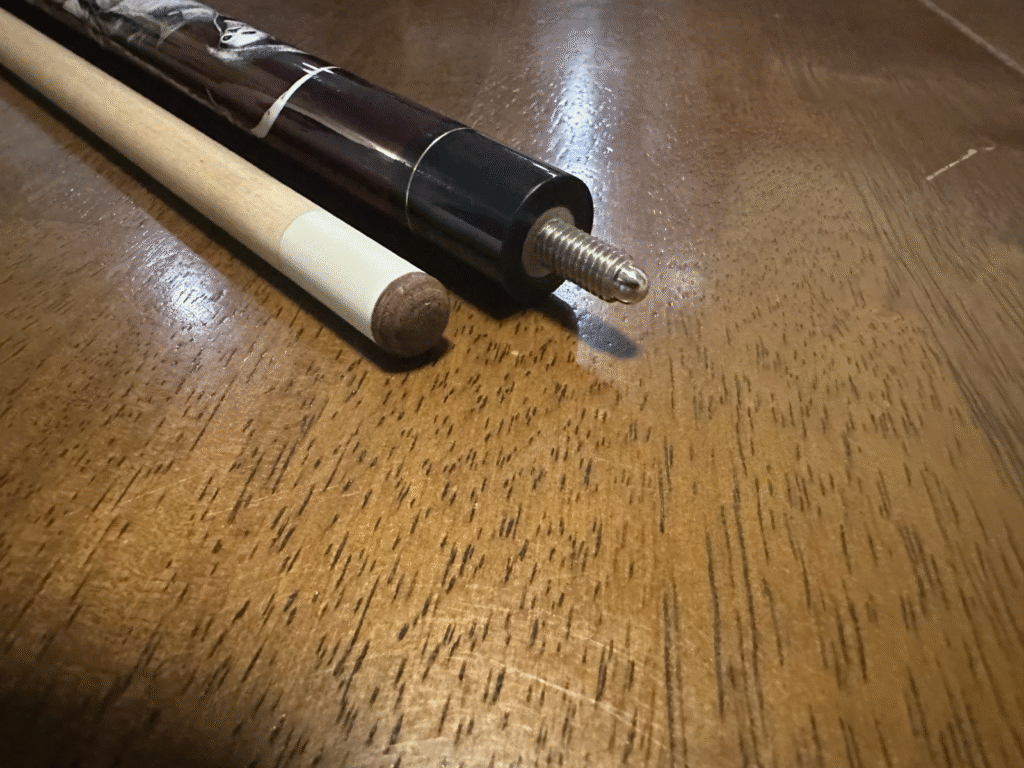
American pool cues are built for strength. The 2 1/4-inch cue ball demands a sturdier cue with a wider tip.
Key Features
- Tip size: Around 13 mm
- Ferrule: Thick plastic to absorb shock
- Material: Typically maple (lighter, cleaner grain compared to ash)
- Construction: Usually a two-piece cue that splits in the middle
The wider tip and robust ferrule allow players to strike the heavier ball with speed and power without risking damage to the cue.
Choosing the Right Cue for Your Game
Once you understand the relationship between cue ball size and cue construction, picking the right cue becomes much easier. Many customers visit our showroom unsure of which cue fits which table. After going through these differences, you now have the knowledge to choose confidently.
If you’re interested in a deeper breakdown—including the differences between English and American pool tables—we’ve created a full video that covers every detail, from ball size to table design to cue specifications.
Pingback: A Guide to the Most Common Pool Cues