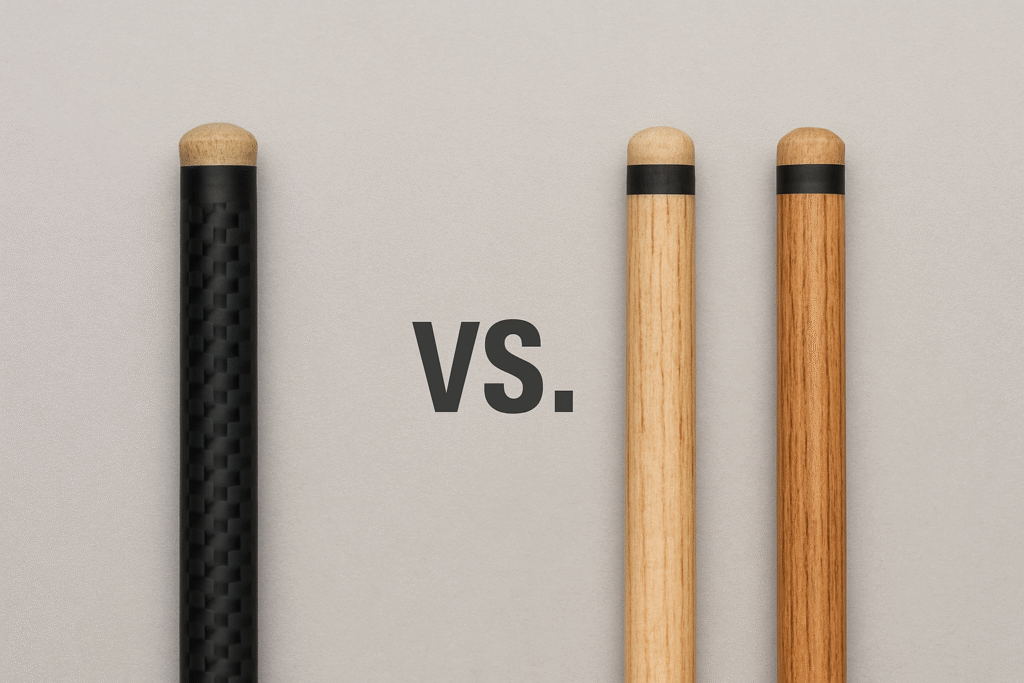
Carbon Fiber vs. Wooden Pool Shafts: A Clear Comparison

Today, we will take a close look at a topic that many players continue to debate: the pros and cons of carbon fiber shafts versus traditional wooden shafts. As someone with more than 30 years of cue-making experience, I have condensed the discussion into the most meaningful points so you can decide which option best matches your game.

Both materials have strengths. Both have weaknesses. In the end, your decision should support your style, your feel, and your long-term comfort at the table.

Key Takeaways

  • Carbon fiber shafts offer smoother performance, low maintenance, higher durability, and greater power, but they cost more, feel different, and may limit extreme spin.
  • They do not warp from heat or humidity and stay clean with minimal effort.
  • Wooden shafts provide the traditional feel, sound, and natural flex that many players prefer, often allowing more spin on off-center hits.
  • Wood shafts require more care, are prone to dings and warping, and vary based on grain structure.
  • Carbon fiber delivers radial consistency, while wood offers a more familiar and customizable playing experience.
  • If you value power, durability, and consistency, carbon fiber is a strong option.
    If you value feel, tradition, and natural feedback, wood remains a reliable choice.
  • Both materials can perform at a high level, the best shaft depends on your personal comfort and playing style.

The Advantages of Carbon Fiber Shafts
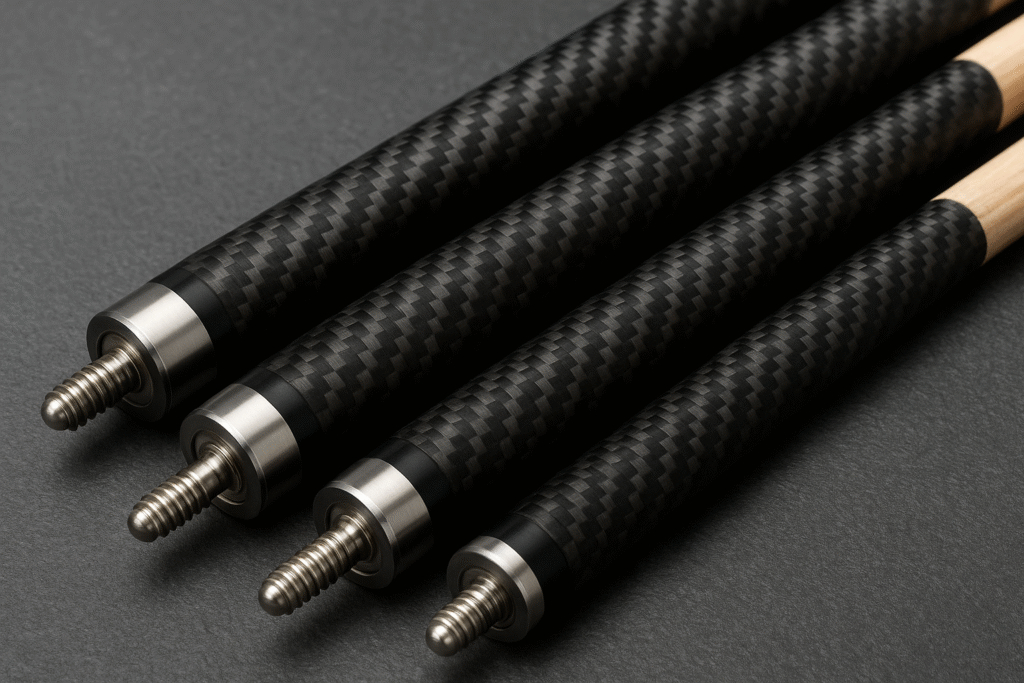
Smooth, Low-Friction Performance

A carbon fiber shaft glides through the bridge hand smoothly due to its low-friction surface. This requires little effort and remains consistent from one session to the next.

Minimal Maintenance

Carbon fiber is easy to clean. You can wipe it with a damp cloth without fear of swelling or damage, something you cannot do with wooden shafts.

Resists Dirt, Chalk, and Moisture

The material does not absorb oils or chalk. It remains clean and stable regardless of conditions.

Unaffected by Weather

Carbon fiber does not warp from heat, cold, or humidity. Even storage in a car trunk will not cause it to bend.

Durable and Damage Resistant

Accidental bumps, table strikes, or drops are less likely to leave marks. While not invulnerable, carbon fiber stands up to abuse far better than wood.

Increased Power

Its stiff construction transfers more energy to the cue ball, allowing you to generate more power with less effort.

Consistent Performance

Since it is not built around natural grain, a carbon fiber shaft provides radial consistency regardless of how the cue is rotated.

The Drawbacks of Carbon Fiber Shafts

Unfamiliar Appearance

Some players find the dark gray or black finish distracting or difficult to adjust to.

Different Feel and Sound

Carbon fiber generally feels lighter and sounds sharper at impact. Although many manufacturers have reduced this effect, it still differs from wood.

Reduced Flex and Spin at the Mis-cue Limit

Because the shaft does not flex much, it may restrict the amount of spin you can apply at the extreme edges of the cue ball.

Adjustment Period

Transitioning from wood to carbon fiber requires time. The feel is distinctive and may take practice to master.

Higher Price Point

Carbon fiber shafts cost more due to production methods and marketing. They are not the most budget-friendly option.

Limited Repair Options

Most routine tip work is still possible, but repairs involving joint collars or vault plates require specialized skills.

Potential Balance Shift

Carbon fiber is lighter than wood, which may shift the cue’s balance point unless counterweighted.

The Advantages of Wooden Shafts
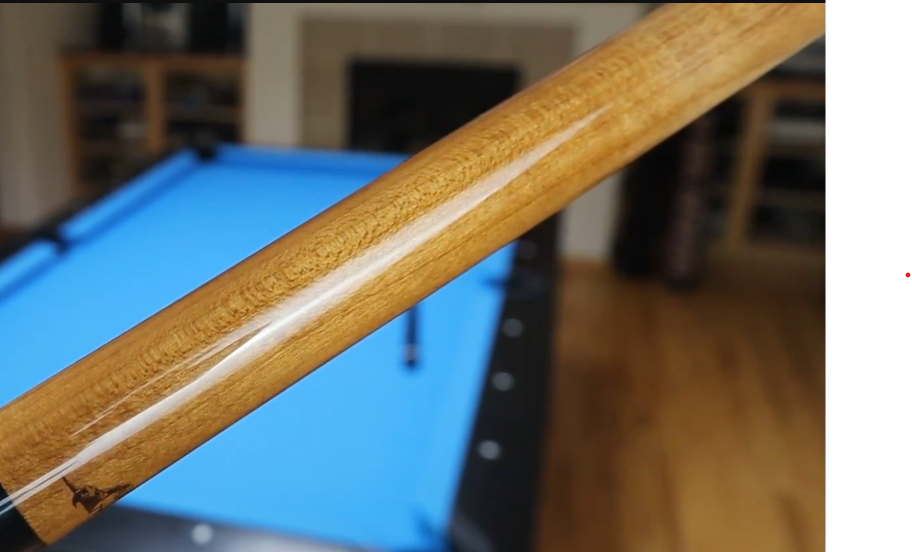
Traditional Feel and Sound

Wood provides the classic hit that many players grew up with. The impact feels solid and the sound is familiar and pleasing.

Natural Flex for Enhanced Spin

Wood flexes more on off-center shots, helping the shaft move out of the cue ball’s path. This may allow experienced players to apply more English with less deflection.

Wide Range of Builds

Wooden shafts come in many forms laminated, cored, or solid. When crafted properly, they can be very radially consistent.

The Drawbacks of Wooden Shafts
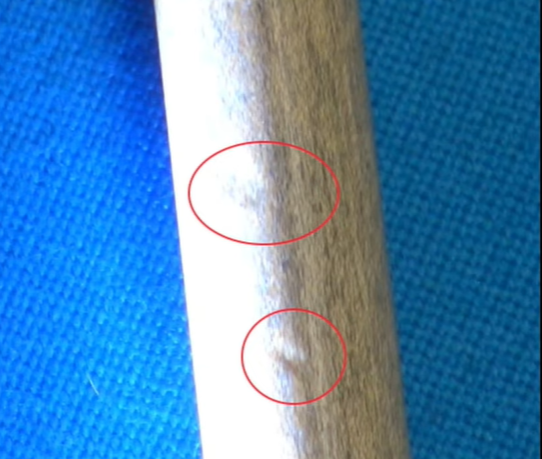
Easily Damaged

Wood dents and scratches more easily than carbon fiber.

Takes on Dirt and Oils

Even well-sealed wood will gradually absorb chalk and hand oils over time.

Sensitive to Heat and Humidity

Exposure to temperature changes or moisture can cause warping, swelling, or shrinking.

Less Natural Radial Consistency

Because wood is a natural material with grain, it has a spine that can change how the shaft performs depending on orientation.

Understanding the Manufacturing Difference
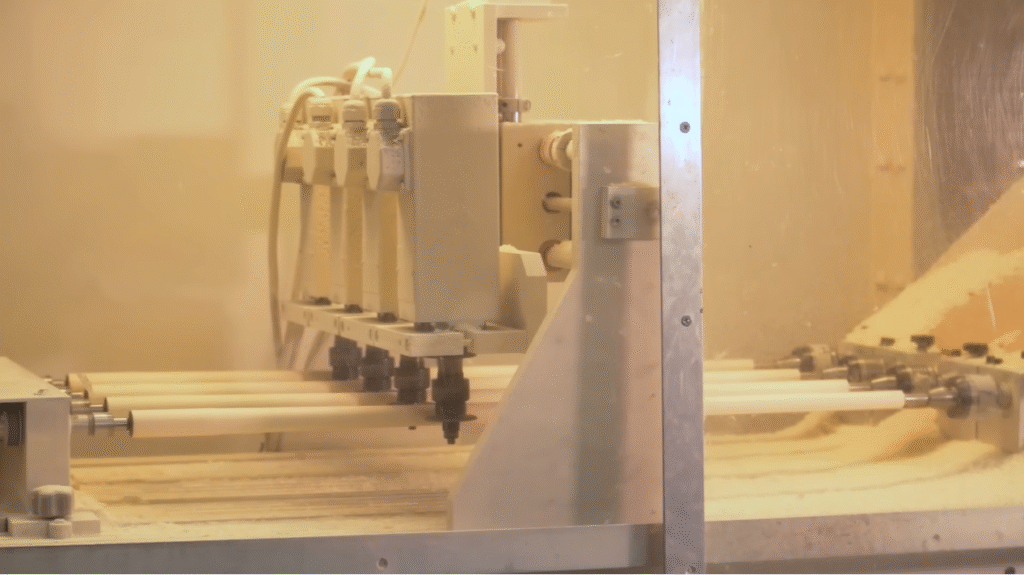
Carbon fiber shafts are built by wrapping layers of carbon sheet around a mold. Wood shafts rely on natural grain structure and how each piece is selected.

Both can be excellent low-deflection shafts, but they reach that goal through completely different engineering.

Do Pro Players Prefer Wood or Carbon Fiber Cues?

Slightly more top-ranked players use carbon fiber, but many still prefer wood.

According to FargoRate (2025) analysis of the top 100 players:

  • 53 players use carbon fiber
  • 46 players use wood
  • 1 player uses fiberglass

Preferences also vary by region: carbon fiber is more popular in Europe, while many top players in Asia still favor wood (top 100 list).

Which Shaft Should You Choose?

If you have played with wood for many years, staying with it may feel comfortable and natural. If you are newer to the game or looking for durability, consistency, and power, carbon fiber is worth serious consideration.

Both options can perform at the highest level. Both require a learning curve. Your preference and what feels best in your hands, should guide your decision.

Final Thoughts

I have aimed to present this comparison as fairly as possible. I believe in carbon fiber technology, and I also believe in the long-standing reliability of wood. Each serves a purpose, and each provides a unique playing experience.

If there is a specific point you would like covered in depth, feel free to request it. Your feedback guides future content, and I appreciate your time and interest in the subject.

Learn more

Discussions from real players comparing wood and carbon fiber.

Material science articles about carbon fiber properties

Woodworking resources explaining grain structure
How to Choose Your First Pool Cue 

Buy Pool Cues

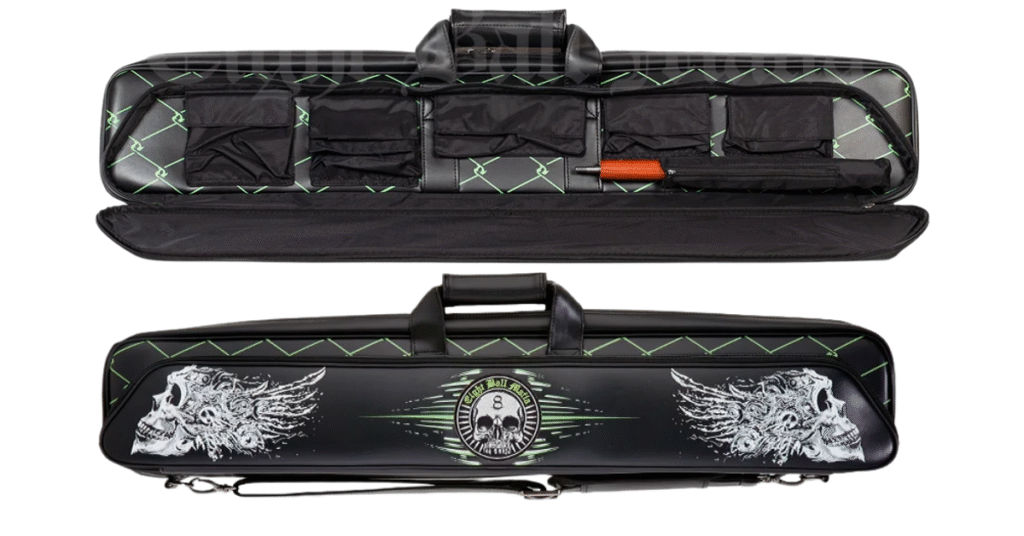
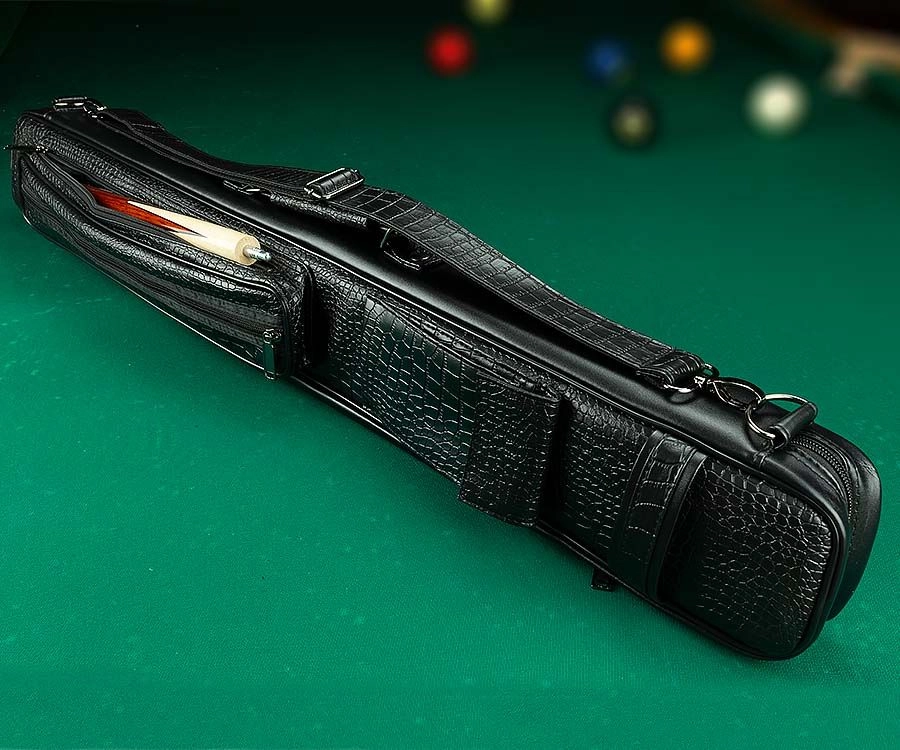
My Ultimate Guide to Leather Pool Cue Case

If you’re someone who spends time playing or following pool, you’re probably no stranger to leather cue cases.

Compared to other materials, leather cases clearly stand out. Honestly, they look dope.

To me, a leather cue case is like a leather bag or briefcase, it just looks great. You enjoy looking at it, you enjoy using it, and you even enjoy showing it off to your friends. It sparks something inside you, like wearing a good watch.

I believe investing in a quality leather case is a smart move. A well-made leather case is a solid investment, and the best part is, you can use it for years. The more you use it, the better it looks, and over time, it carries your personal mark.

There are many things to consider when buying a case, your playing style, how often you travel, how many cues you use, and your budget. Everyone has their own preferences, but it’s worth thinking about these before making a purchase (By yourself ).

This article focuses on the basic elements that make a high-quality leather case. In my view, there are three main ones:

  • Leather quality
  • Inner protection structure
  • Finishing details

Leather Quality

Leather checking 101 for beginners:

If you’re holding your leather case right now, pay attention to a few things. First, look closely at the surface. Real leather has natural grain and color variation, not uniform like printed leather. If you hear a soft creak when you bend it, that’s another good sign.

If you can’t touch it in person, check the product description. You want your case to be made from full-grain or top-grain leather. These are the highest-quality types, durable, flexible, and they age beautifully over time.

If you see bonded leather, PU leather, or synthetic leather, be cautious. These are mixed or artificial leathers. They might look shiny and nice at first but tend to peel, crack, or fade after a few years.

These are just the basics to help you spot a good leather case. If you’ve got your own tips for checking leather quality, drop them in the comments.

Also, keep in mind that one case might not use the same type of leather throughout. Manufacturers often combine different leathers for different parts.

Inner Protection Structure

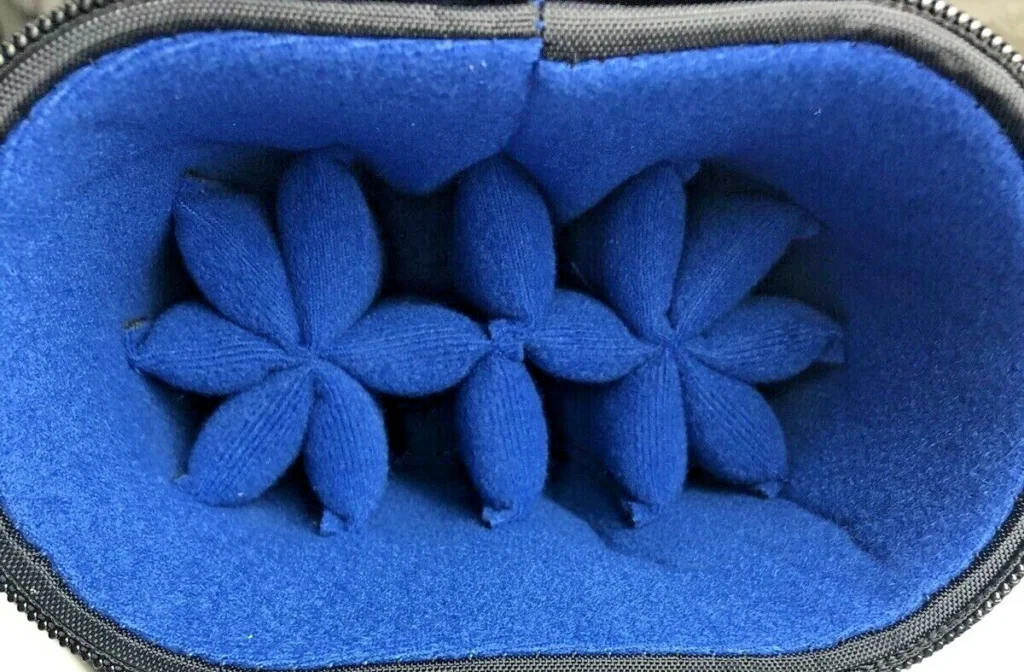
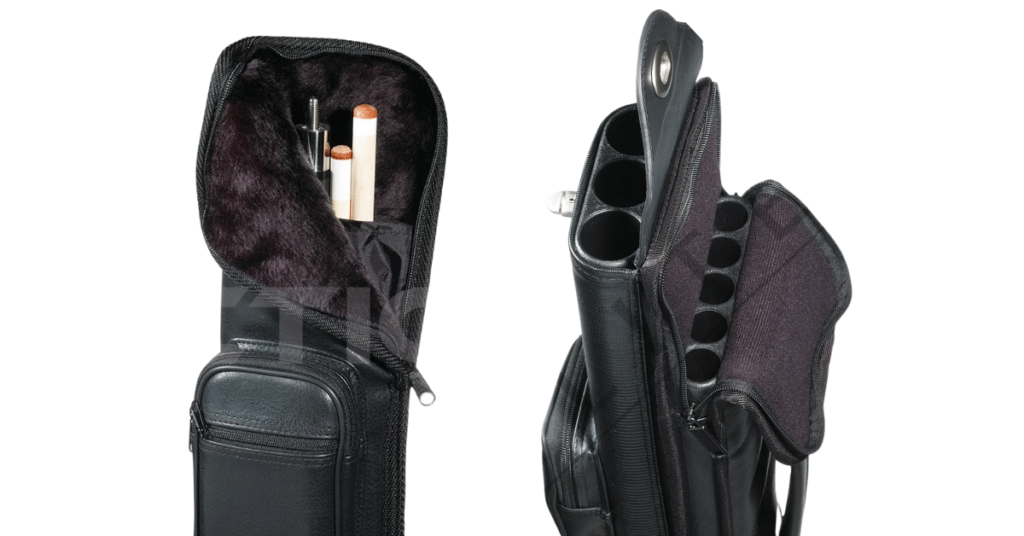
The inside of a case is just as important as the leather on the outside. A case that looks good on the outside can still fail to protect your cue if the inner build is poor.

The main job of the interior is to keep your cues from moving, bumping, or taking direct impact when you travel. Some cases are stiff on the outside but too loose inside, allowing cues to rattle. Over time, that can cause small scratches or wear on your cue.

A good case holds your cue snugly, not too tight, not too loose. When you tilt or lift it, the cue stays in place. It’s the same feeling as storing something valuable exactly where it belongs.

The lining material says a lot about the maker’s mindset. If it’s soft, thick, and has a little bounce, that’s usually a sign of care and craftsmanship.

The bottom of the case also matters. It’s the part most people overlook, yet it takes the most impact. Every time you set the case down, all the weight of your cue presses on the bottom. If it’s thin or just leather without padding, it’ll dent or crack quickly.

High-quality cases often have a rubber pad or thick wooden base wrapped in leather, which helps absorb shock and protects the butt of the cue from hard hits.

When you test a case, set it down a few times. If the base feels solid and quiet, that’s a good sign. If it feels hollow or flimsy, that case probably focuses on looks more than function.

Finishing Details

A good case isn’t just about quality leather or strong structure, it’s about the little things many people overlook. Details like stitching, straps, hinges, zippers, and clasps show the maker’s craftsmanship.

When you pick up a well-made case, you can feel the quality right away. Clasps close firmly, not loosely. The zipper slides smoothly, not stiff or sticky. When it glides quietly and evenly, that’s the mark of a solid zipper.

Cheap cases often use plastic or thin-coated metal zippers that jam or fade within months. A sturdy metal zipper gives a leather case both strength and a premium feel.

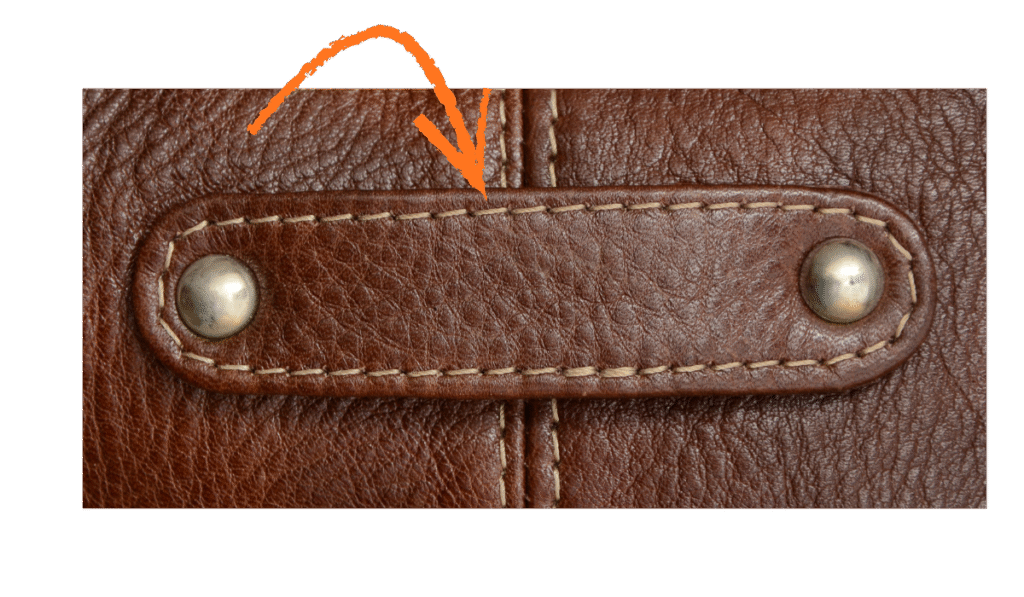
The stitching should be straight, even, and tight. Good cases often have recessed stitching or stitching pressed close to the edge.

Look closely at the leather edges, too. Properly treated edges are smooth and uniform in color. Many low-end manufacturers skip this step, and the edges start cracking or separating after a few months.

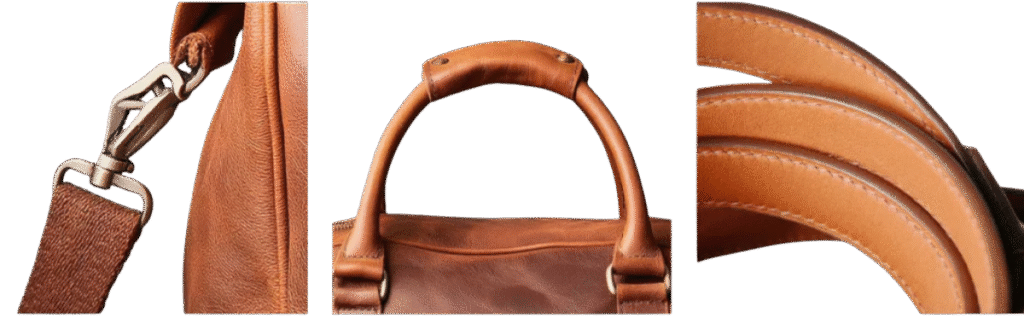
The straps and handles take the most stress, so they should be reinforced or have inner padding. Thin, single-stitched straps usually break at the joints after a short while.

These small details don’t just show style, they reflect the maker’s respect for their work. A trusted brand always checks every stitch and zipper.

Conclusion

If you decide to get one, choose a case made with real materials and solid craftsmanship. Treat it well, and it will follow you for years, just like a trusted cue that never lets you down

Key Takeaways

  • A good leather case isn’t a short-term buy
  • Real leather, especially full-grain and top-grain, ages beautifully and lasts for years.
  • The inside matters as much as the outside.
  • Always check the bottom, zippers, and stitching.
  • A solid metal zipper, thick straps, and clean edges are signs of a well-made case..

Learn more about leather here:

What’s the difference between real leather and fake leather?

What do full-grain, top-grain, and genuine leather mean?

What is vegetable-tanned leather?

What does real leather smell like?

How can I know what type of leather a product uses?

How to Choose the Right Pool Cue Case Size

Cue Case Maintenance 101: How to Keep Your Case Looking New for Years

Many players take great care of their cues but overlook something just as important. The cue case. It protects your cue every time you travel, keeps it safe from bumps and scratches, and helps your equipment last longer.

A good case can serve you for years, but only if you treat it right. Regular maintenance is simple, but it makes a big difference. Here is how to keep your cue case looking clean, strong, and ready for action.

Know What Your Case Is Made Of

The first step to caring for your cue case is understanding its material. Not all cases are the same. Each material reacts differently to moisture, sunlight, and cleaning products.

Leather cue cases have a premium look and feel, but they require a little extra attention. Real leather can dry out or crack if it is not cleaned and conditioned properly. Synthetic leather is easier to manage but can lose its shine if you use harsh cleaners.

Nylon and canvas cue cases are light and durable. They handle everyday wear well, but dirt can build up in the fabric if you do not clean them occasionally. These materials are best cleaned with gentle soap and a damp cloth.

Taking a minute to identify your material helps you choose the right care routine. It is the foundation for keeping your case in top shape.

Clean It the Right Way

Dust and grime are the silent enemies of every cue case. They may not look serious at first, but over time, they dull the surface and wear down seams and zippers.

Start simple. Use a soft, dry cloth to wipe your case after each use. If you notice stains or sticky spots, use a slightly damp cloth with mild soap. Avoid soaking the surface. Too much water can weaken the material and damage the lining.

For leather, use a special cleaner designed for leather goods. Apply it gently with a soft sponge, then wipe it off with a dry towel. Once clean, use a conditioner to keep the leather soft and prevent cracks.

For nylon or canvas, use warm water and a drop of gentle detergent. Wipe in small circles and let the case air dry naturally. Never use a hair dryer or direct sunlight to speed up the process. Heat can warp the shape and fade the color.

If your case has metal parts like zippers or buckles, wipe them dry to prevent rust. A little bit of attention goes a long way toward keeping them smooth and shiny.

Protect It from the Elements

Even the best cue case cannot survive harsh conditions forever. Sun, moisture, and extreme temperatures slowly wear it down.

Never leave your case inside a car on a hot day. The heat can soften glue, warp the structure, and damage the cues inside. Likewise, avoid storing your case in damp basements or near heaters.

Keep your case in a cool, dry place with steady air circulation. A closet or storage rack works well. If your case gets wet, let it dry at room temperature. Wipe off any visible moisture and leave it open until completely dry.

Sunlight can also fade colors and weaken materials. If you carry your case outdoors often, consider using a light protective cover or storing it in the shade when possible.

These small precautions make a big difference in how long your case stays new.

Keep Its Shape Intact

Overstuffing a cue case is one of the fastest ways to ruin its shape. Many players try to fit too many accessories inside. The seams stretch, the zippers strain, and the body starts to deform.

Your case is designed to hold a certain amount. Respect that limit. Keep only the cues, shafts, and small essentials you actually need. Heavy items like chalk boxes, joint protectors, or wrenches should go in the pockets made for them.

When you are done playing, close your case properly. Fasten every latch and zip it fully. This helps it keep its form even when stored for a long time.

A case that keeps its shape not only looks better but also protects your cues more effectively. Once it bends or warps, it can no longer hold the cues securely in place.

Routine Checks and Care

You do not have to deep clean your case every week. A light wipe down after each use is usually enough. Every month or two, give it a more careful inspection. Check for loose stitching, jammed zippers, or small cracks.

For leather cases, apply a conditioner every few months to keep the surface flexible and rich in color. Use a small amount and rub it in gently. Over-conditioning can make leather sticky.

For fabric cases, pay attention to the corners and seams. They often collect dust or chalk residue. A soft brush or cloth can easily remove that buildup.

Once or twice a year, take the time for a thorough clean. Empty every pocket, remove all cues and accessories, and clean both the inside and outside. Let everything dry completely before putting your gear back.

This simple schedule prevents small issues from becoming big problems. It keeps your case in working order and your cues safe.

Avoid Harsh Products and Shortcuts

Cleaning is about care, not speed. Many players make the mistake of using strong cleaners or rough cloths to get rid of stains quickly. That only damages the surface.

Avoid alcohol, bleach, or chemical solvents. These can strip the finish, fade colors, or weaken stitching. Stick to mild soap and clean water. If a stain is stubborn, be patient. Wipe it a few times and let it dry naturally.

Do not use abrasive brushes or scouring pads. They can scratch the surface permanently. A soft sponge or microfiber towel is all you need.

If your case smells musty, place a small pouch of baking soda or silica gel inside for a few days. It will absorb moisture and odors without harming the material.

Shortcuts often cause long-term harm. Treat your case like part of your gear, not just a bag.

Store It the Smart Way

Storage is an underrated part of cue case care. A clean and dry case still needs the right place to rest.

When not in use, store your case upright if possible. This keeps the weight evenly distributed and helps maintain shape. Avoid laying it flat under heavy objects.

If you plan to leave it unused for a long time, empty it completely. Leaving cues or accessories inside for months can trap moisture and cause marks on the lining.

Keep your case away from direct sunlight, radiators, or humid corners. Moderate, stable environments are best. A room with steady air flow and normal temperature is ideal.

Some players use a simple dust cover or fabric bag to shield the case from dirt while it sits on a shelf. That little extra step helps it look fresh every time you take it out.

Why It Matters

Your cue case is more than a container. It is the first line of defense for the tool that defines your game. If the case is weak, worn, or dirty, your cue suffers with it.

Maintaining your case is also about pride. A clean, well-kept case says something about you as a player. It shows that you respect the game and your gear. Every professional knows this.

The truth is, good maintenance does not take much time. Five minutes after each session and an occasional deeper clean are enough to keep it in top shape. The payoff is a case that lasts for years and a cue that stays protected from day one.

The Simple Rule That Works for Everyone

If you want one rule that fits every player, it is this. Keep your case clean, dry, and in shape. No matter what it is made of or how often you play, these three habits cover everything.

Wipe it down, store it right, and never force it to carry more than it should. Those small habits will keep your case looking like new year after year.

You do not need expensive cleaners or complicated tools. Just attention and consistency.

Final Thoughts

Taking care of your cue case is taking care of your game. It is easy to forget, but once you make it part of your routine, it becomes second nature.

Understand your material, clean it gently, avoid harsh conditions, and check it from time to time. Those are the basics that every player can follow.

And if you want one decision that suits everyone, go for simplicity. Keep it clean, keep it dry, and keep it shaped. That is all it takes to have a cue case that looks sharp and serves you for years.

Your cue deserves the best protection you can give it. A well-maintained case does exactly that, every single day.

Hard vs Soft Pool Cue Cases: Which One Protects Better?

When you spend money on a pool cue, protecting it is just as important as how you play with it. A cue that bends, chips, or absorbs moisture loses its edge fast. That is why choosing the right case matters. But there is one question every player faces at some point: should you go for a hard case or a soft case?

At first glance, it seems simple. Hard cases look tougher. Soft cases look lighter. Yet the right choice is not just about which one protects better. It is also about what gives you the best value for the money and fits your daily routine.

This guide breaks down both options from a practical point of view. You will see what each type offers in terms of protection, comfort, price, and long-term value.

Understanding the Two Types

Let us start with the basics.

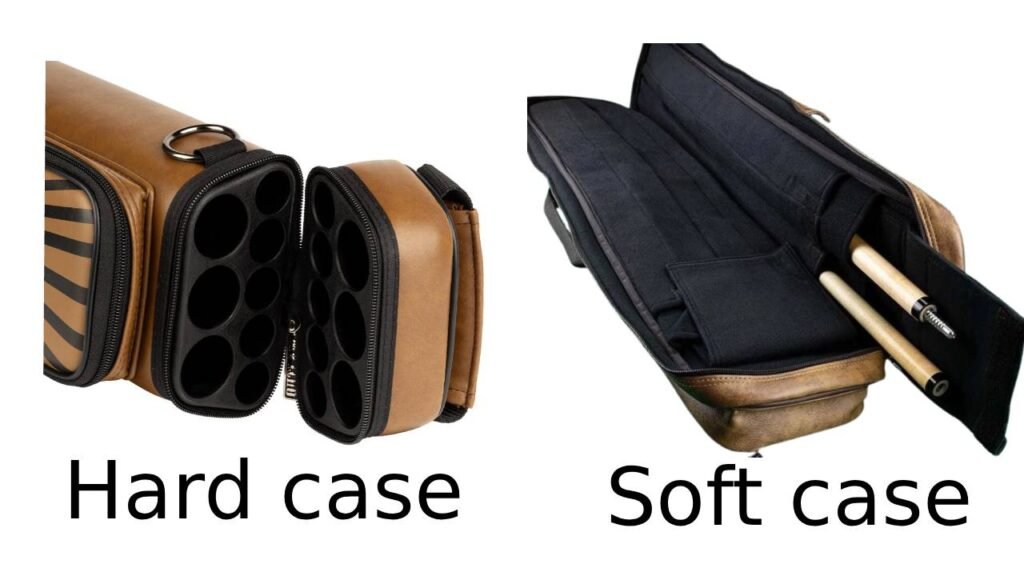
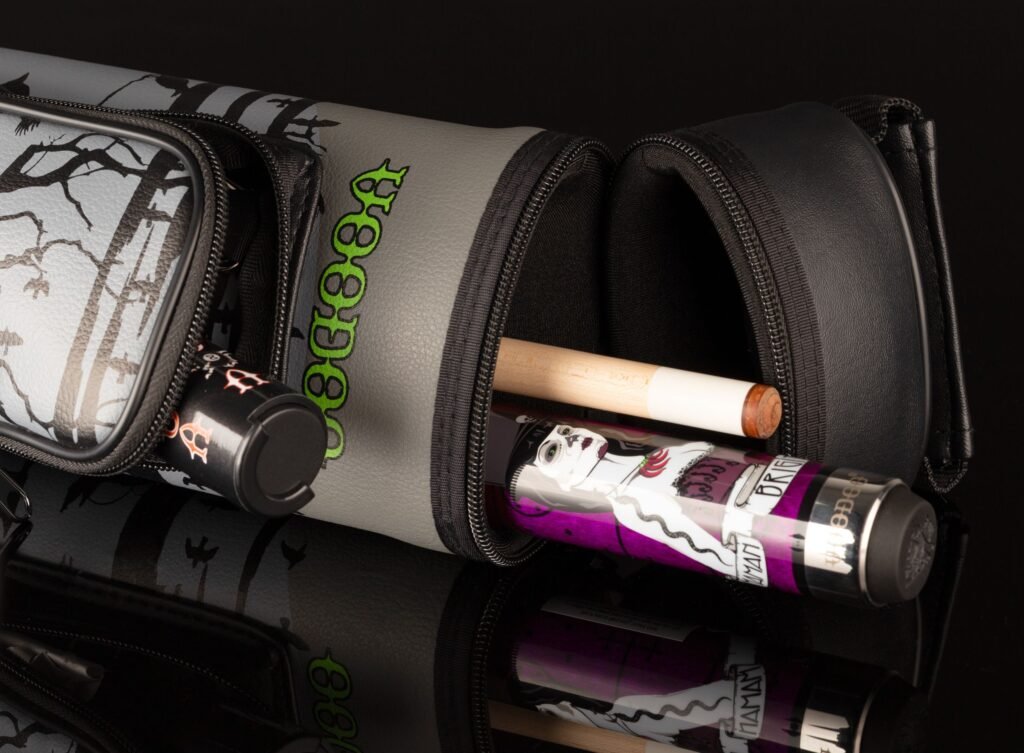
A hard cue case has a rigid outer shell, usually made from molded plastic, leather-covered wood, or high-impact composite. Inside, there are foam or felt-lined tubes that hold your cue parts in place. Everything stays separated and locked in position. The idea is to keep your cue safe even if the case gets dropped or bumped around.

A soft cue case, on the other hand, has a flexible body made from leather, canvas, or nylon. It uses padding rather than rigid tubes to keep the cue safe. Most soft cases have a zippered design and shoulder straps, making them easy to carry and convenient for short trips.

Both cases do the same basic job, but how they do it is very different.

Protection Comes First

Let us talk about what matters most: protection.

A hard case provides the best defense against impact. Its solid shell absorbs shocks before they reach the cue inside. If you travel often, play in different venues, or store your cue in a car, a hard case is the smart choice. The structure keeps the cue straight, shields it from temperature changes, and prevents warping.

With a hard case, you can drop it accidentally, bump into doors, or toss it in the trunk without much worry. The cue stays in place and comes out exactly as it went in. That level of security is what you pay for.

A soft case offers basic protection but not the same peace of mind. It works well for casual play when you handle your gear carefully. The padding prevents scratches and light bumps, but if the case takes a hard hit, the cue inside can still suffer.

If your cue is expensive or custom-made, it is worth investing in a hard case. The extra protection pays off every time you travel or store it in less-than-ideal conditions.

The Power of Convenience

Protection is important, but so is convenience.

This is where the soft case shines. It is lighter, more flexible, and easier to carry around. You can sling it over your shoulder, hop on a motorbike, or walk across town without feeling weighed down.

Soft cases also tend to have more external pockets. You can store chalk, gloves, tip tools, and even a towel without adding bulk. That makes them great for casual players who like to keep things simple and move fast.

A hard case, in contrast, is heavier. The solid shell adds weight, and its rigid shape can feel awkward when you are walking or navigating crowded places. It offers unbeatable protection but sacrifices a bit of comfort.

So when it comes to convenience, the soft case wins. The tradeoff is clear: you get more comfort but slightly less protection.

Looking at the Money

No one likes wasting money, especially on gear that should last for years. The key is to match what you pay with what you actually need.

A hard case usually costs more. The materials, construction, and design push the price higher. But you get what you pay for. It lasts longer, protects better, and keeps its shape even after years of use. Think of it as a long-term investment.

A soft case is cheaper and works well if you play only once or twice a week. It gives decent protection at a lower cost. The downside is durability. After frequent use, the straps or zippers might wear out, and the padding can lose its firmness.

When you look at it over time, a quality hard case might save money in the long run because you do not have to replace it as often. But if you are on a tight budget or play casually, a soft case delivers solid value for less cash.

The trick is to be honest about your habits. If you carry your cue every day, spend the extra money for the hard case. If your cue stays home most of the time, the soft case is more practical.

Matching Case to Playing Style

Think about how you use your cue. That alone can help you decide.

If you play tournaments, practice daily, or travel frequently, a hard case makes sense. It is built for movement and protection. You will not worry about bumps, weather, or storage.

If you play for fun at a local club or bar, a soft case makes your life easier. It is quick to pack, easy to carry, and keeps your cue safe enough for light use.

Your playing routine dictates your needs. The case should fit your lifestyle, not the other way around.

Comfort, Weight, and Feel

Beyond money and protection, there is a smaller detail that makes a big difference: how the case feels in your hand.

A hard case gives a sense of confidence. The structure feels firm and reliable. But if you walk a lot, the extra weight can become noticeable.

A soft case feels light and flexible. It molds to your body, which makes it easier to carry over long distances. The downside is that it does not stand upright on the floor as easily, and it may feel less sturdy.

The best way to know which one fits you is to try them both. Pick them up. Walk a few steps. Imagine how you would move through your usual route to the pool hall. The case that feels natural is usually the right one.

Long-Term Value

Durability matters more than most people think. A cue case is not something you replace often. It travels with you, takes hits, and faces the weather.

A good hard case can last a decade or more. The hinges, locks, and shell resist wear. Even the interior stays intact because the parts are fixed and structured. That durability gives it high long-term value, especially for serious players.

A soft case usually lasts a few years, depending on how often you use it. The materials are thinner, and the stitching can loosen with time. But for casual players, that is acceptable. It does its job while staying affordable.

If you think of your cue case as an investment, the hard case wins. If you see it as a simple accessory, the soft case does the job just fine.

The Balance Between Price and Convenience

Now let us put everything together.

If you value protection more than comfort, spend a bit extra and buy a hard case. It will protect your cue better, last longer, and save you money in repairs or replacements later.

If convenience and lightness matter more, and your cue is not overly expensive, a soft case is enough. You get freedom of movement, easier storage, and still a good level of safety for the price.

But what if you want the best of both worlds? That is where hybrid cases come in. They combine a semi-rigid shell with the light design of a soft case. You get extra protection without the full weight of a hard case. They tend to cost slightly more than soft cases, but they hit the sweet spot between value and usability.

For most players, this is the modern answer.

A Decision That Makes Sense for Everyone

In the end, choosing between a hard or soft pool cue case is not about which one looks cooler or which one the pros use. It is about how much protection you truly need and how much you are willing to pay for comfort.

If you carry your cue around often, invest in a quality hard case. It costs more, but it gives your cue a safe home no matter where you go. That peace of mind is worth every cent.

If your game is more casual and your cue stays close to home, save your money and choose a soft case. You get all the practicality you need without spending more than necessary.

For most players who want balance, a hybrid case is the smart middle ground. It protects well, feels light, and justifies the price perfectly.

Whichever you choose, make sure it matches how you actually play. That is the real measure of a good buy. A pool cue case is not only about looks or brand. It is about value, comfort, and confidence.

Protect your cue, protect your game, and let your choice make sense both on the table and in your wallet.

How to Choose the Right Pool Cue Case Size

When most players start investing in their game, they usually think about the cue first. That makes sense. The cue is what connects you to the table. But there is another piece of gear that deserves just as much attention: the cue case.

A cue case is not only about storage. It protects your cue from heat, moisture, scratches, and the accidental bumps that happen when you travel from home to the pool hall. Choosing the right size makes all the difference between playing smoothly and worrying about your gear.

This guide will help you understand how cue case sizing works, what fits different types of players, and how to make a smart choice that lasts.

Understanding Cue Case Sizes

Case SizeNumber of Butts Number of ShaftsTotal Cue Setups
1×1111 full cue
1×2121 cue with spare shaft
2×2222 full cues
2×4242 full cues with spare shafts
3×5353 cues with extras
4×8484 cues with spare shafts

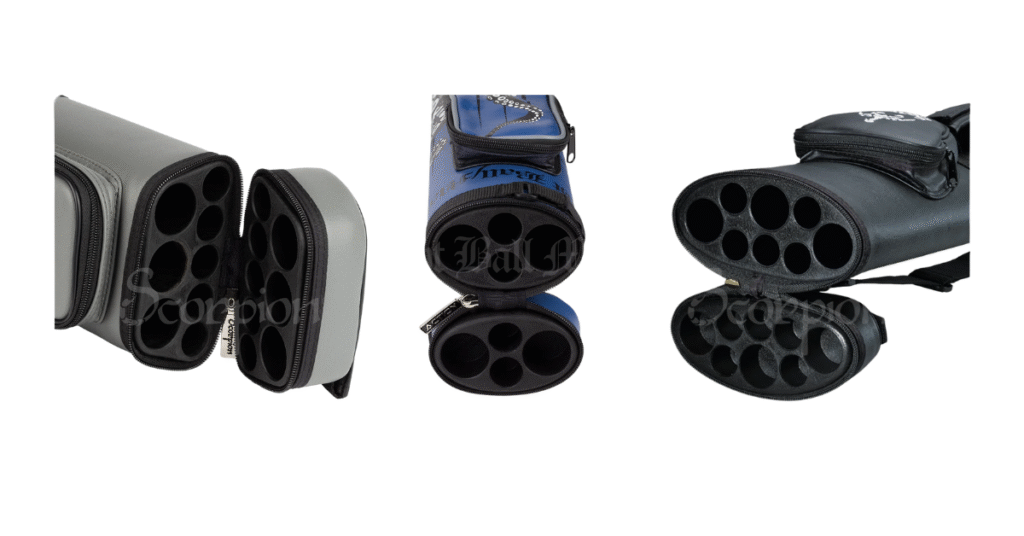
Every cue case is labeled with a set of numbers like 1×1, 2×2, or 2×4. These numbers tell you how many butts and shafts the case can hold. The first number is the number of butts, and the second is the number of shafts.

A 1×1 case holds one complete cue. A 2×2 case holds two cues. A 2×4 case can fit two butts and four shafts. Some professional cases go up to 3×5 or even 4×8, made for players who carry multiple cues for breaks, jumps, and playing.

For new or casual players, these numbers can sound like overkill. You might think that having a big case means you are better prepared. But a bigger case is not always better. It depends on how you play and how much gear you really use.

Why Does Each Cue Case Have a Set Capacity? Can I Just Fit Them All In One Slot?

At first, it might seem easier to have one large compartment and throw in all your cues together. In reality, that design would damage your cues fast.

Each cue case is divided into fixed tubes for a reason. The main goal is protection. A cue is delicate. Even a small bump can bend or chip the wood. If cues share the same space, they will hit each other whenever you move. That means scratches, dents, or warped shafts in no time.

The second reason is stability. Separate tubes keep the weight balanced and prevent pressure on the cue joints. A single open compartment would shift the weight unevenly and make the case bend or twist over time.

Finally, there is convenience. When every cue has its own slot, you can grab what you need right away. No searching, no shaking the case, no risk of pulling out the wrong part.

So the structured layout is not just about looks. It is about keeping your cues straight, safe, and ready to play for years.

Small and Compact Cases

If you usually play on weekends or drop by a bar to shoot a few racks, a compact case is all you need. A 1×1 or 1×2 case keeps things simple. It is light, easy to carry, and protects your cue just as well as any larger model.

Small cases are also ideal if you walk or ride a motorbike to your local pool room. They take up less space, fit easily in lockers, and never feel bulky.

The main downside is capacity. You will not have room for a backup shaft or a jump cue. But if you are not playing in tournaments, you probably will not need them.

The goal is to have something that feels comfortable and easy to manage. For most recreational players, a compact case checks all the boxes.

Medium Size Cases

As you get more serious about your game, you might start to see the value of having an extra shaft or a different tip for certain shots. Maybe you have a jump cue or a break cue that you like to keep handy.

This is where a medium size case, like a 2×2 or 2×4, makes sense. These cases give you more flexibility without becoming heavy or oversized. You can pack your main cue, an extra shaft, and still have space for chalk, gloves, or a small towel.

A 2×2 case is a perfect middle ground. It can grow with you as your skills improve. You do not have to buy another case soon, and you can start building your gear set gradually.

A 2×4 case gives even more breathing room. Many serious hobbyists and semi-pro players stick with this size because it balances storage, protection, and mobility. You can take it anywhere without feeling weighed down.

Large Tournament Cases

Players who compete often or travel to events tend to carry more gear. They may use different shafts for breaking, jumping, or specific table conditions. In that case, a larger case becomes necessary.

Cases like 3×5 or 4×8 are designed for heavy use. They usually include thick padding, reinforced shells, and multiple compartments for tools, accessories, and maintenance kits.

The tradeoff is weight. These cases are not meant for casual sessions or quick visits to the local pool hall. They are for players who treat pool as a sport and travel regularly.

If that sounds like your lifestyle, a bigger case is a smart investment. It keeps all your equipment together and ready for any situation.

What Really Matters Beyond Size

While capacity is important, it is not the only factor to consider. The right cue case should feel right in your hand and on your shoulder. Pay attention to how the handle sits, how the strap fits across your body, and how easy it is to open or close.

Look for solid padding that absorbs impact. Hard cases protect better when you travel by car or plane. Soft cases are lighter and easier to carry around town. Some players prefer hybrid models that blend the two.

Material also matters. Leather and high-grade vinyl are popular because they resist scratches and hold up under daily use. Nylon and canvas offer lighter options that still provide good protection for casual players.

You should also think about storage compartments. Having a few pockets for chalk, gloves, and a tip tool is convenient. But too many compartments can make a case bulky and hard to manage. Keep it simple.

Read More: Hard vs Soft Pool Cue Cases: Which One Protects Better?

Matching Your Case to Your Playing Style

If you play occasionally and just need something to protect your cue, a small case is perfect. It keeps your gear safe and easy to handle.

If you play a few times a week and like having a spare shaft or a jump cue, a medium size case like a 2×2 or 2×4 is ideal. It fits most setups and still feels light enough to carry anywhere.

If you compete or travel frequently, you will benefit from a larger case. It helps you organize all your cues, shafts, and tools so that you can focus on your game instead of your gear.

Think about your habits. How often do you play? How far do you travel? How much equipment do you actually use? The answers will guide your choice naturally.

Comfort and Practicality

Many players overlook comfort until they carry their case for an hour. A comfortable shoulder strap or balanced handle makes a big difference. You want the weight to feel even and the case to stay stable as you walk.

Also, make sure the case opens and closes smoothly. A tight or tricky latch might sound like a small issue, but it becomes annoying fast. Quality zippers or magnetic closures save you time and effort.

Another key factor is how the cues fit inside. The shafts and butts should slide in without friction but also stay secure when the case is upright or tilted. Loose fittings can cause movement that leads to damage.

If you can, test the case before buying. Feel the texture, check the stitching, and try loading your cue in and out. The best case is the one that feels natural in your hands.

Durability and Long-Term Value

A good cue case should last for years. Even if you start small, it pays to choose one that is well built. Look for thick lining, clean seams, and sturdy hardware. These details often separate budget cases from quality ones.

Spending a bit more upfront saves money later. A durable case keeps your cue safe from dents, warping, or moisture. It also holds its shape and looks good even after regular use.

For players who see pool as a long-term passion, investing in a solid case is a simple but wise move. It protects your cue, and it shows that you take your game seriously.

A Choice That Works for Everyone

If you are unsure which way to go, a 2×2 or 2×4 cue case is the safest and smartest option. It has enough space for your main cue and a backup shaft. It fits the needs of beginners, casual players, and advanced players alike.

This size offers flexibility as your game evolves. You can start with one cue and later add more without needing a new case. It is portable, protective, and practical in nearly every situation.

A 2×2 or 2×4 case gives you room to grow while keeping your setup clean and organized. It is the balanced middle ground between minimalism and full competition gear.

Final Thoughts

Choosing the right pool cue case size is not about showing off or collecting equipment. It is about matching your gear to your real habits. A case that fits your routine will make every trip to the table easier and more enjoyable.

If you are just starting out, go simple. If you play regularly, give yourself a bit more space. If you compete, choose something built to handle the road.

But if you want one clear choice that works for almost everyone, go with a 2×2 or 2×4 case. It covers all bases, keeps your cue protected, and stays by your side as your game grows.

That balance is what makes the difference between just owning gear and truly owning your game.

How to Choose Your First Pool Cue – A Beginner-Friendly Guide

Buying your first pool cue can feel exciting but also a little overwhelming. There are so many options, different prices, and lots of unfamiliar terms like tip, shaft, wrap, or balance point. If you’ve just started playing pool and want to pick a good first cue, don’t worry — this guide is written to help you understand everything step by step, in a simple way that makes sense even if you’re totally new.

Understanding the Cue: What You’re Actually Buying

A pool cue may look like a simple stick, but every part of it affects the way you play. The very top is called the tip. It’s usually made from leather and is the only part that touches the cue ball. Soft tips give you more control and make it easier to add spin, but they wear down faster. Hard tips are more durable but less forgiving for beginners.

Right below the tip is the shaft. This is the long, slim section of the cue and plays a big role in how the cue feels in your hand. Most shafts are made from maple wood — light, smooth, and classic. Newer shafts are made from carbon fiber, which doesn’t warp over time, stays consistent, and gives you a clean, solid hit.

The bottom part, where your back hand rests, is called the butt. Some butts have a textured grip called a wrap, which can be made of leather, rubber, or linen. Others have no wrap at all, giving a smooth, natural wood feel. Which one is best depends entirely on your personal comfort.

Length and Weight: Why Comfort Matters More Than You Think

Most cues are about 58 inches long — that’s the standard size and works well for most people. If you’re very tall or very short, you can choose a slightly longer or shorter cue, but for beginners, standard length is almost always fine.

Weight, on the other hand, can make a big difference. Cues usually weigh between 18 and 21 ounces. A lighter cue (around 18–19 oz) gives you more control and a smoother stroke, while a heavier one (20–21 oz) can make your shot feel more powerful but might tire your arm faster. Most beginners feel more comfortable starting with something in the middle, not too heavy, not too light.

Tip Size and Why It Affects Your Shots

The tip of your cue usually comes in sizes between 12 mm and 13 mm. A smaller tip lets you control spin more easily, while a larger tip gives you a more stable, straightforward shot. For a beginner, something around 12.75 mm or 13 mm is ideal — it’s forgiving but still lets you grow your skills over time.

If the word “spin” is new to you, here’s what it means: when you hit the cue ball slightly off-center, you can make it curve or change direction after hitting another ball. Smaller tips help with that, but they also require a bit more accuracy.

Choosing Between Wood and Carbon Fiber

This is one of the most common decisions when buying a cue today. Wood (especially maple) has been used for decades. It gives a warm, classic feel and is usually more affordable. The downside is that wood can warp if you don’t store it properly.

Carbon fiber shafts are more modern. They’re stronger, more stable, and resist warping even with temperature or humidity changes. They feel a bit stiffer, and their hits are very consistent — that’s why many serious players like them. But they are more expensive.

If this is your very first cue and you’re not ready to spend a lot, a good quality wood cue is perfect. If you’re planning to stick with the game long-term, carbon fiber is a smart investment.

The Feel in Your Hands: Finding the Right Grip

The way your hand connects with the cue is something you can’t judge by looking at specs online. A smooth, wrap-free cue feels elegant and direct, but it can get a bit slippery if your hands sweat. Leather wraps feel premium and give a nice, secure grip. Linen wraps are soft and breathable, and rubber wraps offer a firm hold and are easy to clean.

The right choice is the one that feels comfortable to you. If possible, try holding different cues and pay attention to what your hand naturally prefers.

Budget: What to Expect at Different Price Points

A common mistake for beginners is thinking they need an expensive cue to play well. The truth is, a well-balanced, comfortable cue matters much more than the price tag. A budget under 100 USD can already get you a solid, basic cue that’s great for learning. In the 100–300 USD range, you’ll find better craftsmanship, more stable shafts, and cues that will last you for years. Beyond 300 USD, you start getting into high-performance carbon shafts and pro-level cues.

For your first cue, choose one that feels right, not one that just looks expensive.

The Real Test: How It Feels When You Play

No matter what the numbers say — length, weight, tip size, or material — the most important thing is how the cue feels when you actually hit the ball. If it feels too heavy, too long, or awkward in your hand, it’s not the right cue for you. The perfect first cue should feel like a natural extension of your arm.

Think of it like buying shoes. Even the best brand won’t feel right if the fit is wrong.

Final Advice for New Players

As a beginner, don’t overcomplicate your first purchase. Choose a cue with a standard length, a medium weight, and a medium tip. Make sure it’s straight (you can check this by rolling it on a flat table). If your budget allows, invest in a decent shaft because it makes the biggest difference in your shots.

And most importantly, get a proper cue case. Protecting your cue from moisture, warping, and scratches will keep it in good shape for a long time.

Conclusion

Your first pool cue isn’t just a tool — it’s the start of your personal journey with the game. The right cue will make learning easier, give you confidence, and help you enjoy every shot. Don’t worry too much about finding “the best cue out there.” Focus on finding the best cue for you — something that fits your hand, your budget, and your style.

Later, as your skills grow, you can always upgrade. But your first cue, if chosen wisely, will be the one that teaches you how to truly love the game.

Would you like me to adjust this guide to a specific budget range (for example: under $100, under $300, etc.) and give real cue model recommendations too?

Learn more

Action Pool Cues Series Overview