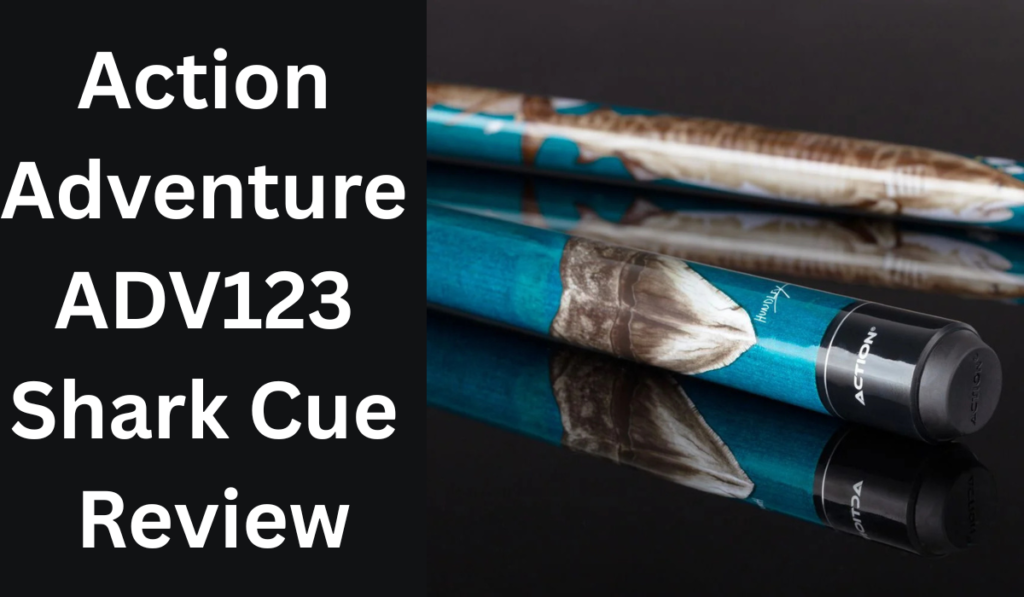
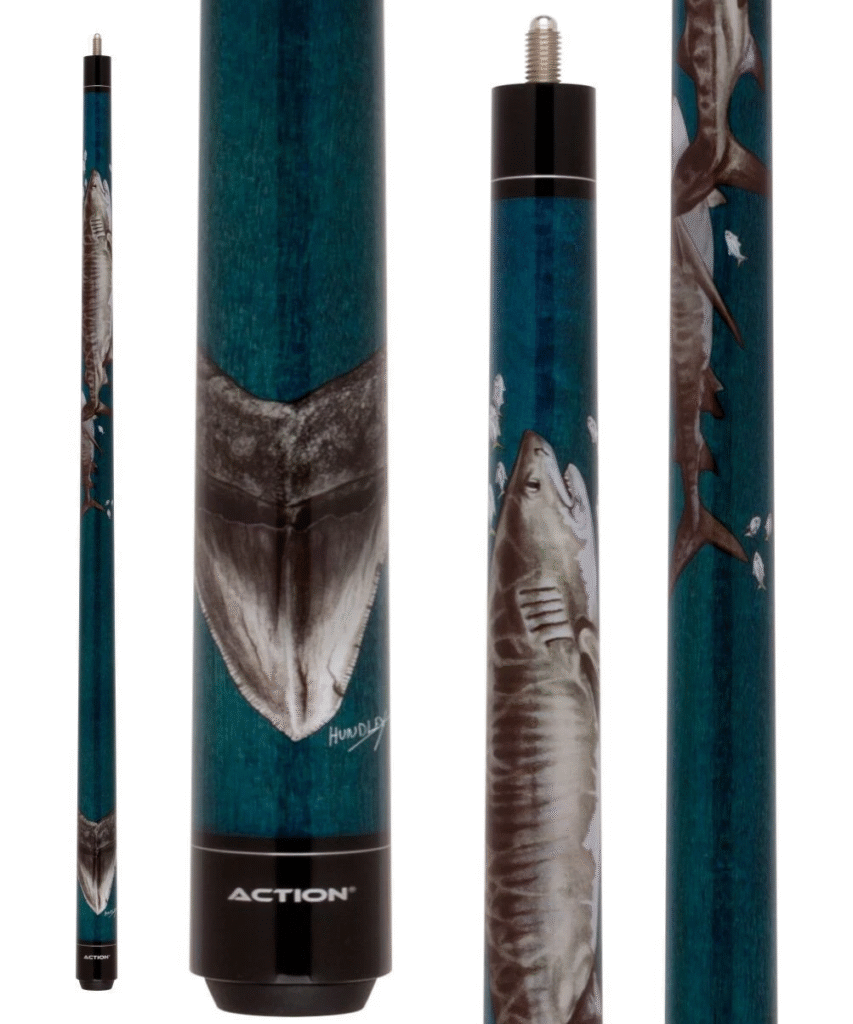
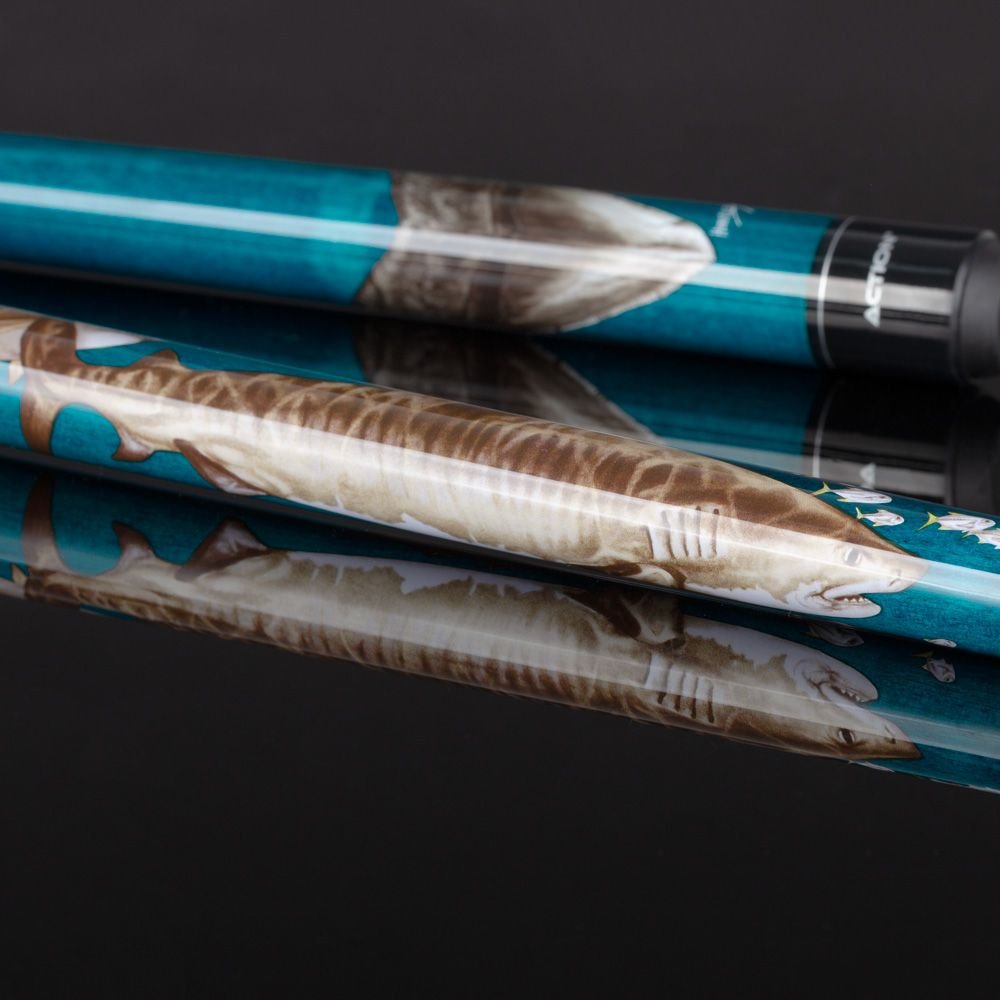
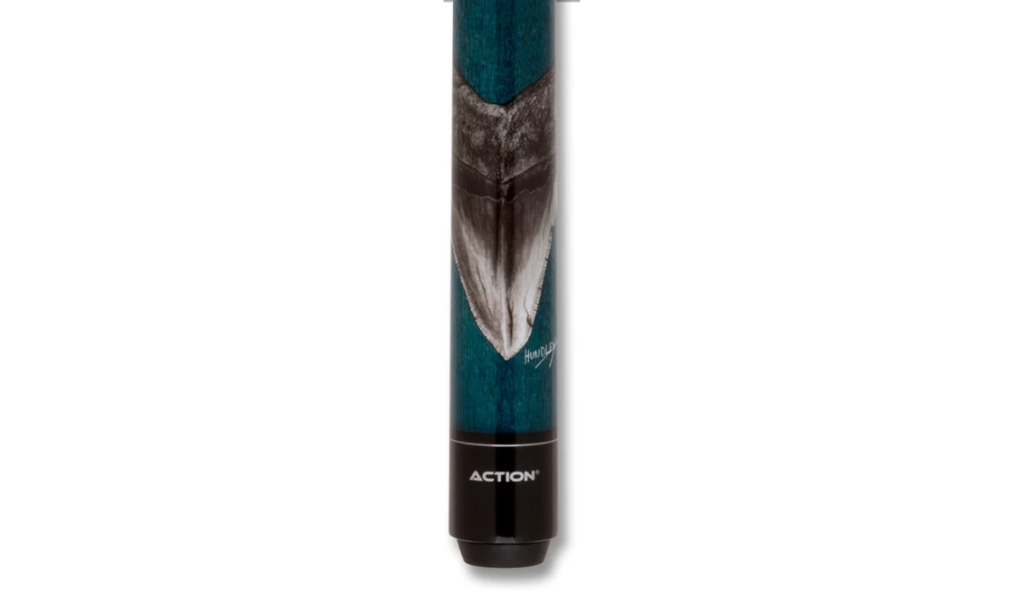
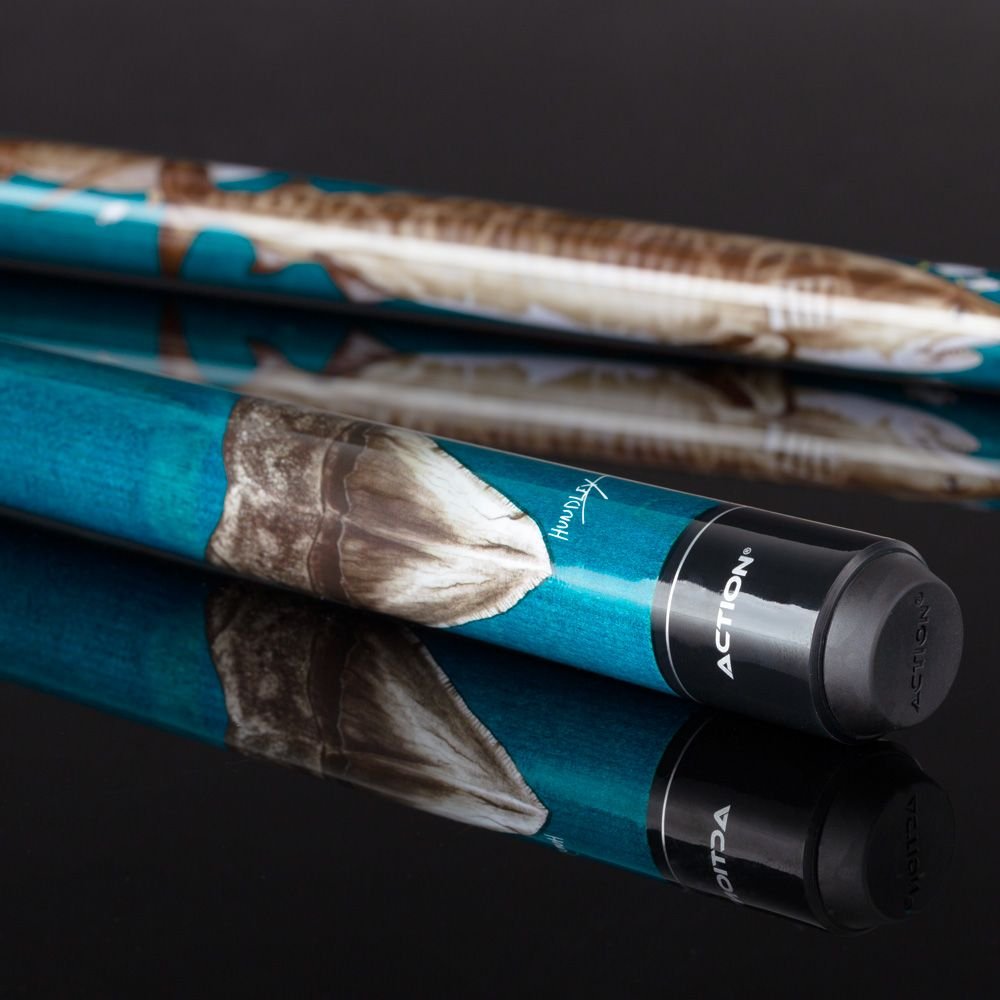
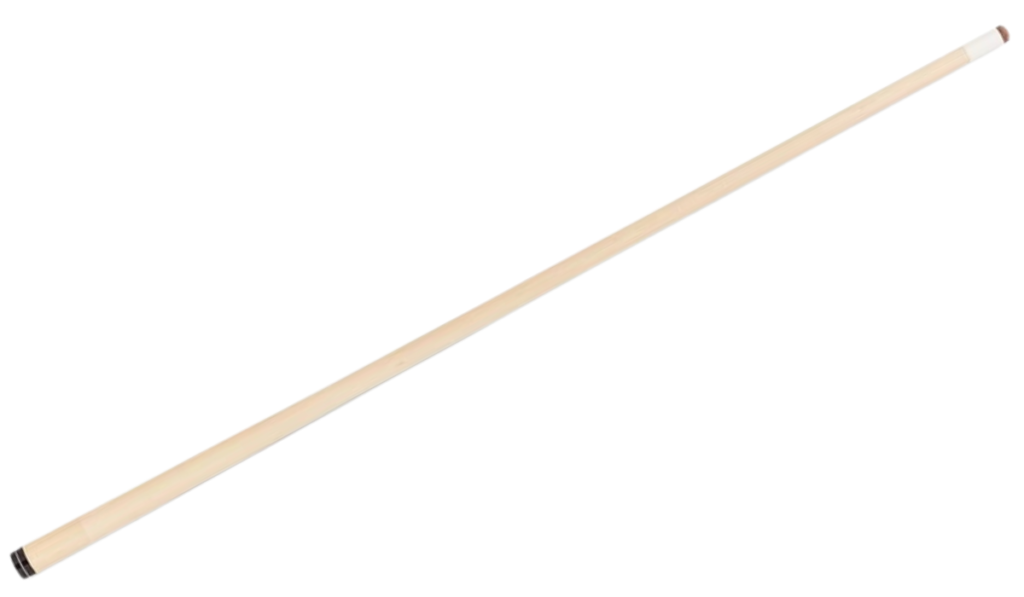
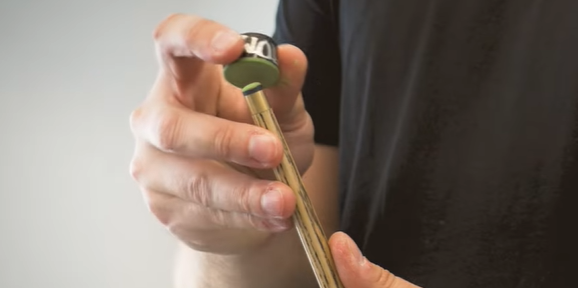
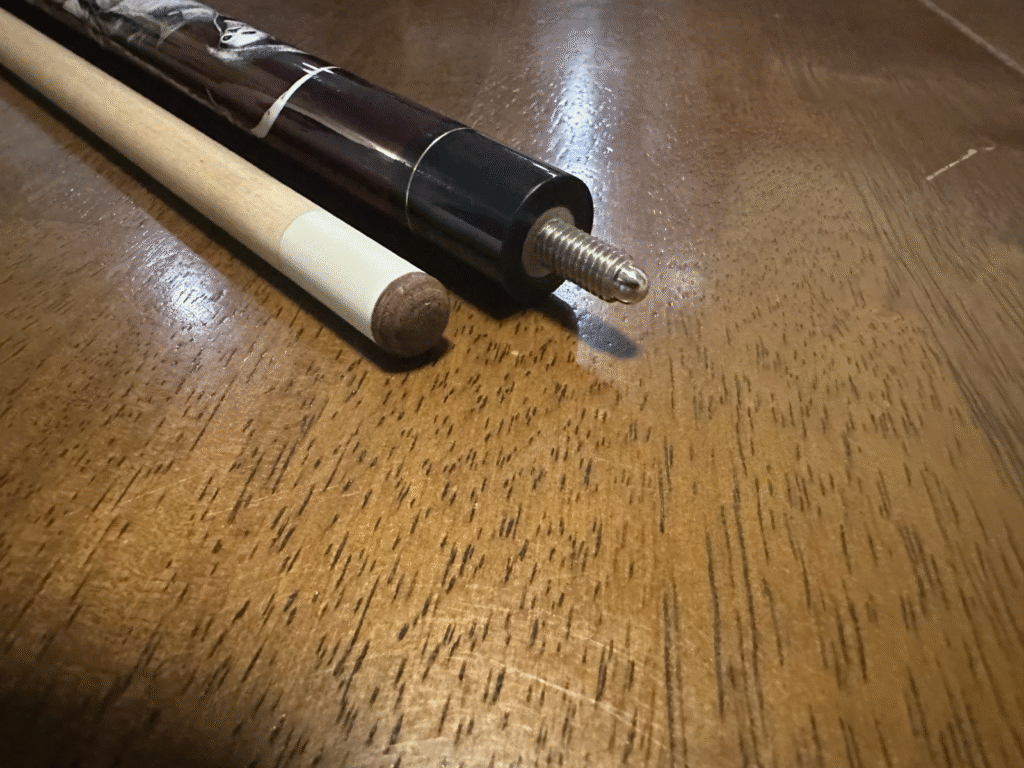
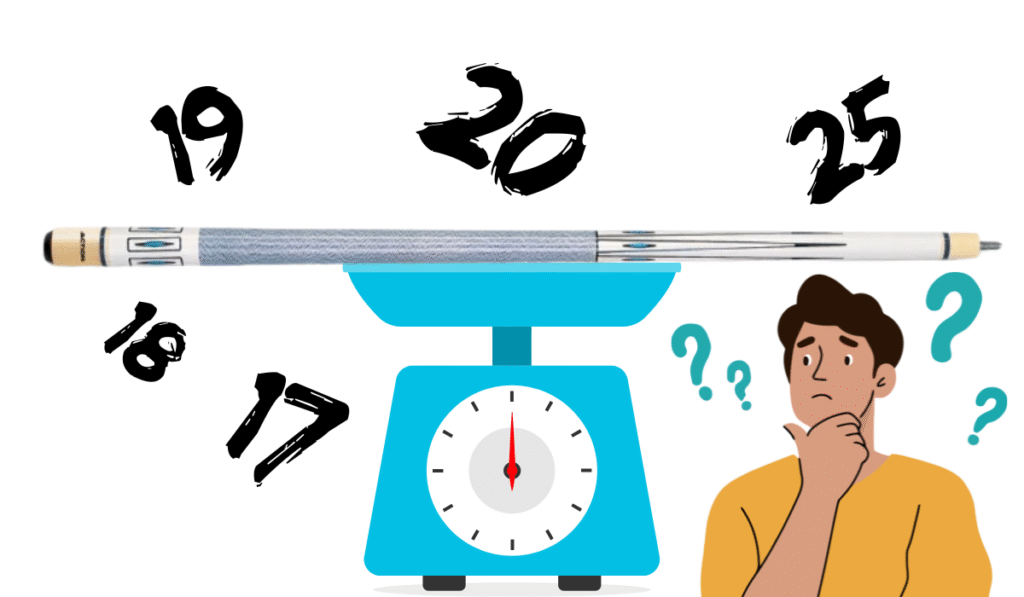
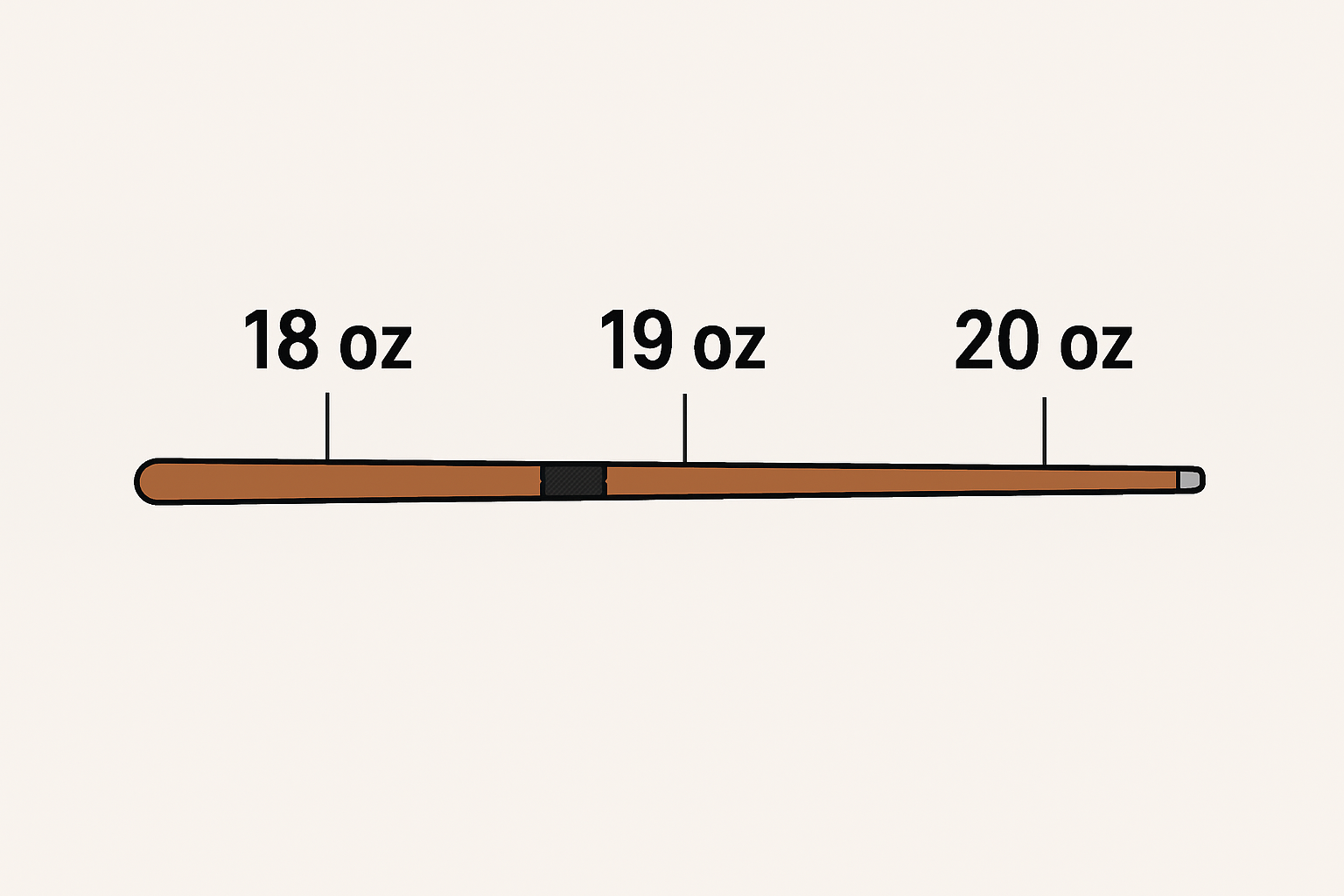
The Action Adventure ADV123 Shark Cue is a standard two-piece pool cue designed for casual play and regular practice. It features a teal finish with shark-themed artwork and a maple wood construction. This model belongs to the Action Adventure Series and is positioned in the entry to mid-level price range. It focuses on basic performance, durability, and visual appeal.
The ADV123 is built as a two-piece cue for easy transport and storage. It is designed for players who want a reliable cue for everyday use, including beginners and intermediate players. The cue does not focus on advanced technology but instead provides consistent play and stable construction.
The cue is available in multiple weight options, typically ranging from 18 oz to 21 oz, allowing players to select a weight that matches their preference and playing style.
Overall Design
Color and Artwork
The cue features a teal-colored forearm and butt sleeve. The color is bright and stands out compared to traditional wood finishes. A shark graphic runs along the forearm, showing a shark in motion. On the butt sleeve, a shark tail graphic continues the theme and visually balances the design.
The cue does not include a wrap. The grip area is natural maple, which gives the cue a clean and seamless appearance. This design choice keeps the cue visually simple, but the grip may feel smoother than wrapped cues, especially if hands are moist.
Materials and Finish
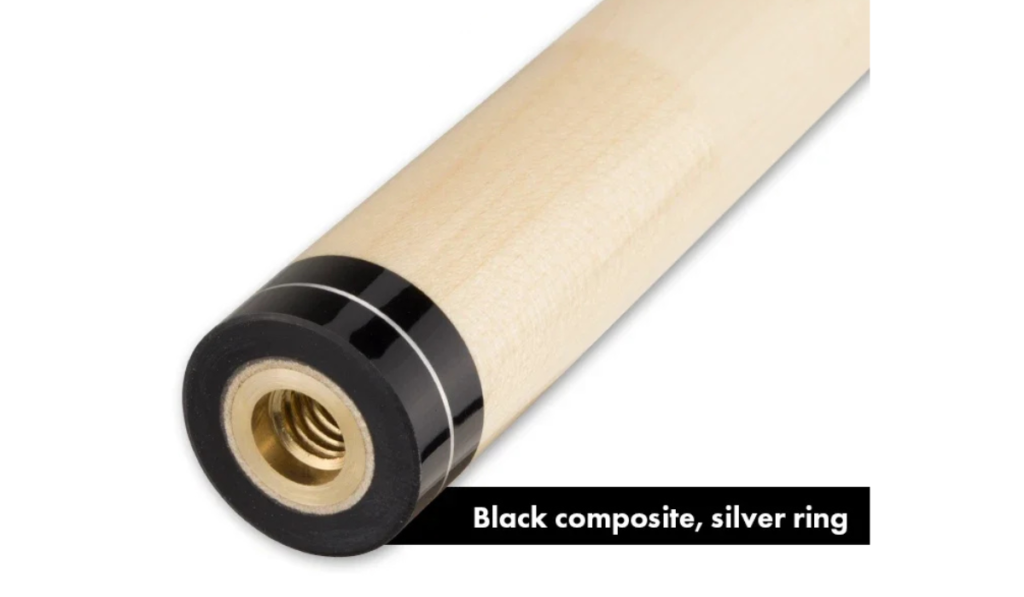
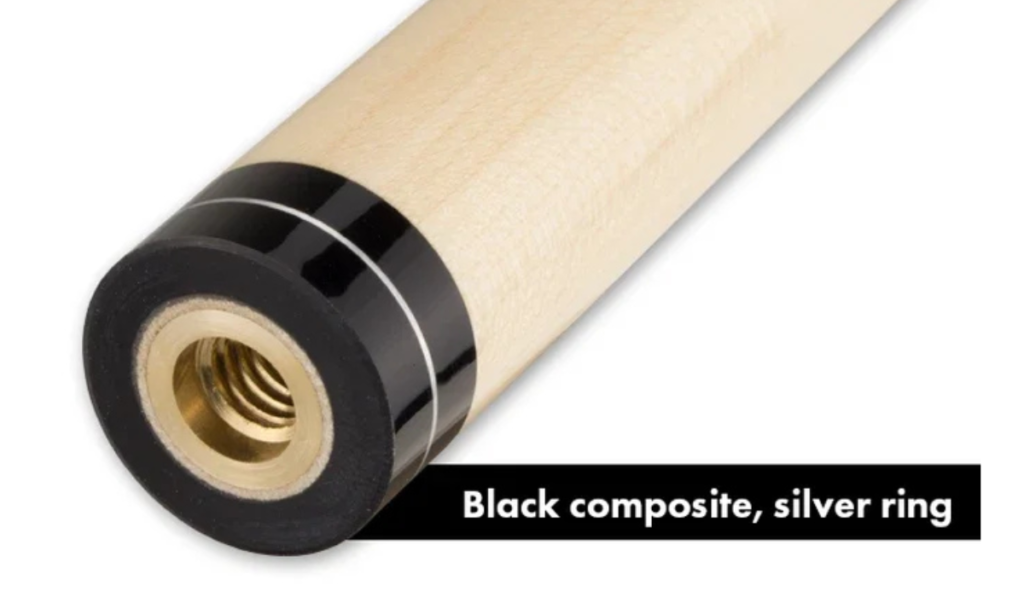
The ADV123 is constructed from hard rock maple for both the shaft and the butt. Maple is widely used in pool cues due to its strength and consistency. The collar and butt plate are made from black composite materials with simple silver ring accents.
The finish is smooth and even across the cue. While not high-gloss or premium, it provides enough protection for regular use and light wear.
Tip
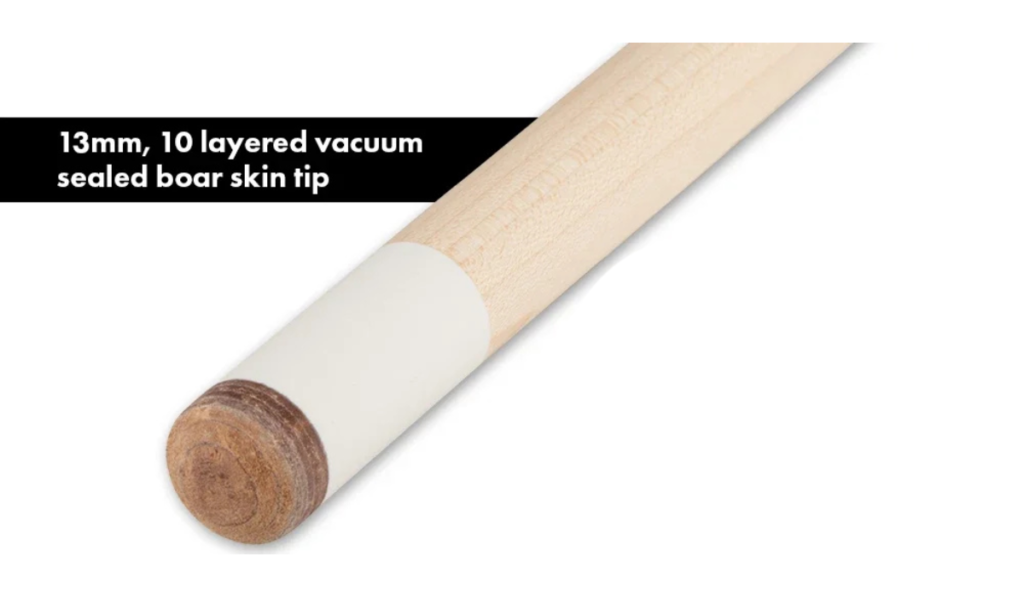
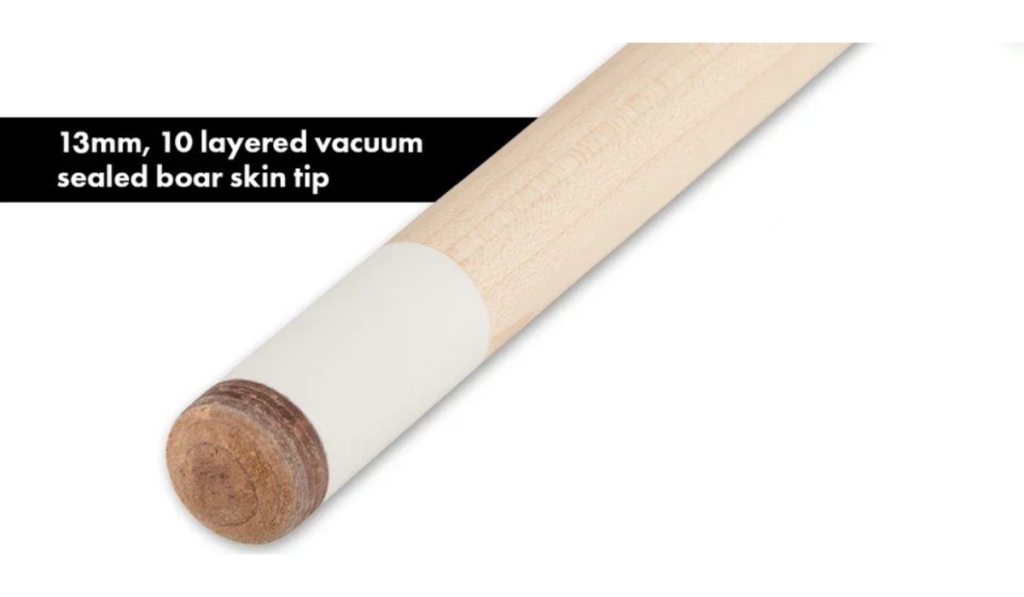
The cue is equipped with a 13mm tip made from 7-layer vacuum-sealed boar skin. This type of tip helps maintain shape over time and provides a firm and consistent hit. It offers reasonable control for basic spin and cue ball placement.
Players who prefer a different feel or higher spin control may choose to replace the tip later, but the stock tip performs adequately for general play.
Ferrule
The ferrule is made from fiber linen and measures approximately 1 inch. It connects the tip to the shaft and helps absorb impact. This material is commonly used in entry-level and mid-range cues and provides stable performance.
Shaft
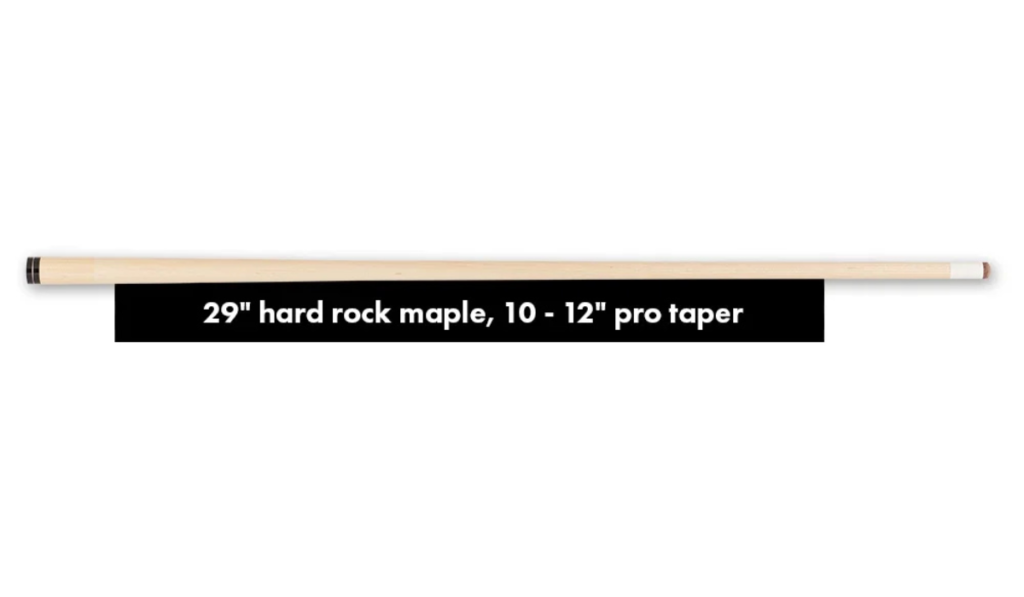
The shaft is 29 inches long and features a pro taper of about 10 to 12 inches. This taper provides a balanced feel and smooth stroke motion. The maple shaft remains straight under regular use and supports consistent ball contact.
The joint uses a standard 5/16×18 pin, which is common in many pool cues. This makes the cue easy to assemble and compatible with replacement parts.
Collar and Forearm
The collar is black composite with a single silver ring, adding a simple visual break between the shaft and butt. The forearm continues in teal maple and displays the shark artwork clearly.
The absence of a wrap gives the forearm a uniform look and keeps the grip area firm and direct.
Butt Sleeve and Butt Plate
The butt sleeve matches the forearm with teal maple and includes the shark tail graphic. The butt plate is black composite and features the Action logo in silver. These elements complete the visual design and maintain consistency across the cue.
Bumper
The cue ends with a black rubber bumper. This protects the butt from damage when resting on the floor or leaning against surfaces. The bumper is firm and securely fitted.
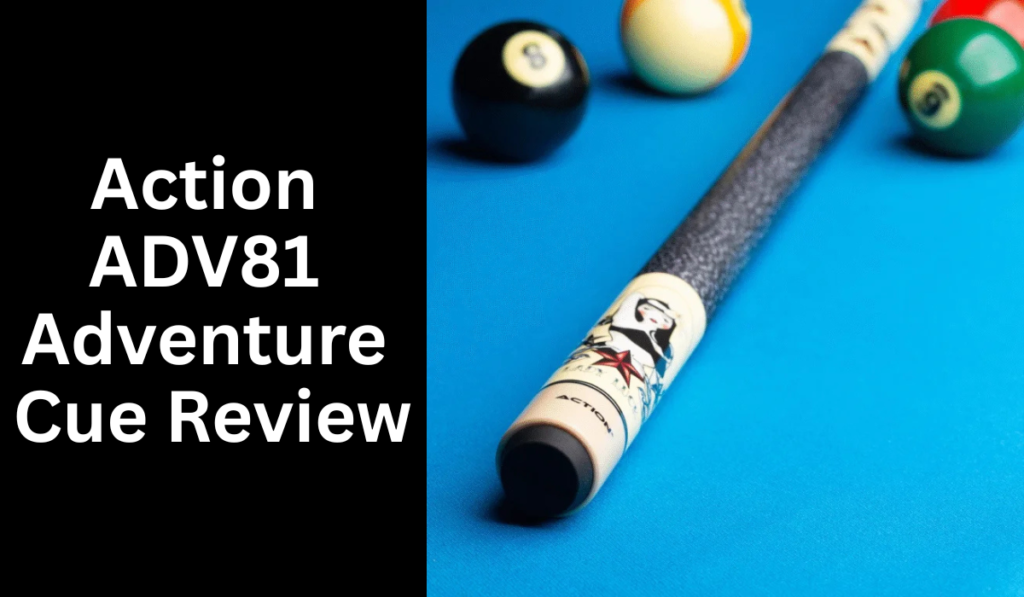
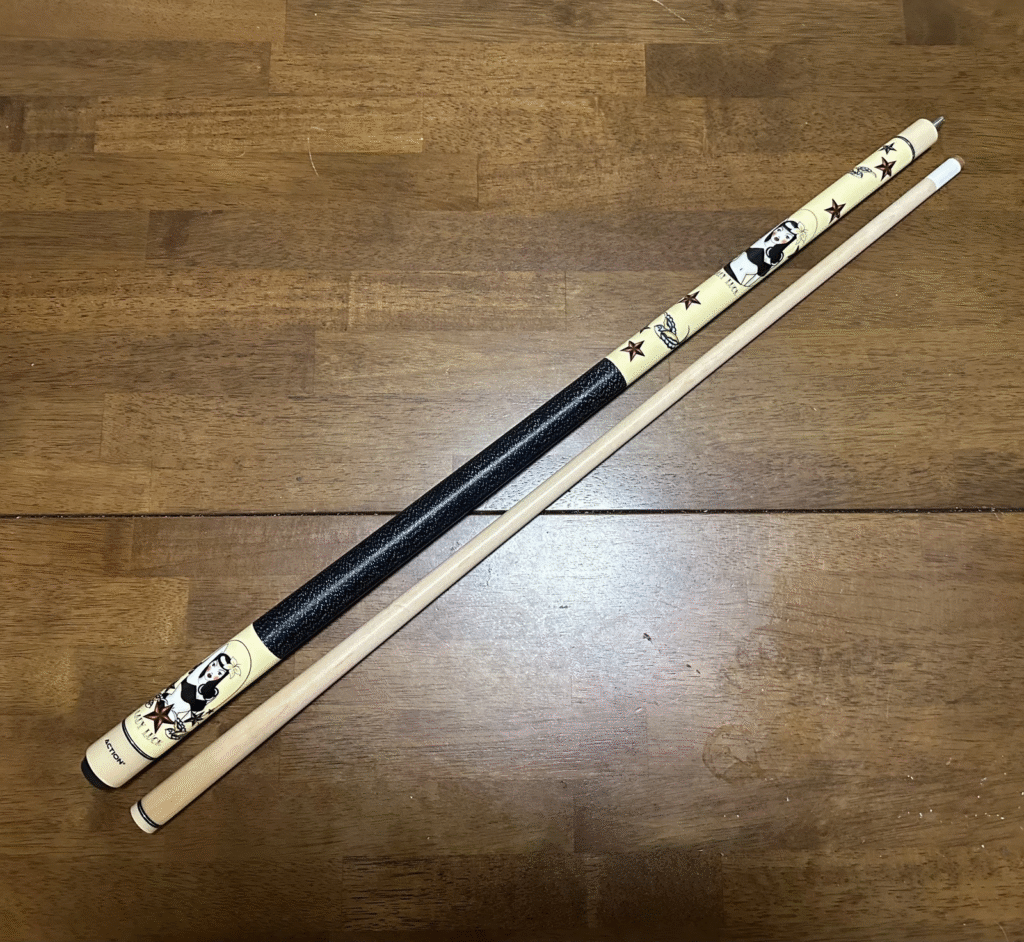
The Action ADV81 Adventure Cue is a traditional maple pool cue designed for everyday play. It features standard components, adjustable weight, and a themed visual design. This cue is suitable for recreational and intermediate players looking for a reliable and visually distinctive option.
The tip is 13mm and made from multi-layer vacuum-sealed boar skin leather. This type of tip offers consistent compression and moderate grip on the cue ball.
The size is standard for pool cues and is suitable for most playing styles. It provides a balance between control and durability without being overly soft or overly hard.
Ferrule
The ferrule is a 1-inch fiber linen ferrule. This material is durable and resistant to cracking under repeated impact.
The ferrule connects the tip to the shaft and helps transmit energy efficiently. Its design is simple and functional, without additional performance features.
Shaft
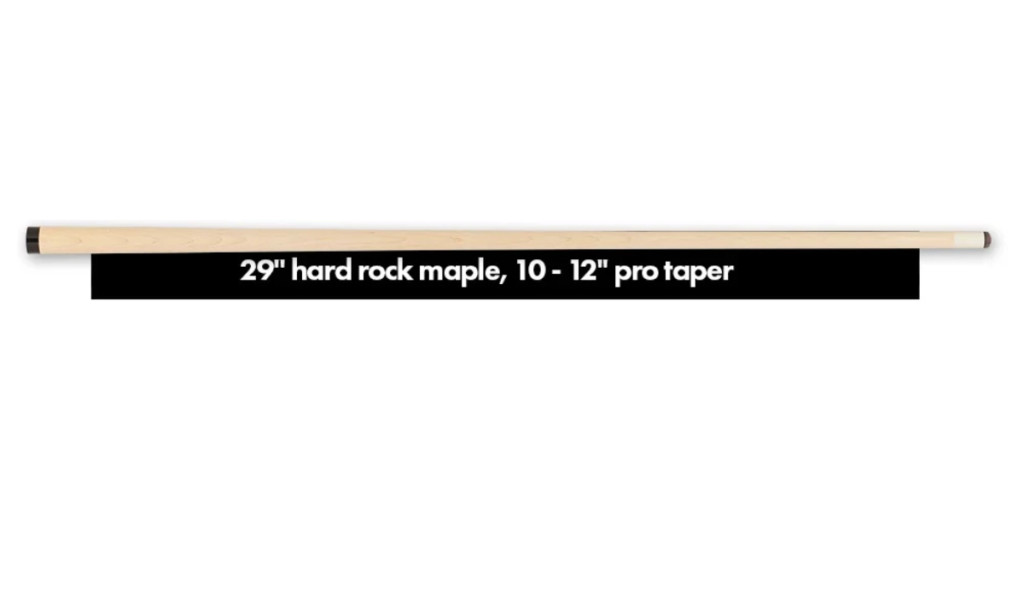
The shaft is 29 inches long and made from hard rock maple. This wood is commonly used in cue construction due to its strength, straight grain, and resistance to warping.
The shaft features a pro taper from approximately 10 to 12 inches. This taper provides a gradual reduction in diameter toward the tip, allowing for smooth stroke motion and consistent feel.
The shaft is uncoated and does not include low-deflection technology. It is designed for traditional play and familiar feedback.
Joint
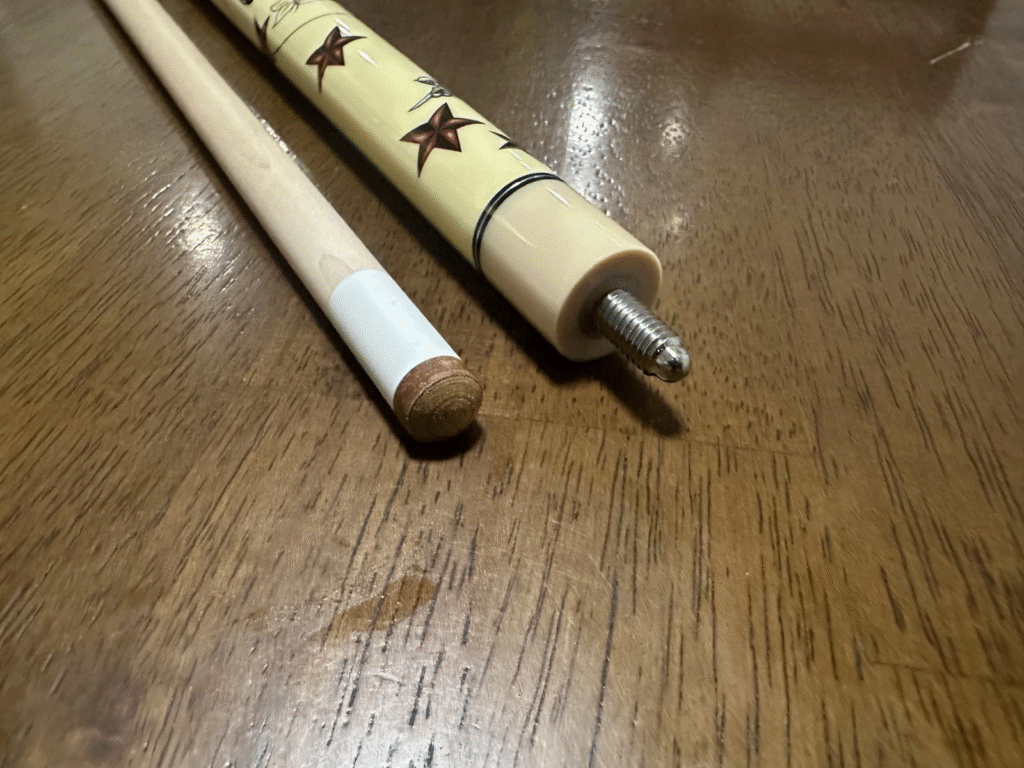
The cue uses a 5/16 × 18 joint, one of the most common joint types in pool cues. This joint allows for easy assembly and disassembly.
The joint provides a secure connection between the shaft and butt, maintaining alignment and stability during play. It is compatible with many standard replacement shafts.
Collar and Forearm
The collar is made from cream-colored composite material with black trim and a single silver ring. The design is simple and traditional.
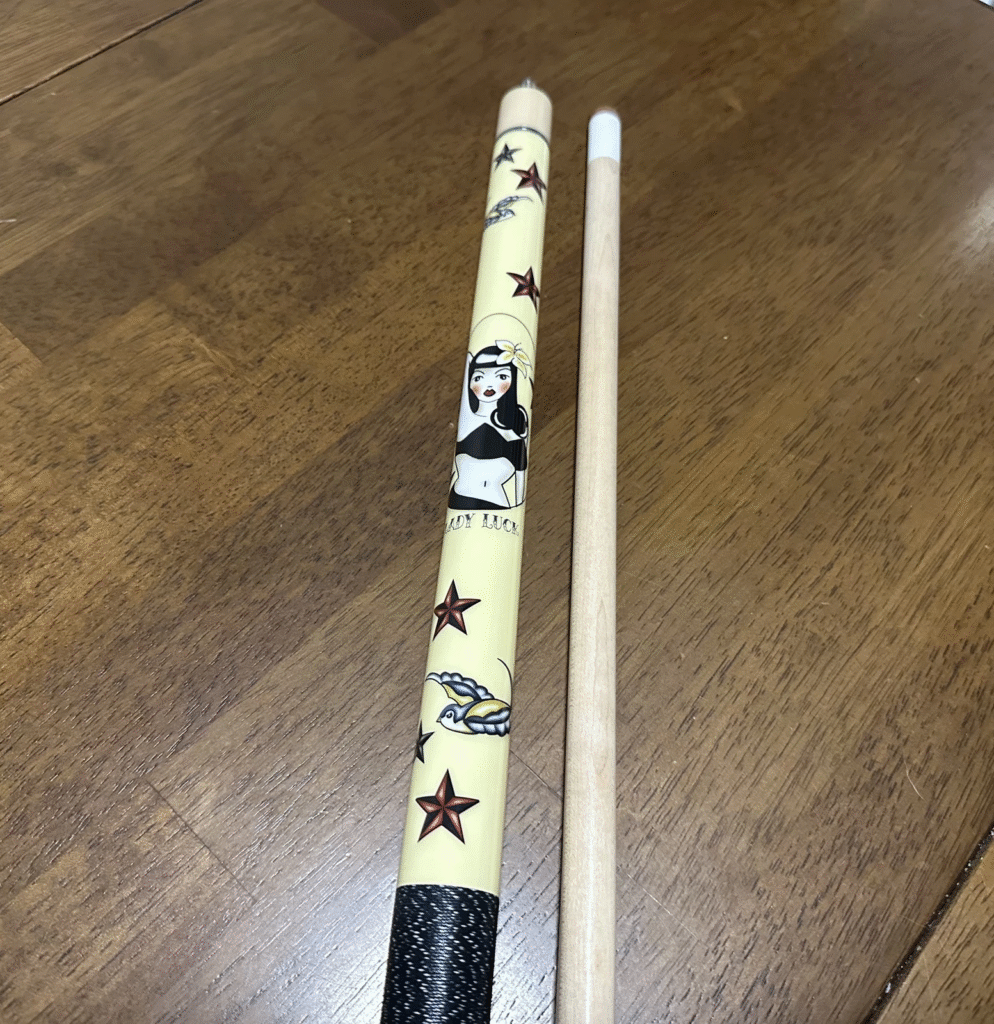
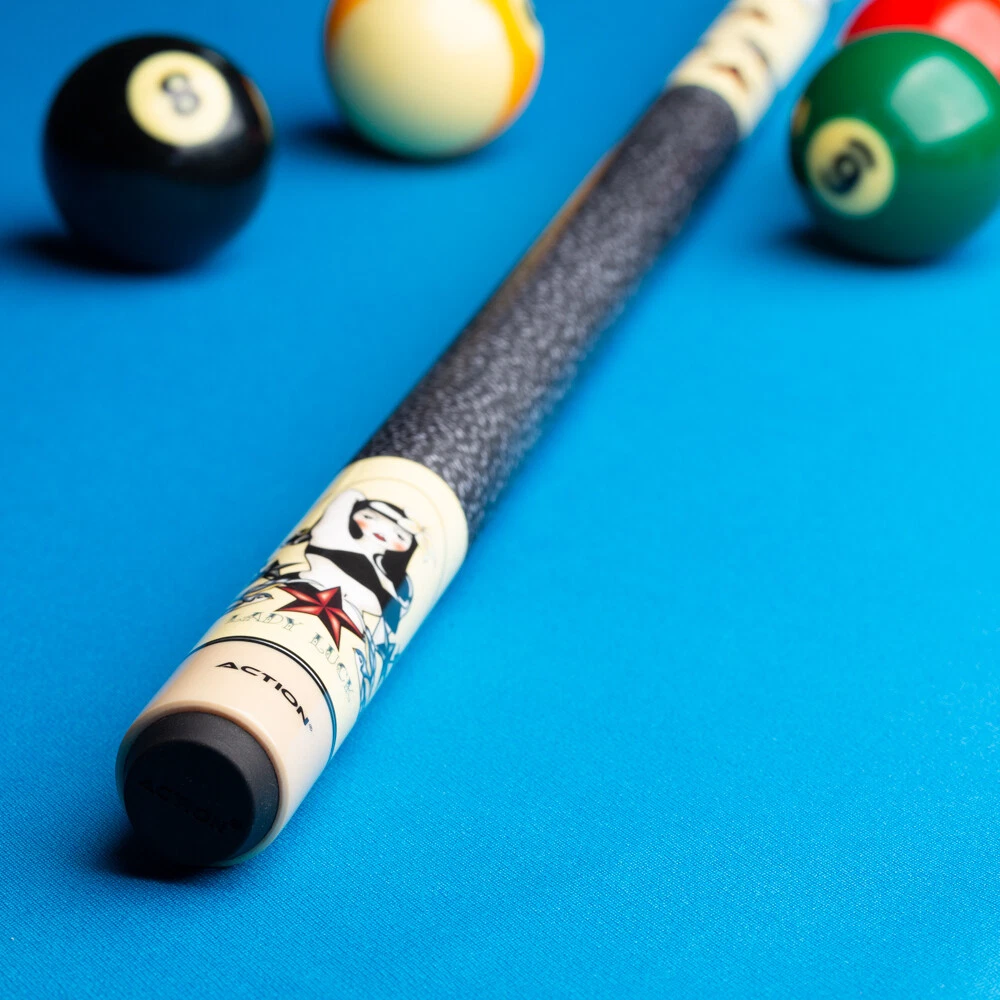
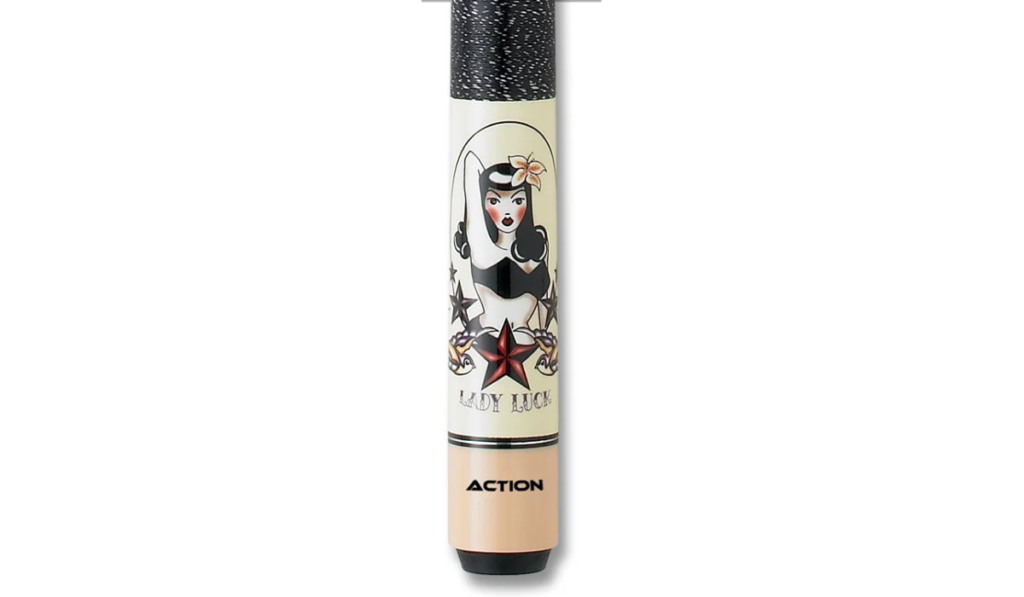
The forearm is constructed from Birdseye maple and features a Lady Luck graphic overlay. The artwork is integrated into the wood surface and serves as the primary visual element of the cue.
The forearm design reflects the Adventure series theme and adds a decorative focal point without affecting performance.
Wrap and Grip
The cue is equipped with a black and white Irish linen wrap. This material provides a breathable and textured grip surface.
Irish linen is commonly used for players who prefer a dry, non-tacky feel. It allows for smooth hand movement during the stroke and reduces moisture buildup.
The wrap area is well-finished and blends cleanly with the forearm and butt sleeve.
Butt Sleeve
The butt sleeve continues the Birdseye maple design and includes an eagle graphic overlay along with a single silver ring.
This section provides visual balance with the forearm while maintaining consistency in materials and finish. The butt sleeve does not include functional components beyond housing the weight bolt system.
Butt Plate and Bumper
The butt plate is made from cream-colored composite material and features the Action logo in black.
The bumper is black rubber and protects the end of the cue from impact when placed on the floor or leaned against surfaces. It also provides access to the internal weight bolt.
Buy This Cue
You can buy the Action ADV81 Adventure Cue directly on our website at sportlava.com. We offer the best price along with free shipping
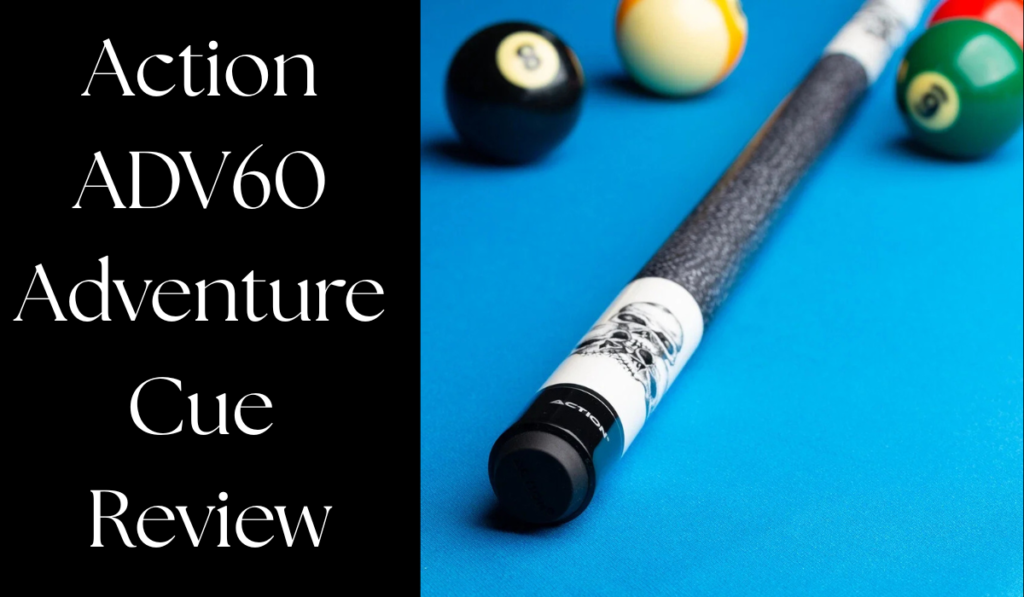
The Action ADV60 is part of the Adventure Series by Action Cues. It is built using hard rock maple and features a bold skull-themed design. The cue is suitable for casual players and intermediate players who want a balanced cue with stable performance and visual impact.
This cue is commonly used for standard pool games and is available in several weight options, making it adaptable to different playing styles.
The cue uses a 13mm tip, which is a standard size for pool cues. This size offers a good balance between control and power.
The tip is made from layered leather, which helps maintain shape and consistency over time.
The tip provides reliable contact with the cue ball and supports common shot types such as draw, follow, and basic spin.
Ferrule
The ferrule is made from fiber linen material and measures approximately 1 inch in length.
Fiber linen ferrules are commonly used in mid-range cues and are known for durability and stable performance.
Shaft
The shaft is made from hard rock maple and measures about 29 inches in length. It features a professional taper.
Joint and Pin
The Action ADV60 uses a 5/16×18 joint pin. This is a common joint type found in many pool cues.
The joint is designed to provide a solid feel during play and consistent energy transfer from the butt to the shaft.
Forearm Design
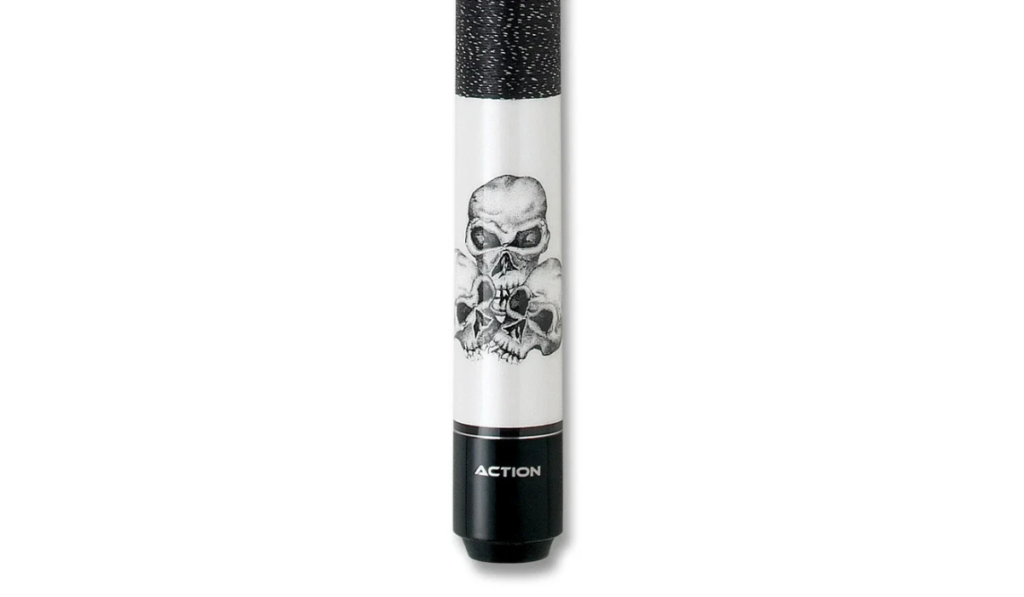
The forearm is made from white-stained birdseye maple with visible wood grain. It features a stacked skull graphic applied cleanly along the length of the forearm. The contrast between the light wood and dark design creates a bold but controlled look.
Wrap
The cue features a black and white Irish linen wrap.
Butt Design
The butt of the Action ADV60 is made from white-stained birdseye maple and features a stacked skull design.
The butt plate is made from black composite material and includes the Action logo. A rubber bumper is installed at the bottom to protect the cue from impact when placed on the floor.
Buy this cue
You can purchase the Action ADV60 Adventure Cue directly on Sportlava. Visit the product page to check current pricing and available weight options, and order the cue that fits your playing style.
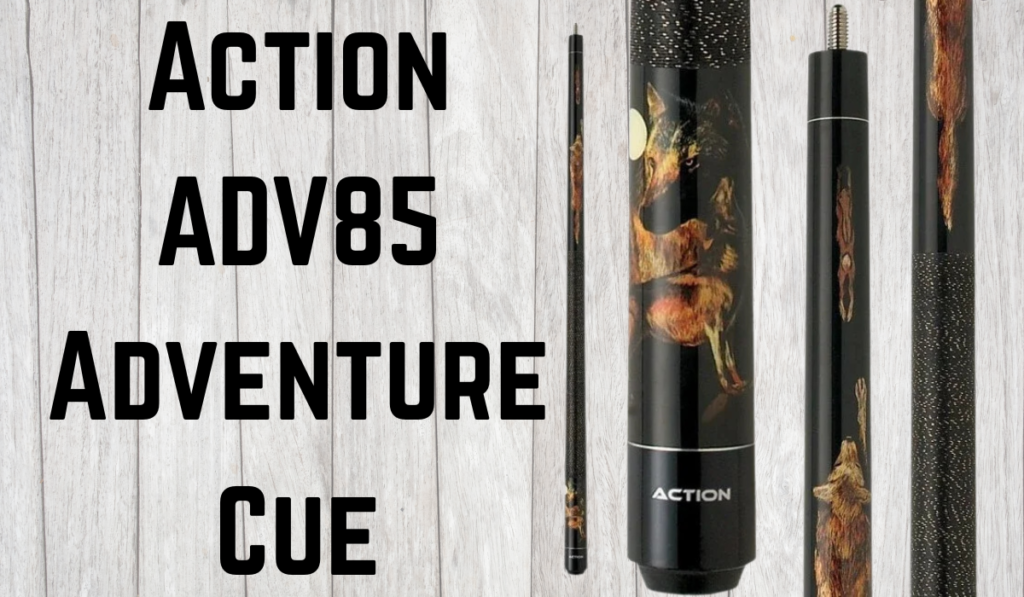
The Action ADV85 Adventure Cue is a pool cue from the Adventure Series by Action. This series focuses on bold graphic designs combined with standard cue construction. The ADV85 is designed for beginner to intermediate players who want a visually distinctive cue that remains easy to use and consistent in performance.
This cue is suitable for recreational play, practice sessions, and regular pool room use. The overall build follows traditional cue structure while emphasizing visual storytelling through animal-themed artwork.
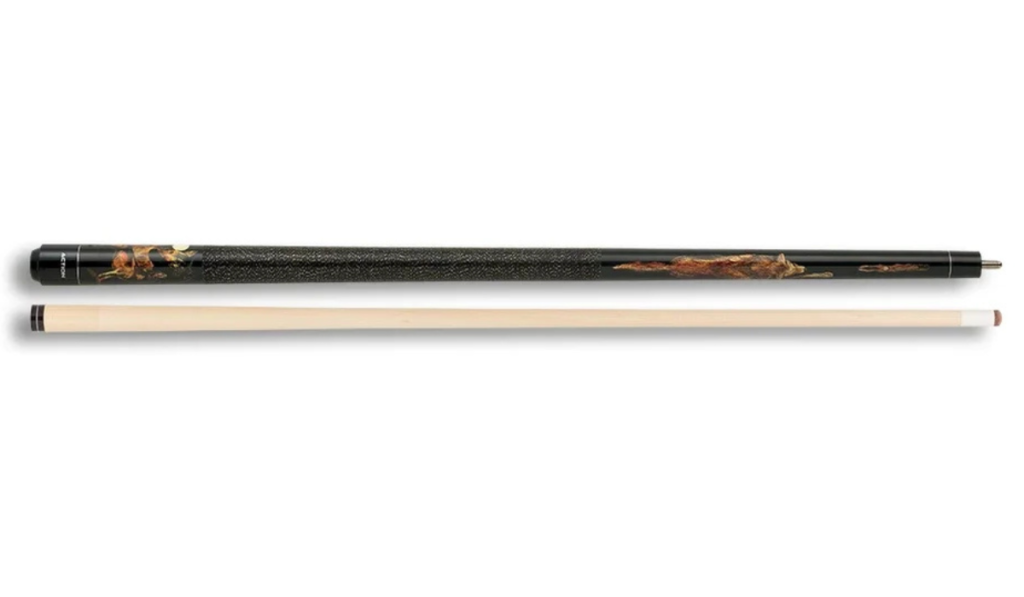
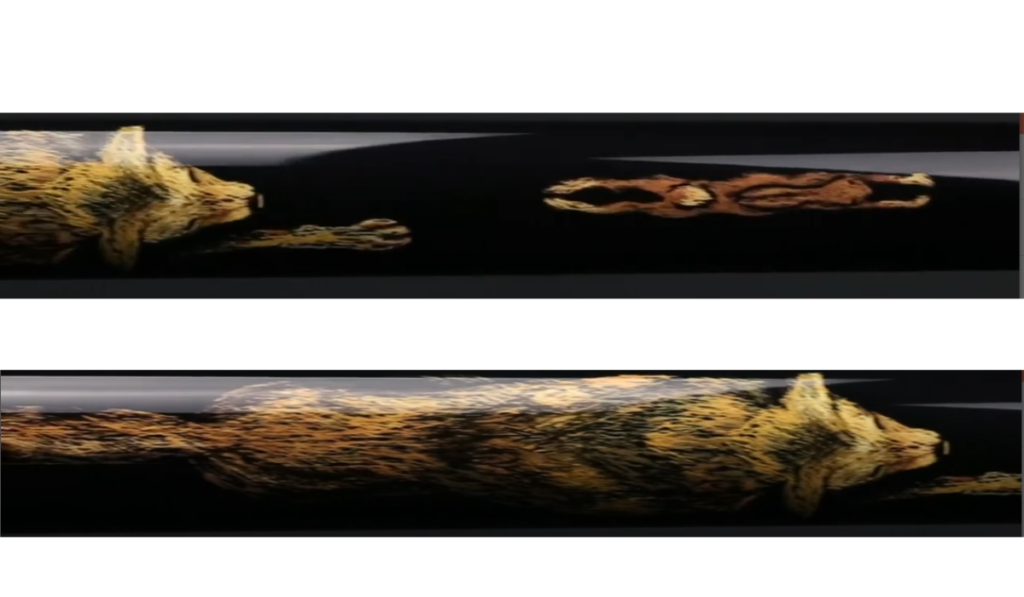
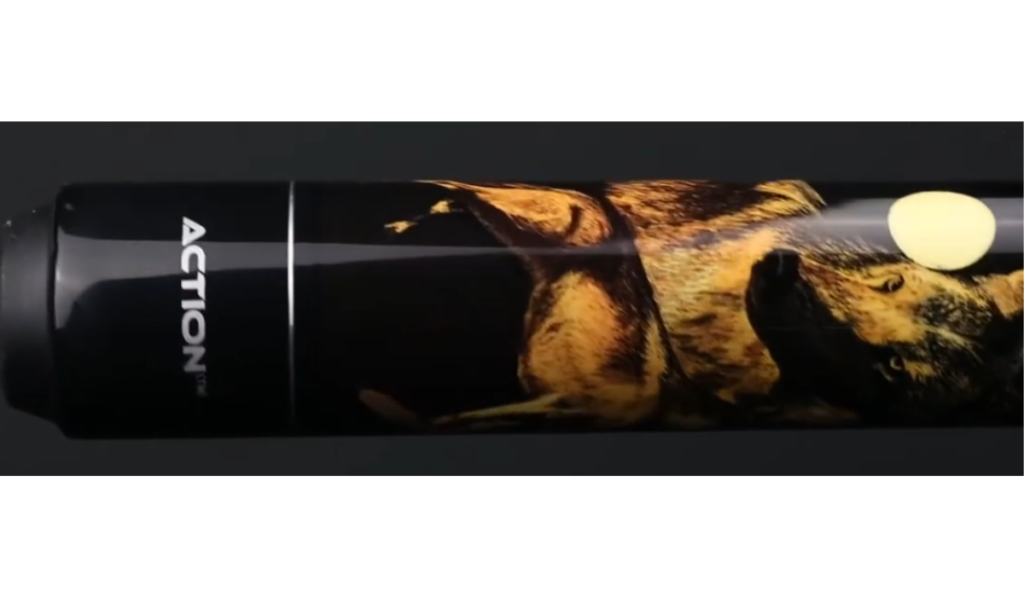
The cue uses a black base tone across the entire body. Gold and light-colored graphics. The artwork is distributed between the forearm and the butt sleeve in a balanced layout.
The design theme is based on wildlife imagery. Metal rings and silver accents appear at the joint and butt plate.
Forearm Design
The forearm features artwork of a wolf chasing a rabbit. This image is printed over black Birdseye maple. The forearm surface is smooth and evenly finished.
Shaft Construction
The shaft measures 29 inches and is made from hard rock maple. This wood type is widely used in pool cues due to its durability and stable playing characteristics. The shaft surface is smoothly sanded, offering controlled glide during stroke motion.
The shaft uses a standard taper. This taper suits beginners and intermediate players, offering predictable feedback and consistent shot control. It supports basic stroke mechanics and helps players develop stable cue action.
Tip and Ferrule
The cue features a 13 mm tip made from layered boarskin leather. This tip size is standard for pool cues. The layered structure supports consistent contact and spin control.
The ferrule is 1 inch long and made from fiber-linen material. The ferrule contributes to a solid and stable hit.
Joint and Connection
The ADV85 uses a 5/16×18 joint pin, one of the most common joint standards in pool cues. This makes it easy to replace shafts or upgrade components in the future.
The joint collar features composite material with silver ring accents. There is no noticeable looseness or misalignment during normal use.
Wrap Section
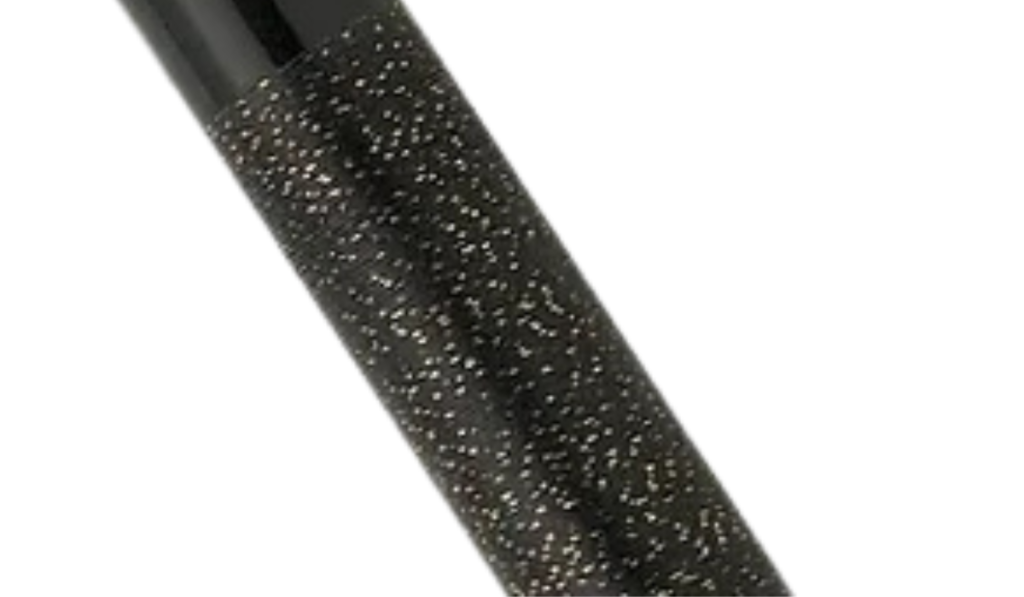
The wrap is made from black Irish linen with small gold specks. It performs well under dry or slightly sweaty hands.
The wrap texture is smooth but not slippery. It matches the overall black and gold color theme of the cue.
Butt Sleeve Design
The butt sleeve displays artwork of two wolves with a full moon. The butt sleeve and forearm designs work together to form a continuous visual theme.
Butt Plate and Bumper
The butt plate is simple and includes a small Action logo.
The bumper is made from black rubber. It protects the cue when placed on the floor and prevents slipping. The bumper can be removed to access the weight bolt system.
Conclusion
The Action ADV85 Adventure Cue is a solid choice in its price range. Overall, this cue is quite reliable for everyday play and practice.
This cue is available at Sportlava, where you can purchase it with free shipping. It also comes with manufacturer warranty support.
Many pool players want a reliable cue but hesitate to spend a few hundred dollars. More than 60 percent of casual players buy in the mid range because they need solid performance without the heavy price tag. I’ve tested and sold hundreds of cues over the years, which gives me a clear view of what actually works for everyday players. That experience is exactly why I understand why Action Pool Cues have become such a popular choice.
In this article you’ll learn who Action is, what their cues are really like, and whether they fit your playing style. I’ll share practical insights so you can choose the right cue with confidence.
Key Takeaways
Action Pool Cues offer a wide range of series that cover beginners, casual players, and intermediate level players.
The Classic and Value series are ideal starting points if you want dependable performance at an affordable price.
Exotic, Adventure, and Fractal series focus more on visual design while keeping the same stable maple construction.
Summit Low Deflection cues are the best choice within the Action lineup for players who want better accuracy and control.
Impact and Sneaky Pete series appeal to players who prefer a direct feel and traditional cue behavior.
Break and Jump cues from Action are built specifically for power and durability, not for everyday shooting.
Junior and Starter series help new and young players develop proper fundamentals more easily.
Overall, Action cues prioritize value, consistency, and accessibility rather than high end technology.
Action is a well known American cue brand that focuses on value and consistency. They design cues for everyday players who want something better than a house cue but do not want to spend premium money. Their goal is simple. Build cues that feel solid, look good, and hold up over time.
The brand has grown quickly because their products are easy to use. Many league players and new players start with an Action cue before upgrading to a higher tier brand.
Build Quality and Materials
Action cues use hard rock maple for most of their shafts. This type of wood is stable and gives a predictable hit. The butts often combine maple, composite rings, and simple decorative inlays. You will not find exotic engineering or advanced technology. Instead, you get honest materials that perform well for the price.
Each cue comes with a standard 13 mm tip. Most players upgrade the tip later for better spin and control. The joints are smooth and fit tight enough to avoid rattling or vibration.
How Action Cues Perform
Action cues deliver a medium feel. Not too soft. Not too stiff. This makes them friendly for beginners who are still building a consistent stroke. The cue ball feedback is clear enough for players to learn English and speed control.
Most shafts have medium deflection. Experienced players will notice more cue ball squirt compared to high end LD shafts. For many casual players this is not a problem. The performance is more than enough for league play or regular practice.
Who Should Buy Action
Action is a great fit for players who want a reliable starter or mid level cue. If you are moving up from a bar cue, this is a clear upgrade. If you play once or twice a week, Action gives you stability without pressure on your budget.
Break and jump models in the Action lineup are also popular. They are affordable and powerful enough for most players who want a dedicated breaking cue.
Action Pool Cue Series Overview
Classic Series
The Classic Series is the foundation of the Action brand. These cues focus on simple maple construction and traditional point patterns. The hit is predictable and steady, which makes them a favorite among new players and league regulars. Classic models offer balanced weight and clean finishes that feel familiar from the very first shot.
Exotic Series
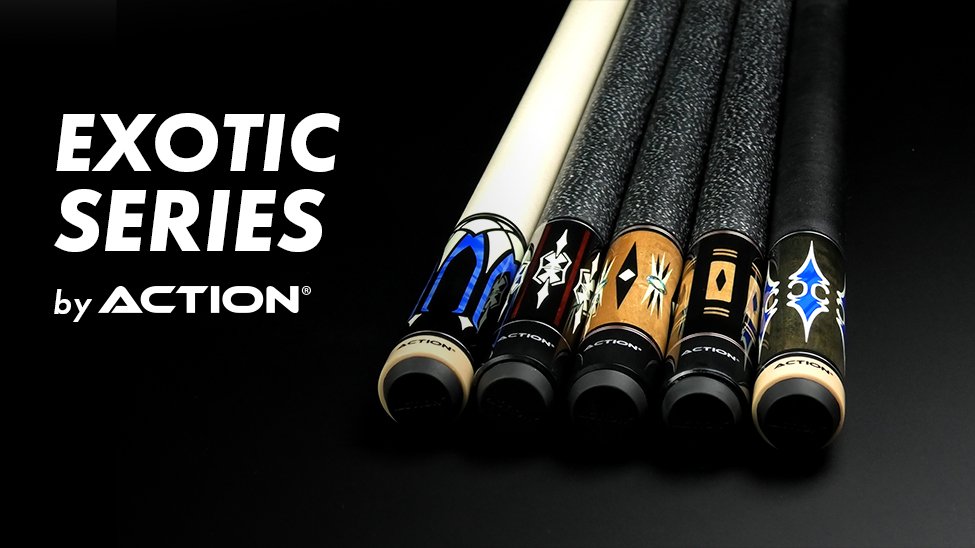
The Exotic Series adds more striking visual details. These cues use bold color combinations, decorative overlays, and multiple wood tones. They maintain the same stable maple shaft but look far more refined. Players choose this series when they want dependable performance with strong visual appeal.
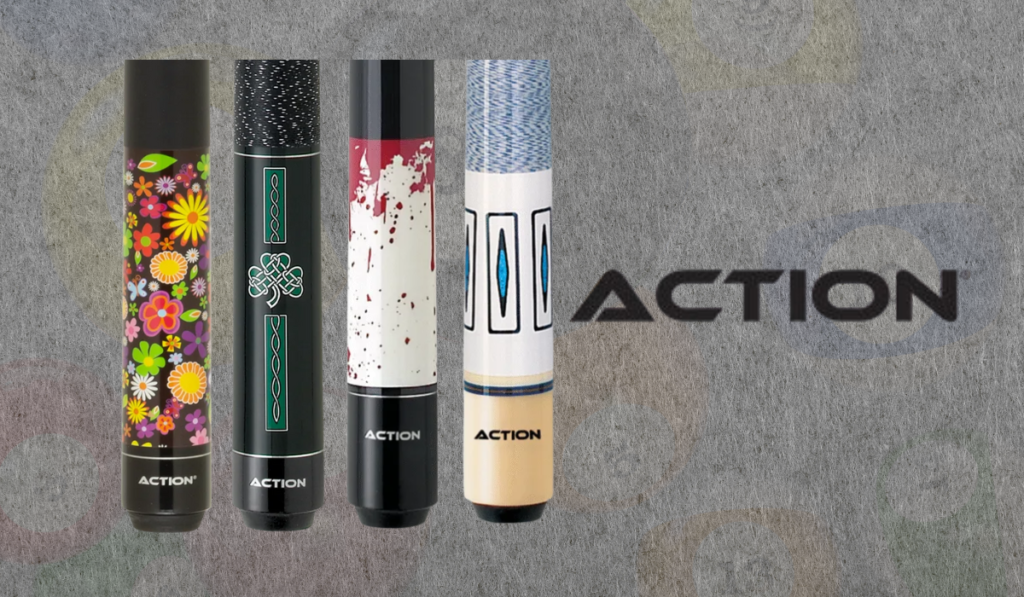
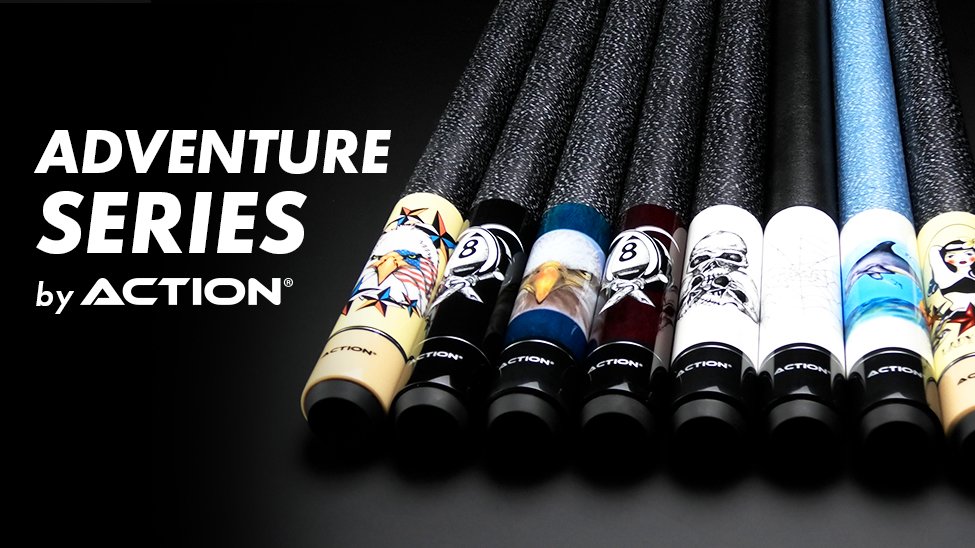
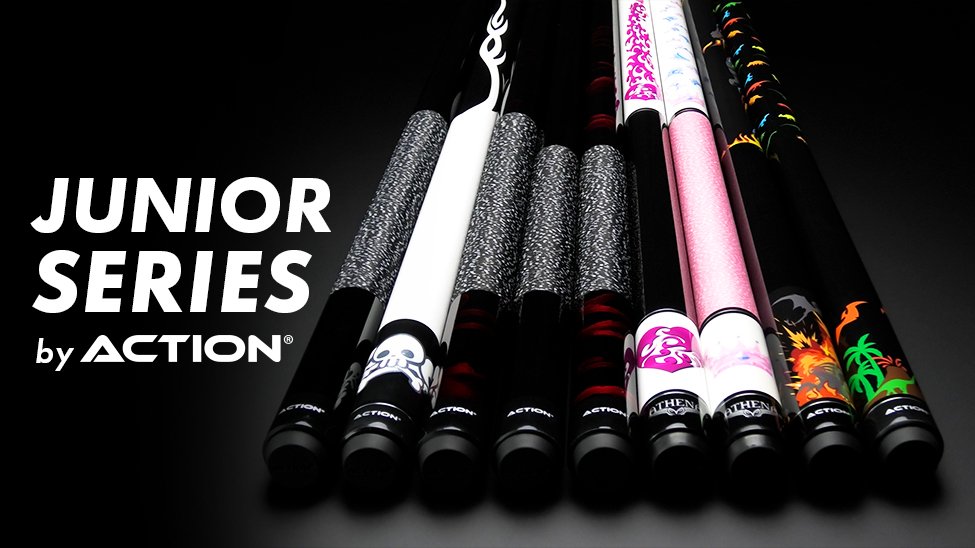
The Adventure Series brings artwork and creativity into the cue. Designs range from fantasy themes to tattoo inspired graphics. These cues play with the same consistency as other Action lines but are perfect for players who want personality in their gear. Each cue looks like a piece of art on the table.
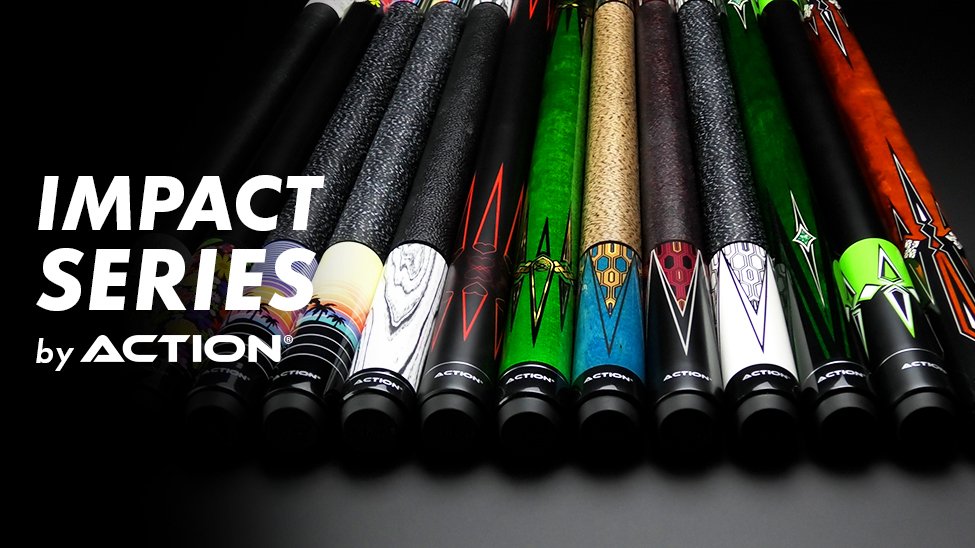
The Impact Series offers a more aggressive look and a sharper playing feel. Many models feature no wrap handles that give a direct wood to hand connection. The response feels fast and clear. Players who enjoy quick feedback and bold designs gravitate toward this line.
The Summit Series focuses on enhanced accuracy. These cues use low deflection shafts that reduce cue ball squirt and improve control when applying English. The taper is refined and the front end is lighter, which helps players aiming to step up their precision. This line bridges the gap between mid range and premium performance.
Break and Jump Series
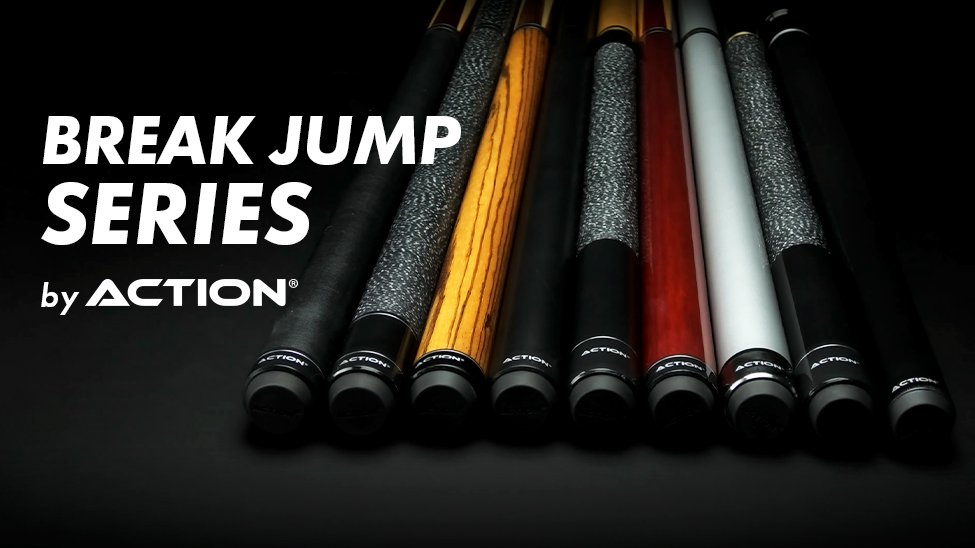
The Break and Jump Series is built for powerful shots. These cues are stiffer and often slightly heavier, allowing players to transfer more energy into the cue ball. They also handle high impact jumps with ease. Many players pair these cues with their main shooter for more reliable breaking.
The Junior Series is designed for younger players and tight spaces. These cues are shorter and lighter while still offering the same reliable construction. They are ideal for beginners who need easier control and smoother stroke development.
Design Focused Series
Black and White Series
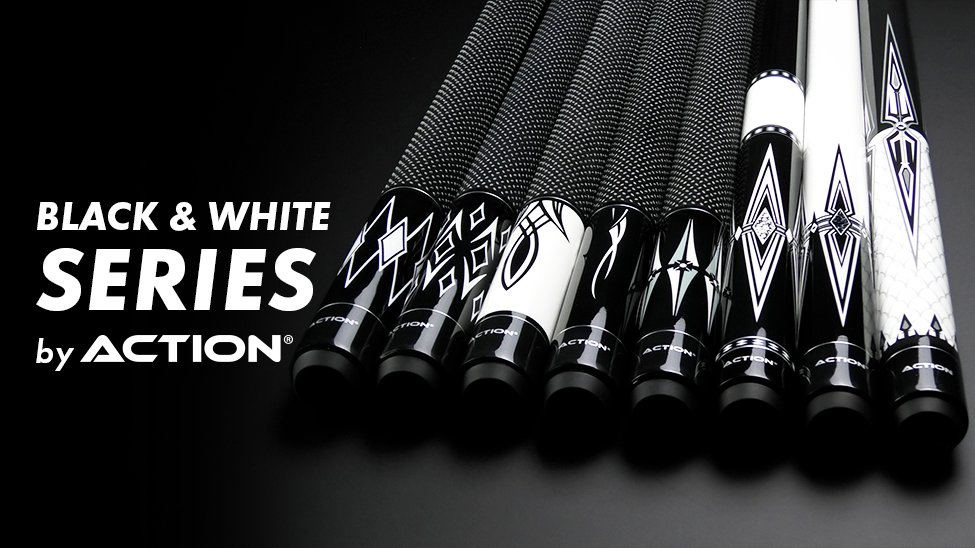
The Black and White Series uses sharp contrast to create a clean, modern look. These cues feel minimalist but bold. The maple build remains steady and controlled. Players who prefer simple but striking visuals enjoy this series.
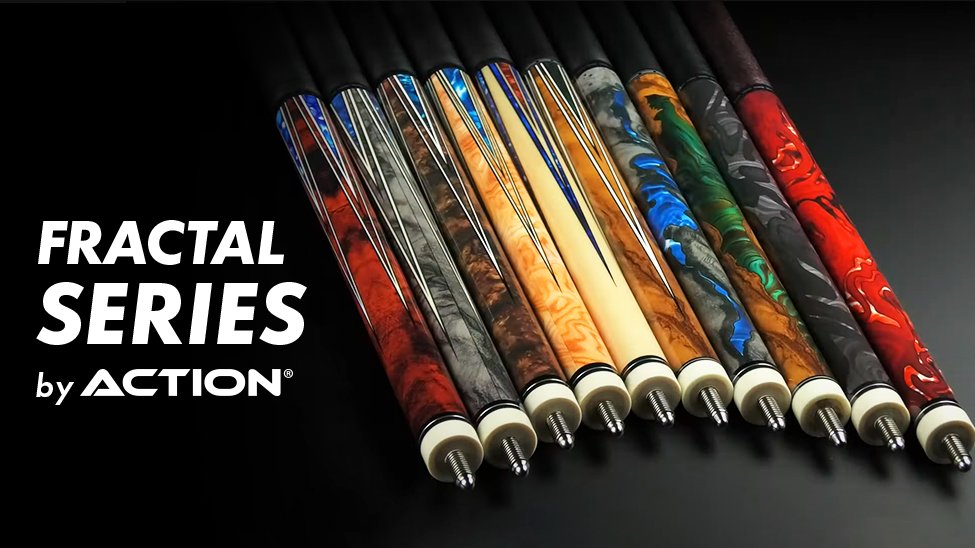
The Fractal Series features bright geometric artwork and digital style patterns. These cues stand out immediately because of their colorful designs. They perform with the same stability as the Classic line but deliver a much more vibrant presence at the table.
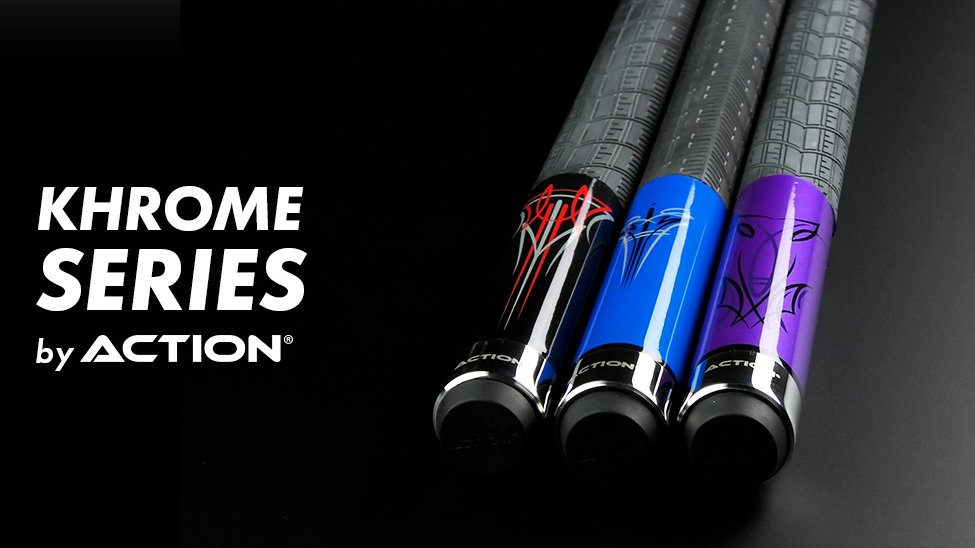
The Khrome Series blends metallic inspired graphics with polished finishes. The look feels modern and sleek. The playability stays consistent with a medium hit. This line appeals to players who want a high tech aesthetic without changing the core feel of their cue.
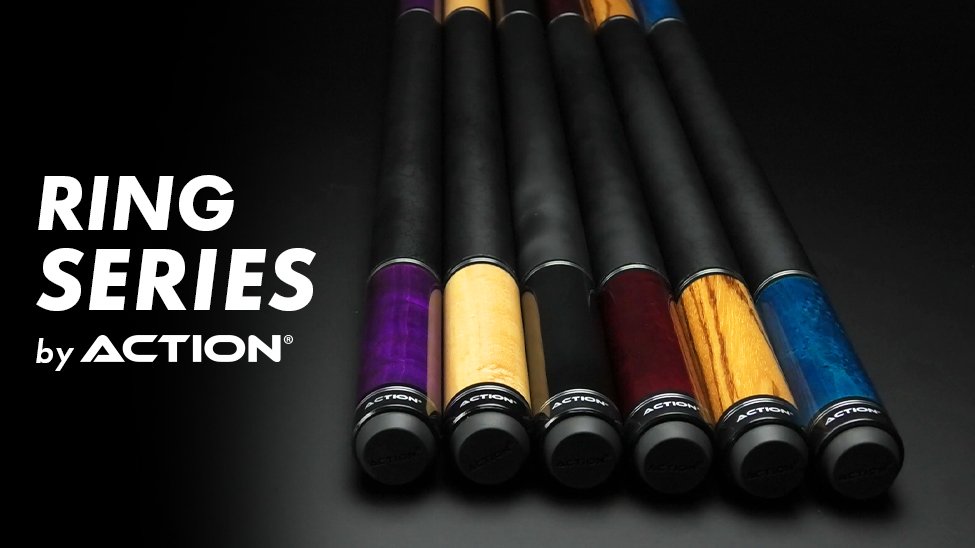
The Ring Series highlights detailed ringwork placed throughout the cue. The design feels balanced and precise, using accent rings to tie the forearm and butt together visually. Players who appreciate clean craftsmanship and symmetry enjoy this series.
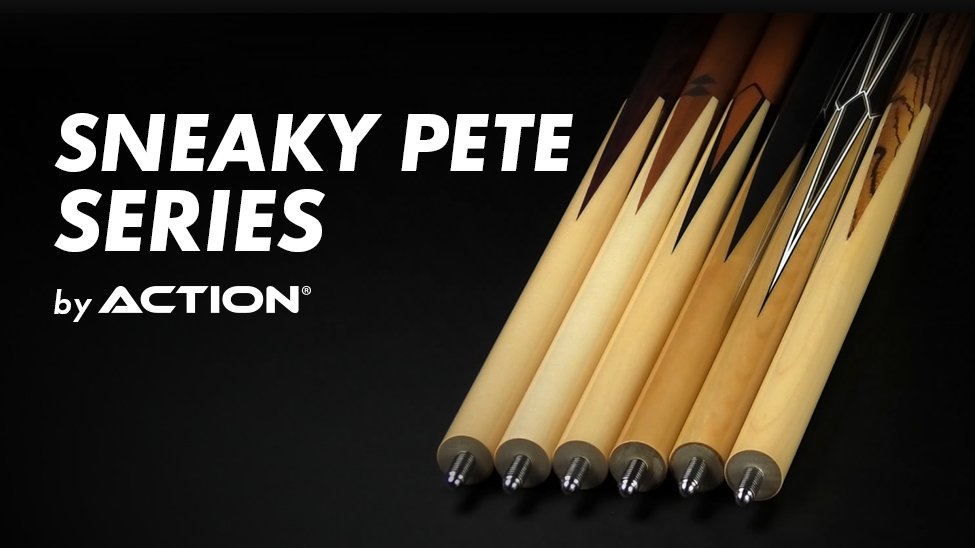
The Sneaky Pete Series looks simple on purpose. These cues mimic house cue designs but offer much better consistency and control. The plain maple look hides a smooth and stable hit. This line is ideal for players who like the classic bar cue style with upgraded performance.
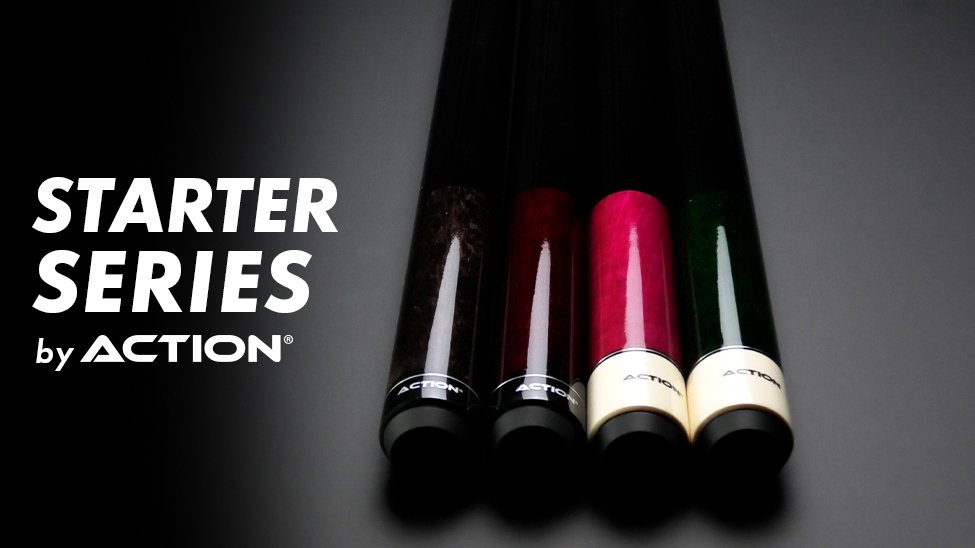
The Starter Series is made for beginners picking up their first cue. The design is simple and lightweight, making it easier to build a consistent stroke. These cues offer dependable performance without overwhelming new players.
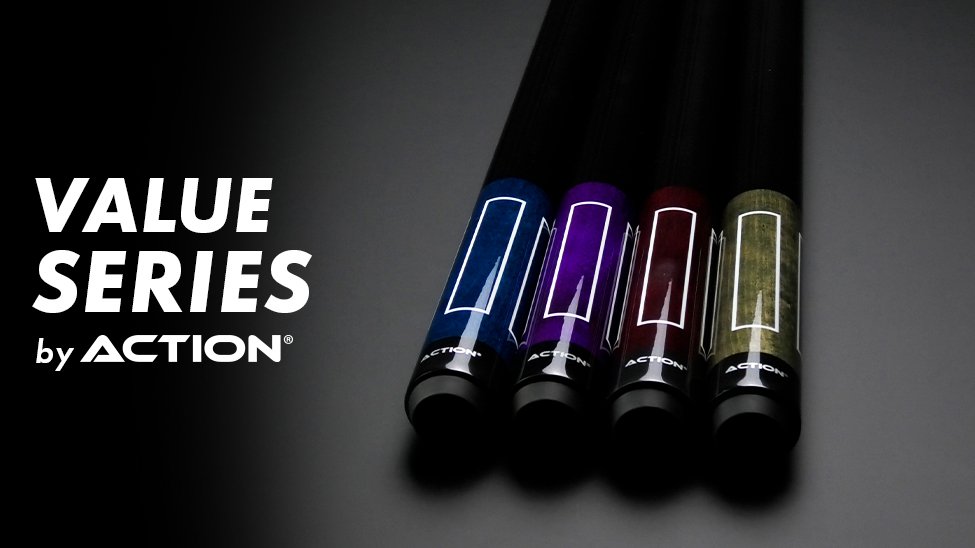
The Value Series focuses on affordability while keeping Action’s core playability. These cues use basic maple construction and straightforward graphics. They are ideal for casual players who want something better than a house cue at a price that fits any budget.
Which Action series fits your playing style best? Do you prefer classic looks, bold designs, or performance focused cues? We would love to hear your thoughts and experiences.
If you are ready to shop, you can explore our full selection of Action Pool Cues in our store. We carry popular models across multiple series and are always happy to help you find the right cue for your game.
Why do some cues stay straight for years while others warp within months? Why does one cue feel balanced and precise while another feels unpredictable?
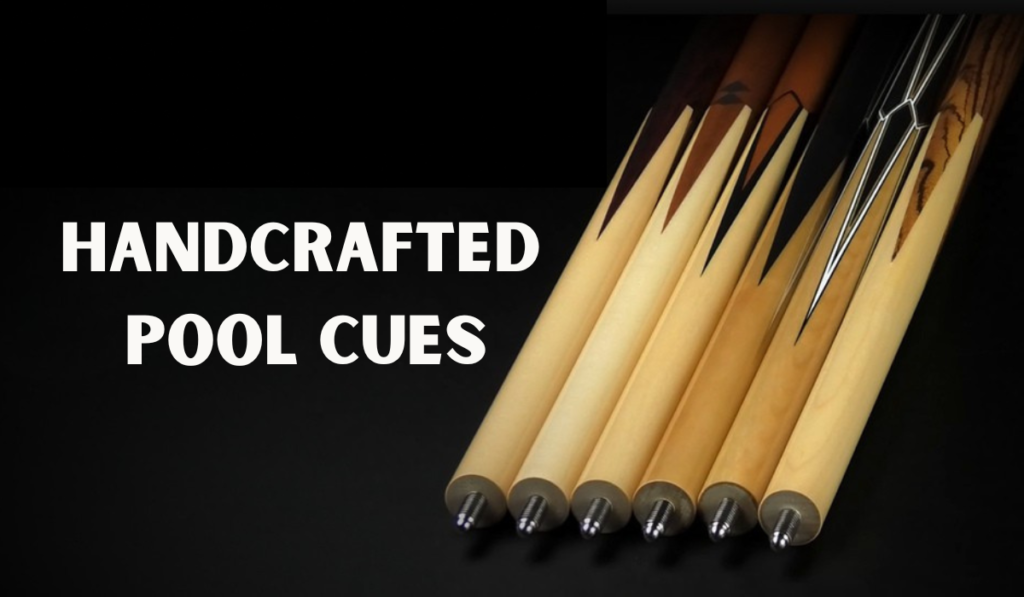
The answer often comes down to how the cue is built. In this article, you’ll learn the key steps behind crafting a quality pool cue from wood selection to the final wrap so you can see what separates a reliable cue from an average one.
Key Takeaways
A cue’s performance and durability depend heavily on the build process, not just the final appearance.
Maple is the preferred wood for shafts because it offers strength, stability, and consistent play.
Points are a key indicator of craftsmanship—clean alignment and even veneers show precision in construction.
A cue is built from multiple parts (forearm, handle, butt sleeve, butt cap), all of which must be fitted and turned as one seamless piece.
Weight adjustments come from the threaded rod inside the butt, cut to match the desired balance.
The joint pin requires near-perfect accuracy to keep the cue straight and ensure a solid connection.
Handle wraps (leather or Irish linen) are applied after finishing and must be wound evenly for comfort and control.
Price varies based on materials, number of points, inlays, wrap type, and total hours of skilled labor.
Selecting and Preparing the Wood
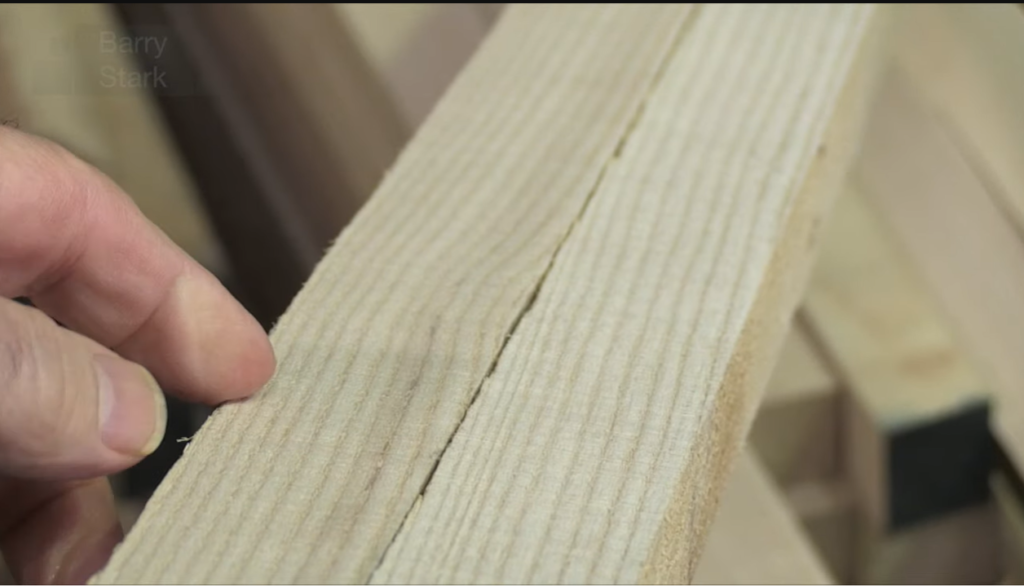
Everything begins with choosing the right wood. Maple is commonly used for shafts because it’s strong and stable. The wood starts as a block, then gets cut into a square, placed on a lathe, shaped into a round dowel, and given a light initial taper.
After that, the dowel is conditioned to reduce moisture and allow it to stabilize. Once it reaches an appropriate moisture level, the maker removes a very small amount of material each month to keep the shaft straight and prevent distortion over time.
For the butt section, dense and decorative hardwoods such as ebony, rosewood, purpleheart, or figured maple are used to create both beauty and balanced weight.
Creating the Points
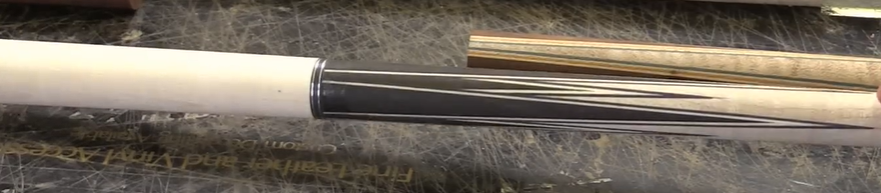
Points are the triangular shapes that rise up the forearm of the cue. To make them, the maker cuts precise grooves into the dowel, then inserts layers of veneer and hardwood into these channels.
When the cue is turned again, the veneer layers taper down into sharp points. A high-quality cue usually has points that are:
aligned evenly around the cue
symmetrical
consistent, with veneers matching cleanly from end to end
The number of points (4, 6, 8, etc.) affects both the complexity and the time required to build the cue.
Assembling the Forearm, Handle, and Butt Sleeve
A cue is built from several main parts:
the forearm (where the points sit)
the handle section
the butt sleeve
the butt cap
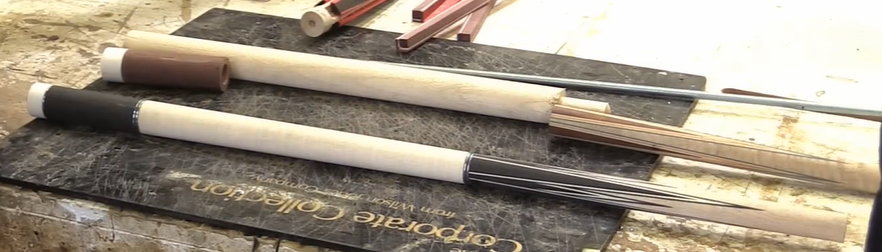
Each piece is bored out, fitted together, and glued. After assembly, the cue goes back on the lathe so everything can be turned into one smooth, seamless shape with the correct diameter.
Inside the butt, a threaded rod is added to adjust the cue’s weight. The rod is cut to the exact length needed to reach the final weight the maker wants.
Drilling and Installing the Joint Pin
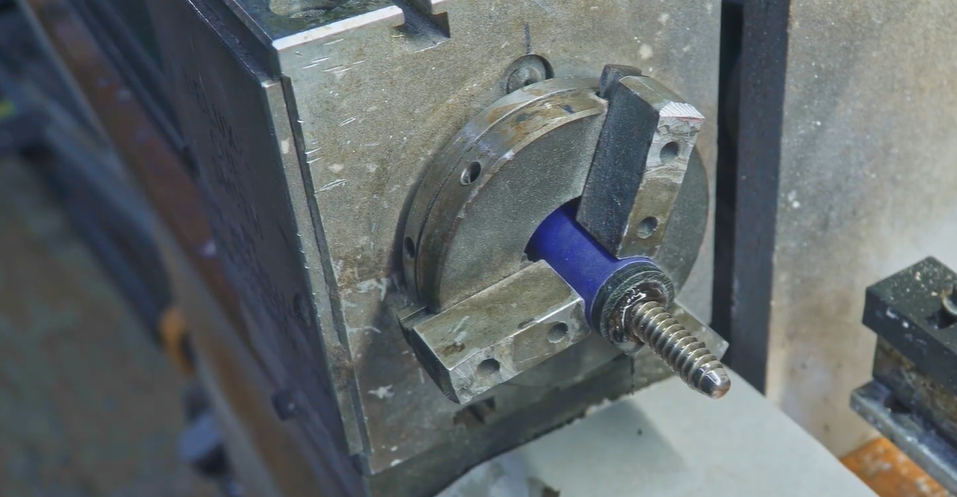
The joint pin connects the butt and shaft, so accuracy is essential. The cue is secured in place and checked with a dial indicator to ensure almost no runout. Only when the cue is perfectly centered is the hole drilled and the joint pin installed.
Finishing and Wrapping the Handle
After finishing and polishing, the handle area is left uncoated because this is where the wrap will go. To prepare for the wrap, the maker slightly reduces the diameter of this section so the final wrap sits flush.
A cue can be wrapped in:
leather
or fine Irish linen (Personally, I prefer Irish linen. It has a clean, soft texture that feels great in the hand).
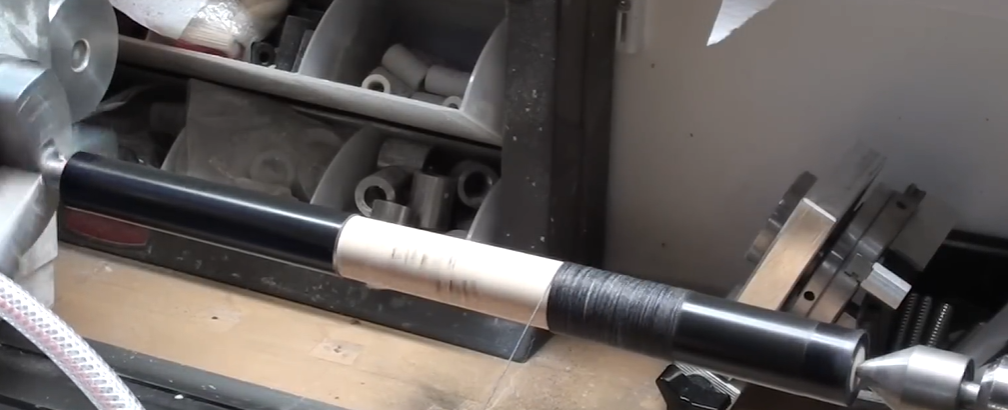
The linen is wound using a two-direction motor so the thread lays evenly, stays flat, and doesn’t overlap.
Factors That Affect Cue Pricing
The price of a custom cue depends on:
the type of wood
the number of points
the number of inlays
the wrap material
the total labor hours
Basic designs fall on the lower end, while cues with many inlays and points require significantly more time and craftsmanship.
How Long It Takes to Build a Cue by Hand vs. in a Factory
Handcrafting a pool cue is a slow, deliberate process.
Drying the wood alone can take weeks, and each stage tapering, cutting points, turning the parts, fitting the joint, finishing, and wrapping requires time for the materials to settle before the next step begins.
A fully handmade cue often takes 40 to 100 hours of labor, spread across several weeks depending on the number of points, inlays, and the finish required.
Factory-made cues follow a completely different timeline. Automated lathes, pre-dried wood, and assembly-line processes allow mass-produced cues to be completed in a few hours, sometimes less than a day.
A Process Built on Patience and Skill
Watching the cue-making process firsthand showed me that even the smallest detail has a purpose. Every pass on the lathe, every cut, and every veneer layer requires patience and accuracy.
A handcrafted pool cue isn’t just a billiards tool—it’s the result of dozens of precise steps repeated until everything reaches balance and harmony.
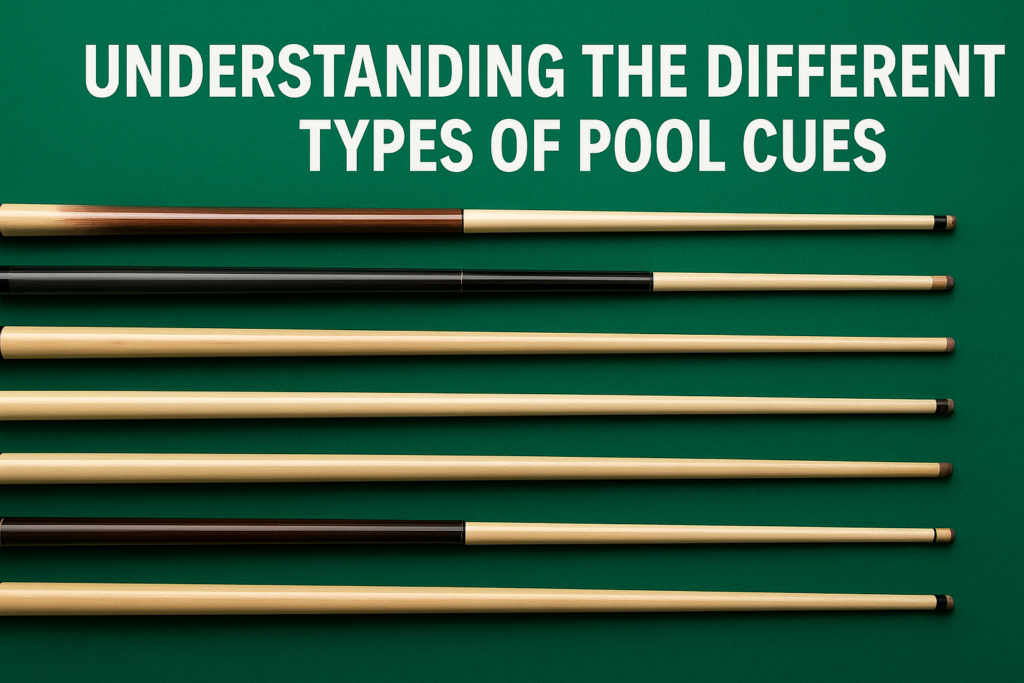
Pool cues may look similar at first, but each type is built for a specific job. Knowing the difference helps players choose the right tool for better control, power, and accuracy. Below is a breakdown of the cue types most players see around the world.
Key Takeaways
Different cues serve different jobs.
A playing cue is for everyday shots and control.
Break cues are built for power and durability.
Jump cues help lift the cue ball cleanly.
Jump-break cues combine both roles in one stick.
Sneaky-pete cues look plain but play like higher-end cues.
One-piece cues are common in public spaces and made to be tough.
Two-piece cues offer better quality and easy transport.
Low-deflection cues help players aim more accurately with spin.
Carom and snooker cues are designed for their specific games.
Playing cue
This is the cue most people use for regular shots. It’s built for balance and feel. A good playing cue gives steady control, a smooth stroke, and a tip that grabs the cue ball just enough to apply spin.
Break cue
A break cue is made for one thing: hitting hard. It usually has a harder tip and a stronger shaft that won’t flex as much. This helps transfer more force into the rack. Many players keep a break cue separate to avoid wearing out their main cue.
Jump cue
A jump cue is shorter and lighter than a standard cue. The goal is simple: lift the cue ball off the table cleanly. The short length lets the player raise the cue almost straight up without losing accuracy.
Jump-break cue
This cue combines the power of a break cue and the build of a jump cue. Players who want to carry one extra cue instead of two often choose this option.
Sneaky-pete cue
This cue looks like a simple house cue, but it’s actually a two-piece cue designed for performance. Skilled players used them in the past to avoid showing opponents they had their own custom cue. Today it’s more of a style choice.
One-piece cue
You’ll see these in bars, community centers, and casual play spaces. They’re sturdy and inexpensive. The downside is that they’re harder to transport and rarely match the quality of a good two-piece cue.
Two-piece cue
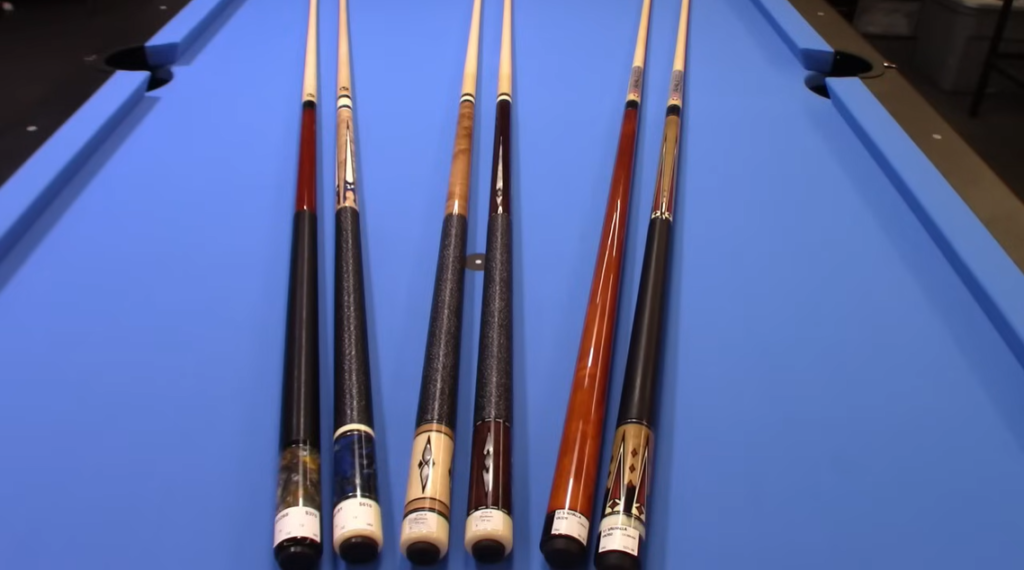
Most personal cues come in two pieces. They’re easier to carry and tend to offer better materials, better balance, and more consistent play. Players can also replace parts without buying a full cue.
Low-deflection cue
A low-deflection shaft reduces the sideways push that normally happens when you use spin. This helps the cue ball travel more in line with the aim. Many modern players prefer these shafts because they make aiming with spin more predictable.
House cue
A house cue is the standard cue sitting on the wall at most pool halls. They vary a lot in weight and straightness. Some are fine, others aren’t, but they’re meant for general use by anyone walking in.
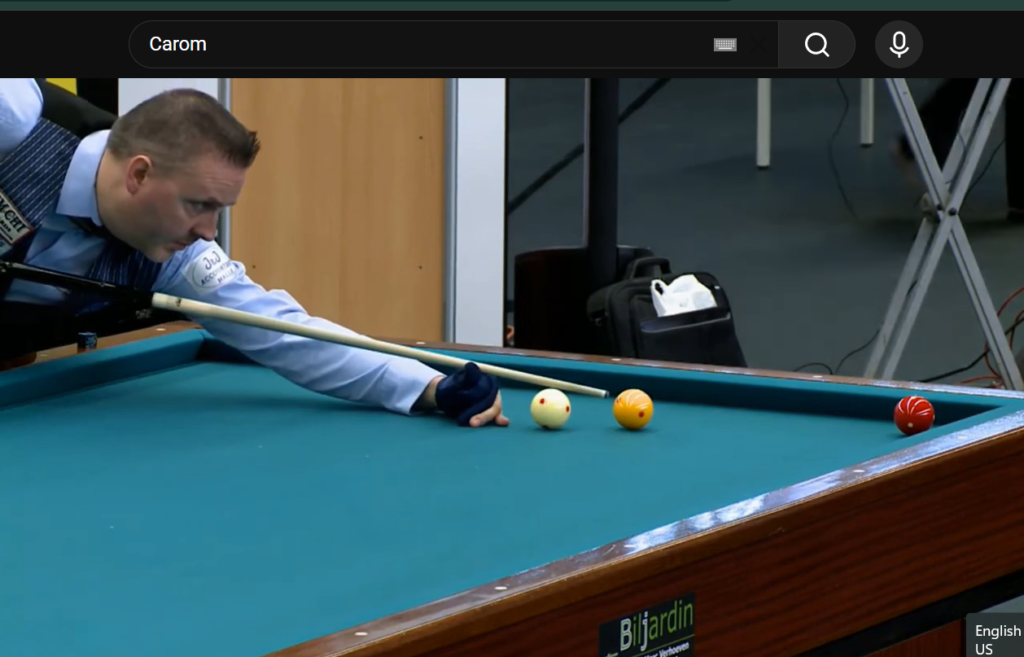
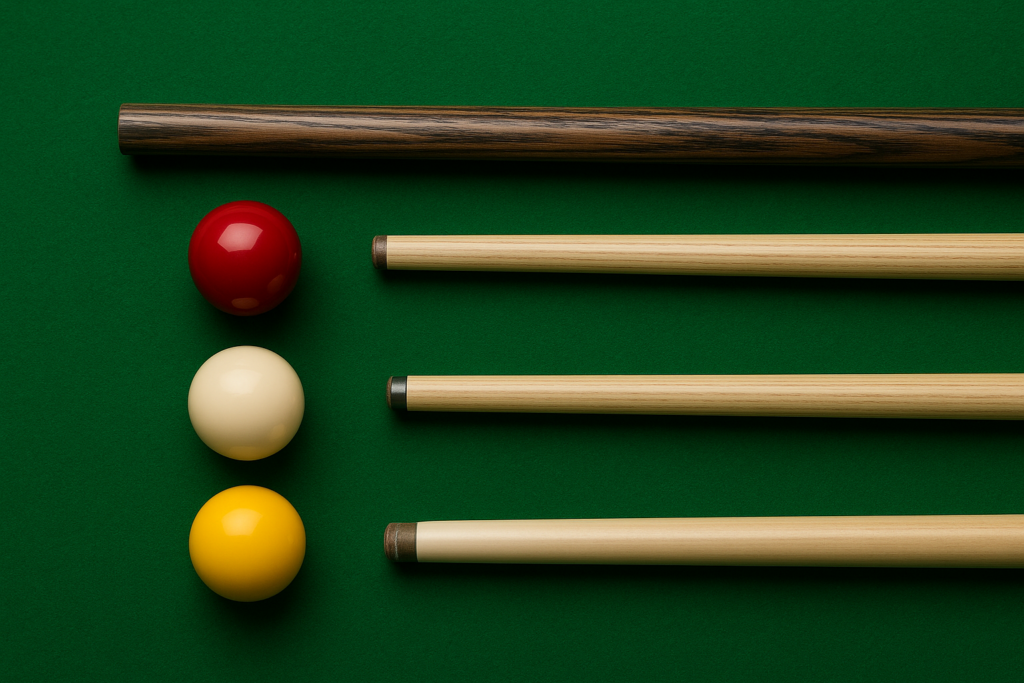
Carom cue
Carom cues are used for games played on pocketless tables, like three-cushion billiards. They have a thicker shaft and a shorter, stiffer build. The design helps with precise control and heavy spin.
Snooker cue
A snooker cue is thinner than a standard pool cue and often has a smaller tip. Snooker balls are smaller, so the cue needs to match. The feel is different from a pool cue, but it gives the fine control needed for long, delicate shots.
Many customers are unsure which cue they should use for different cue sports. Pool and snooker may look similar on the surface, but the equipment especially the cue is designed around the size and weight of the balls. In this guide, I’ll walk you through the key differences between English pool cues, snooker cues, and American pool cues, and explain why each one is built the way it is.
Key Takeaways
Feature
English Pool Cue
Snooker Cue
American Pool Cue
Cue Ball Size Used
1 7/8″
2 1/16″
2 1/4″
Tip Size
8–9 mm
9.5–10 mm (up to 11 mm)
~13 mm
Cue Wood
Ash
Ash
Maple
Ferrule Type
Brass/metal (small)
Stainless steel
Thick plastic (shock-absorbing)
Cue Construction
Often 2-piece (center joint)
Often 3/4 joint
Mostly 2-piece (center joint)
Primary Purpose
Precision & control for small ball
Control with extra stability
Power & durability for heavy ball
Not Ideal For
American pool (too thin/weak)
American pool (tip too small)
English/snooker finesse shots
Cue Ball Sizes
Before comparing cues, we need to look at the cue balls themselves. The size of the ball determines the structure, strength, and tip size of the cue.
Game Type
Cue Ball Size
Notes
English Pool (8-Ball)
1 7/8 inches
Smallest and lightest cue ball
Snooker
2 1/16 inches
Slightly larger; requires a slightly thicker cue tip
American Pool
2 1/4 inches
Largest and heaviest cue ball
These differences directly impact what type of cue is suitable for each game.
English Pool Cues
English pool cues are designed for the smaller, lighter English eight-ball cue ball.
Key Features
Tip size: 8–9 mm
Material: Usually ash
Purpose: Precise cue-ball control
The thin tip gives players excellent accuracy for finesse shots. However, this same thinness makes it unsuitable for American pool—the cue simply isn’t built to take the repeated impact of heavier balls.
Two-Piece Construction
Many English pool cues split at the center with a brass joint. This makes them easier to carry while maintaining balance and playability.
Snooker Cues
Snooker balls are slightly larger than English pool balls, so the cue must match.
Key Features
Tip size: 9.5–10 mm (some players prefer up to 11 mm)
Ferrule: Often stainless steel
Material: Ash
Construction: Commonly a three-quarter joint, positioned closer to the butt for better stiffness
The snooker cue offers a blend of control and durability, designed for the longer table and slightly heavier ball.
American Pool Cues
American pool cues are built for strength. The 2 1/4-inch cue ball demands a sturdier cue with a wider tip.
Key Features
Tip size: Around 13 mm
Ferrule: Thick plastic to absorb shock
Material: Typically maple (lighter, cleaner grain compared to ash)
Construction: Usually a two-piece cue that splits in the middle
The wider tip and robust ferrule allow players to strike the heavier ball with speed and power without risking damage to the cue.
Choosing the Right Cue for Your Game
Once you understand the relationship between cue ball size and cue construction, picking the right cue becomes much easier. Many customers visit our showroom unsure of which cue fits which table. After going through these differences, you now have the knowledge to choose confidently.
If you’re interested in a deeper breakdown—including the differences between English and American pool tables—we’ve created a full video that covers every detail, from ball size to table design to cue specifications.
Cue weight is one of the most overlooked factors in how well you play, yet it affects every stroke you take. Many players struggle with inconsistent control, missed long shots, and a cue that simply doesn’t feel right in their hands and they never realize the weight is the real issue. The wrong cue weight can make your stroke feel tense, cause your arm to tire quickly, and make cue-ball control harder than it needs to be.
In this article, you’ll learn how cue weight truly affects accuracy, feel, balance, and long-session comfort. You’ll also discover how small weight changes impact your stroke and how to choose the weight that actually fits your game. Let’s get started.
Key Takeaways
Cue weight influences accuracy, control, stroke comfort, and long-term consistency.
Most players and most professionals play between 18 and 20 oz because it balances power and control.
Lighter cues give more feel but require cleaner technique; heavier cues offer stability but reduce finesse.
Longer cues often need slightly higher weight to maintain balance.
Even small adjustments (0.3–0.5 oz) can significantly change how the cue performs.
The best cue weight is the one that feels natural, stable, and comfortable over long sessions.
The Typical Weight Range
Most cues fall somewhere between 18 and 20 ounces.
Many professionals stay within this range as well, because it offers a balance between power and control.
My own cue usually sits around the middle of that range because I can generate cue speed without feeling like I’m fighting the weight of the cue, but it still gives me the stability I need on long shots.
Too light and the cue tends to feel loose or overly sensitive. Too heavy and it becomes harder to move the cue freely.
How Weight Affects Control and Accuracy
A lighter cue gives you more feedback in your hands.
You tend to feel soft shots more clearly, and touch becomes easier. The tradeoff is that a light cue demands a cleaner stroke.
Mistakes show up faster, especially on long straight shots. A heavier cue has the opposite personality. The extra mass helps keep the cue moving in a straight line and gives you natural momentum through the ball.
That makes pocketing feel easier, but it reduces the fine control you get with lighter setups. After long sessions, heavy cues can also cause arm fatigue, and tired muscles eventually affect your form.
When Cue Length Changes Your Ideal Weight
Longer cues have become more common. Once you add length or an extension, the balance of the cue changes.
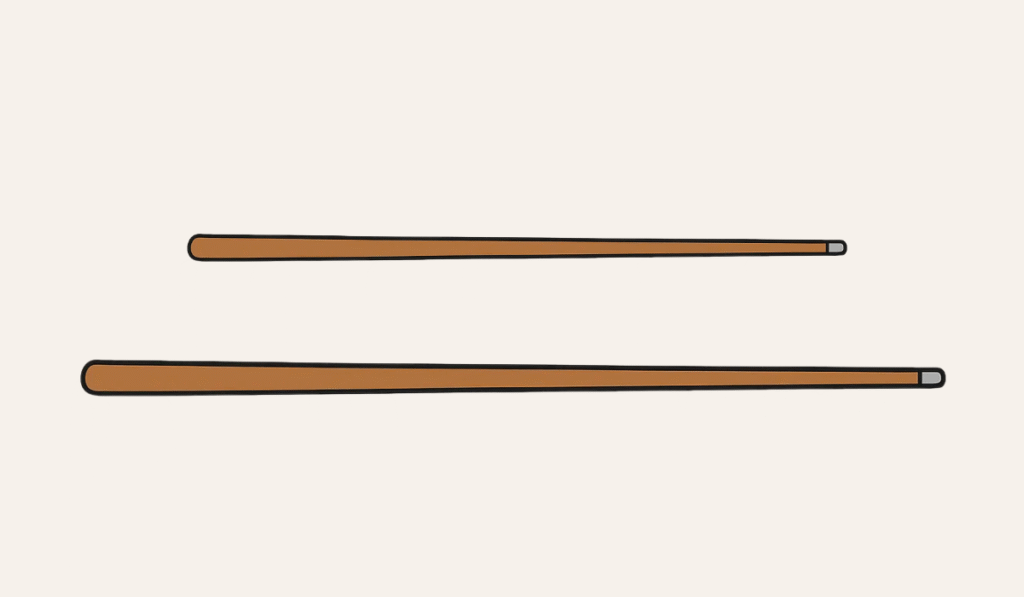
If the cue is long but still very light, it can feel like swinging a long twig. For cues around 66 or 67 inches, many players move slightly heavier just to keep the cue feeling stable.
This isn’t about adding power, it’s about maintaining a comfortable balance point so the cue swings naturally.
Small Weight Changes Make Big Differences
Most of the weight adjustments happen in the butt of the cue, and this is why tiny changes matter.
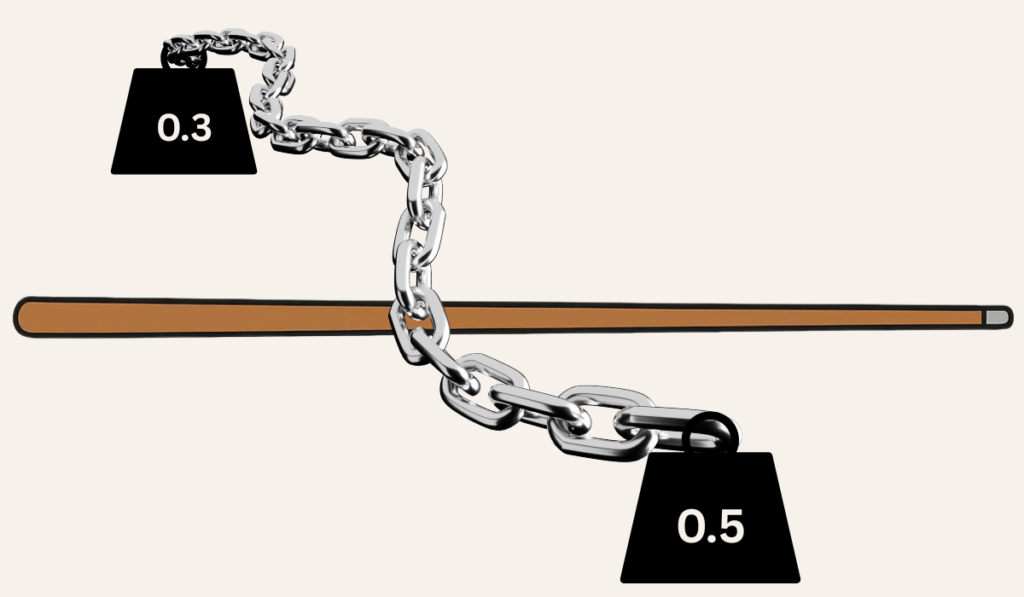
Adding even 0.3 or 0.5 ounces shifts how the cue sits in your hand. It affects the balance point, how steady your backswing feels, and how easily the cue accelerates through the ball.
When I tested different bolts, the difference was noticeable immediately. Some settings made the cue feel effortless. Others made it feel heavy or unresponsive. This is normal, your body is very sensitive to weight changes in the handle of the cue.
Finding Your Ideal Cue Weight
There is no universal “best” weight. The ideal weight is simply the one that matches your stroke and your goals.
A good way to find it is to start with the weight you already use and adjust in small steps. Try a few long straight shots, a few soft follow shots, and a few draw shots.
Pay attention to whether the cue feels stable, whether you can control speed comfortably, and whether your arm stays relaxed.
The right weight is the one that lets you play for hours without tension while still giving you confidence on both soft shots and long-distance potting.
Final Thoughts
Cue weight is one of the simplest adjustments you can make, yet it has a huge impact on how you play. It affects rhythm, accuracy, balance, and how your stroke develops over time.
Once you take a little time to experiment, you will find the weight that feels natural to you. And when the cue feels right, your whole game feels better.
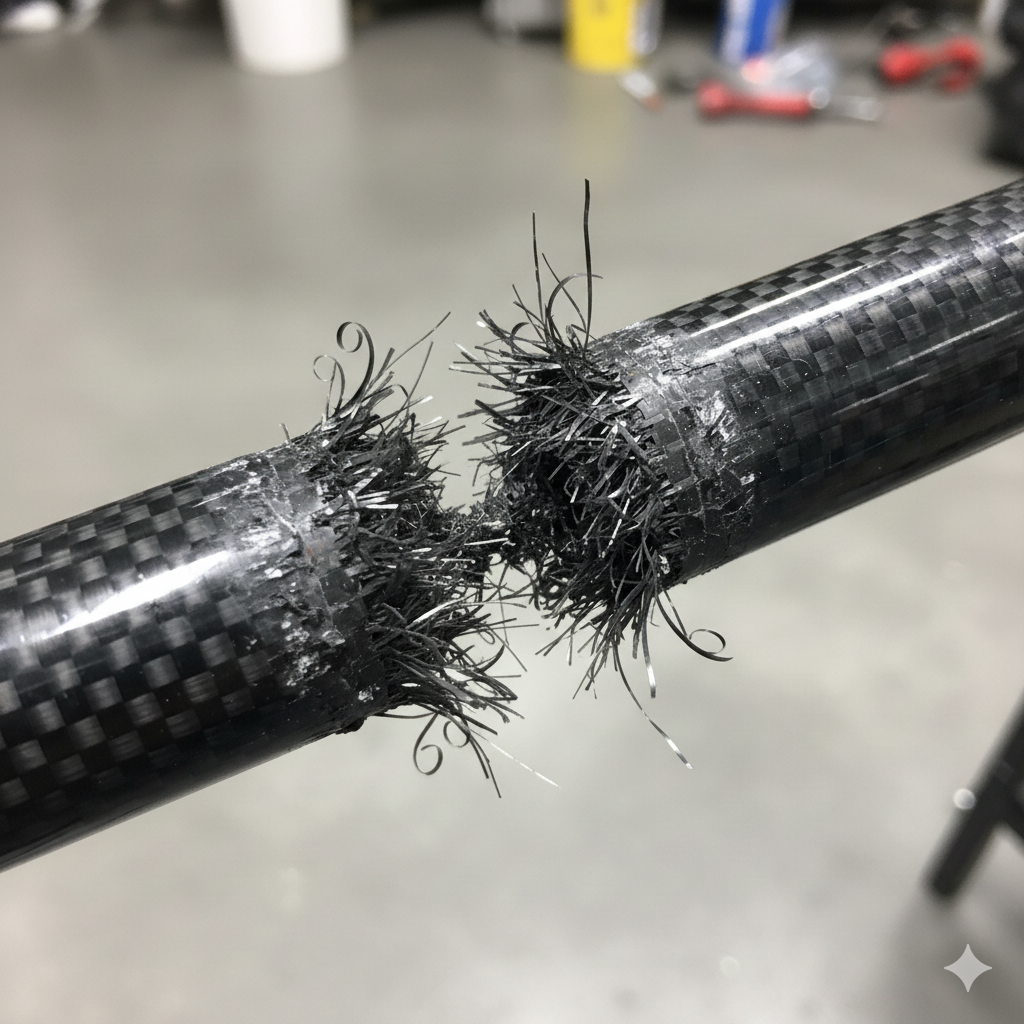
Carbon fiber shafts last longer than maple, but most players still ruin them through simple bad habits. Banging the cue, leaving it in a hot car, and skipping basic cleaning are the things that cut a shaft’s life short.
As someone who has maintained gear for league nights, tournaments, and long travel days, I have seen great shafts fail for preventable reasons.
In this guide you will learn how to protect your shaft from heat, impact, grime, and joint wear so it stays smooth, consistent, and accurate for years.
Key Takeaways
Your shaft is durable, not indestructible. Avoid drops, table bangs, and pushing balls.
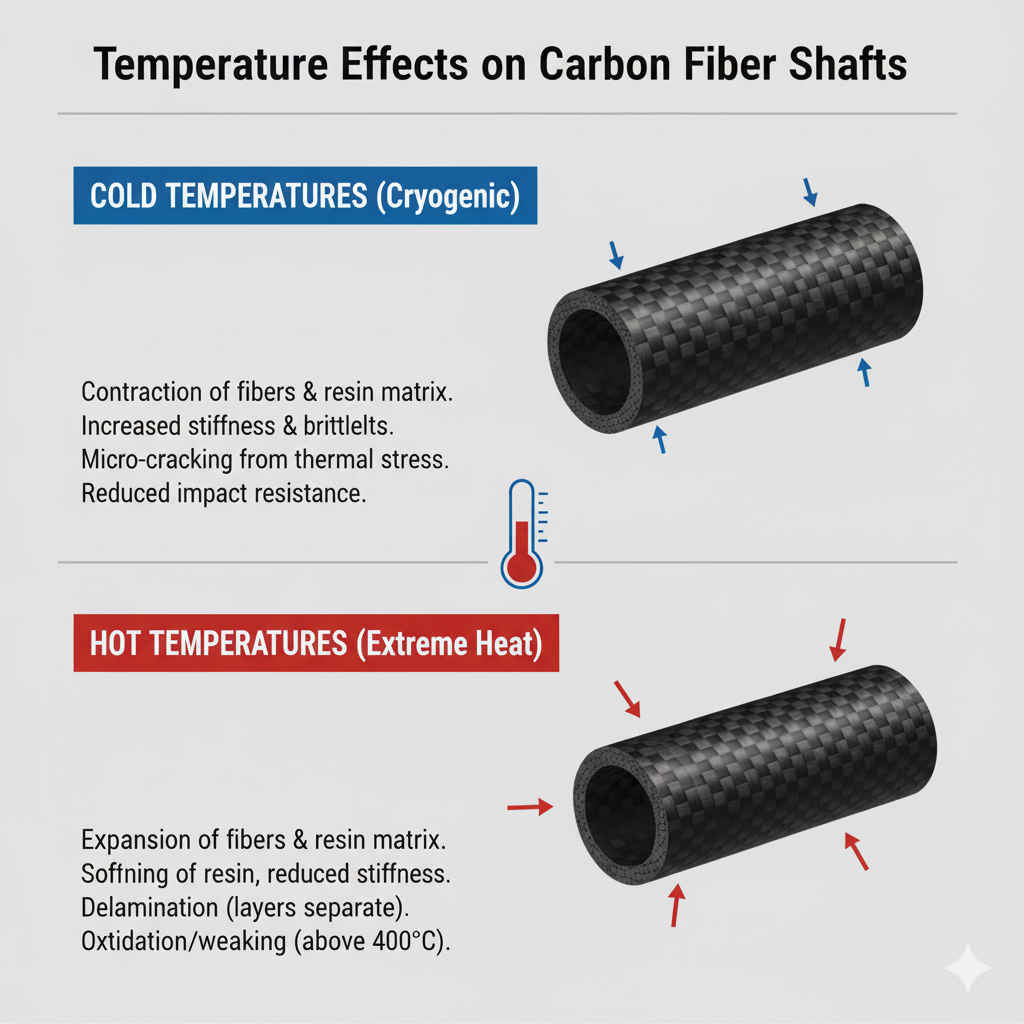
Extreme heat and cold can still damage carbon fiber, so do not leave your cue in the car.
Clean the shaft with a damp microfiber cloth or Predator wipes, then dry it right away.
Use quality tips and chalk to protect your investment and keep performance consistent.
Clean the joint regularly to maintain a precise, solid fit.
Use joint protectors to prevent dirt and damage during transport.
Store your cue in a well-built, insulated case to extend the life of the shaft.
Your Shaft Is Not Indestructible
A carbon fiber shaft is more durable than a maple shaft, but it is not something you can abuse. Do not bang it on the table. Do not let it hit the floor. And do not push balls around with it.
Yes, many players do it, but it is still a bad idea. Treat your shaft well and it will last, but do not assume durability means immunity.
Temperature Changes Still Matter
Carbon fiber handles temperature shifts better than maple, but extreme heat and cold still affect it. Leaving your cue in the trunk or back seat exposes it to those extremes. If you can avoid leaving your cue in the car, you should.
I used to keep backup cues in my car year round, and I knew they were taking a beating. Hot summers and cold winters in the Northeast are tough on any cue, carbon fiber included.
Simple, Effective Cleaning
Carbon fiber is easier to maintain than maple. That alone makes it appealing, even if it did not play as well as it does.
You can clean it with a slightly damp microfiber cloth, but the individually wrapped Predator wipes are even easier.
I keep them in my bag and hand them out when I see someone with a carbon fiber shaft. Wipe the shaft, dry it right away, and you are set.
And remember, if you invested in a quality shaft and a quality tip, pair them with quality chalk. Putting a cheap tip or bad chalk on an expensive shaft never makes sense.
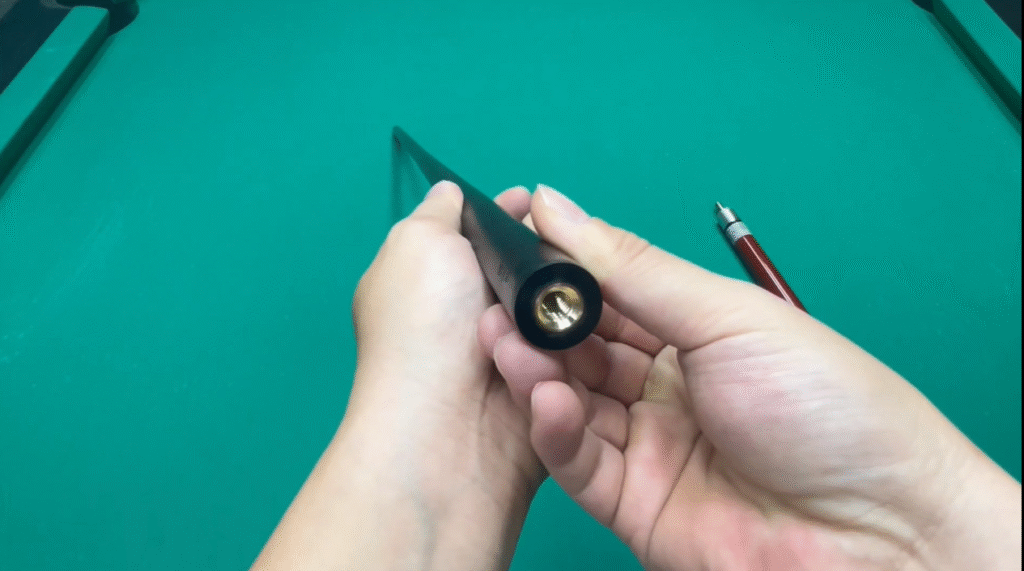
Clean the Joint Too
Most players forget the joint. Dirt builds up, and the fit becomes less precise.
Take a Q-tip, run it around the joint, and keep that connection clean. Your cue will fit better, play better, and last longer.
Extra Steps That Extend the Life of Your Shaft
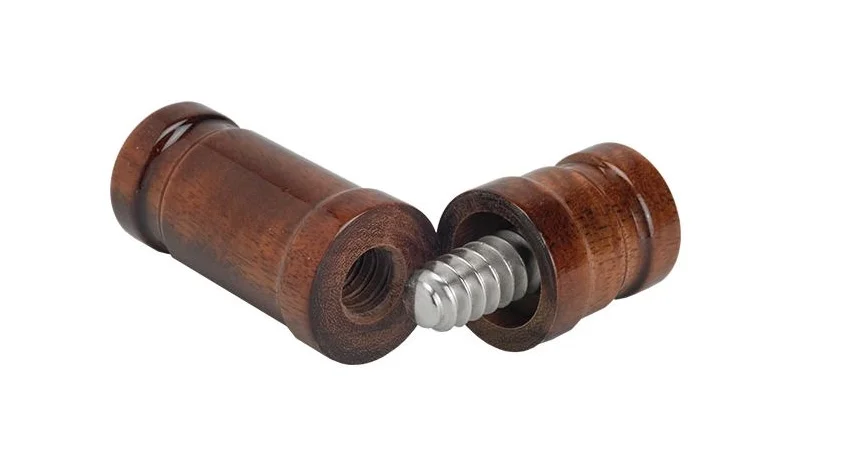
Use joint protectors. They keep the joint clean and protect it from damage. Most high-quality cues come with them, but I keep extras around because they are easy to lose.
And get a quality case. A good case with insulation is not a luxury. It protects your shaft from temperature swings and physical damage. You have made a real investment. Protect it properly.
Final Thoughts
A carbon fiber shaft can give you years of consistent performance, but only if you treat it right. Keep it clean, protect it from heat, guard the joint, and store it in a proper case.
These small habits cost nothing and save you from warped fittings, gritty feel, and premature wear. Take care of your gear and it will take care of your game.